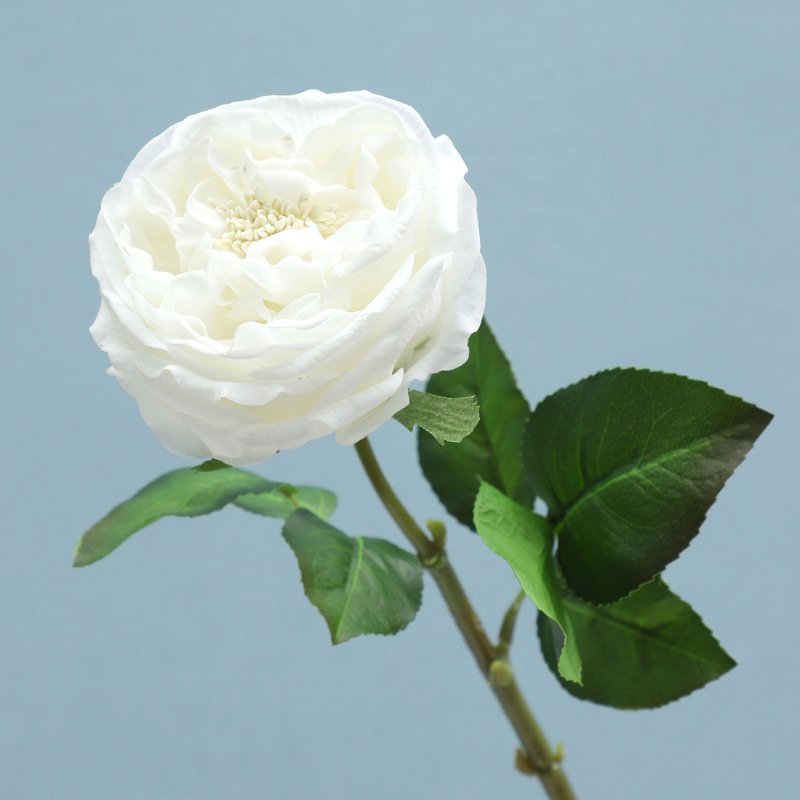
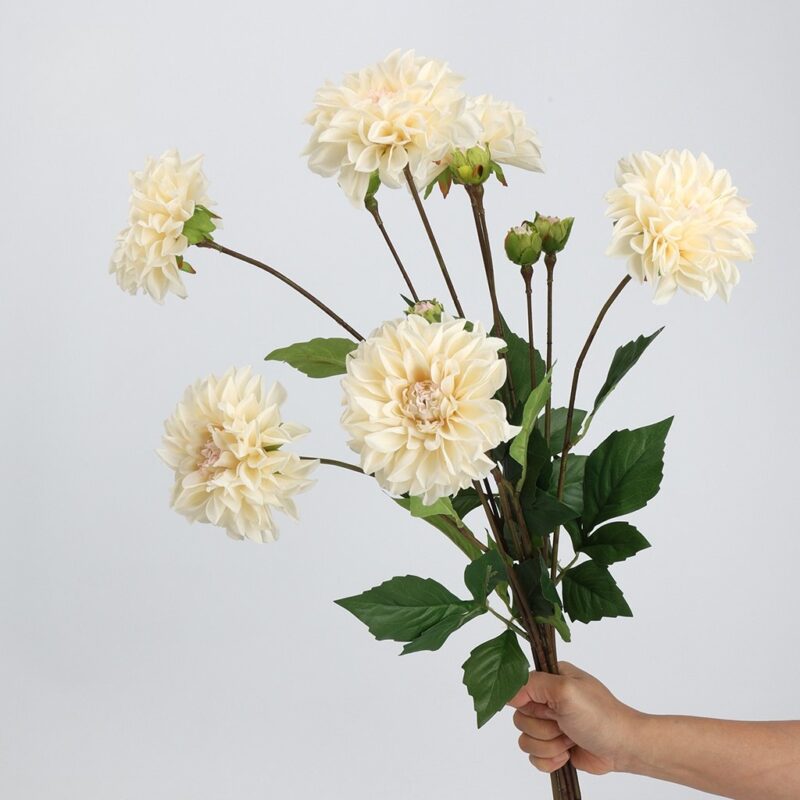
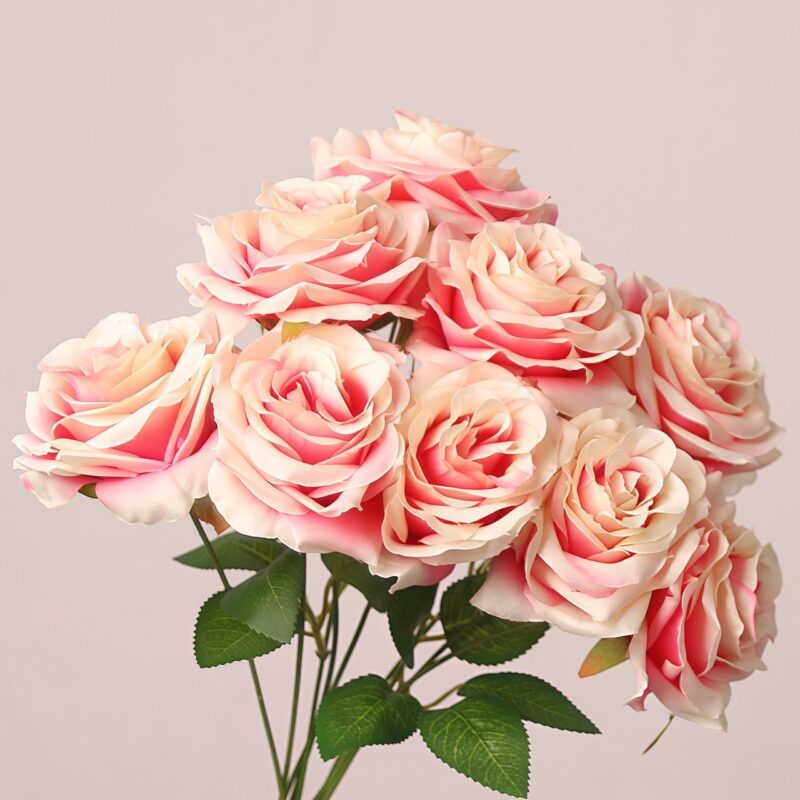
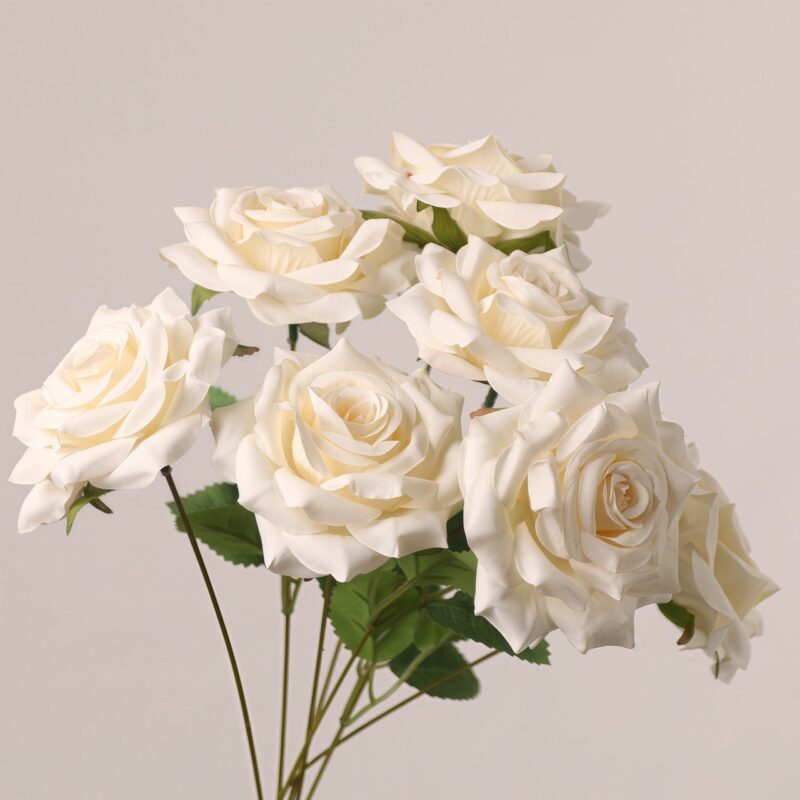
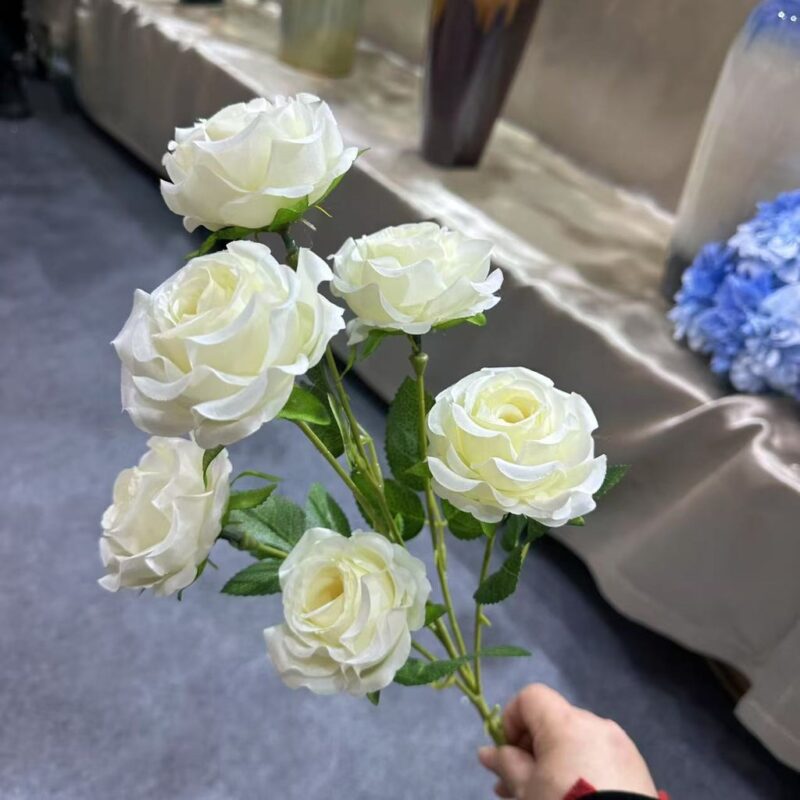
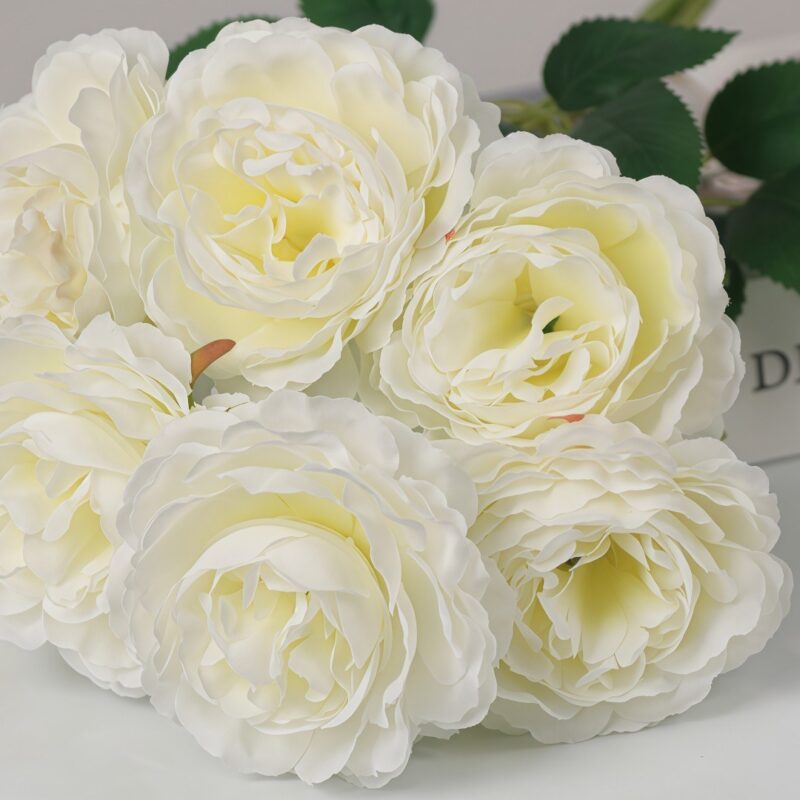
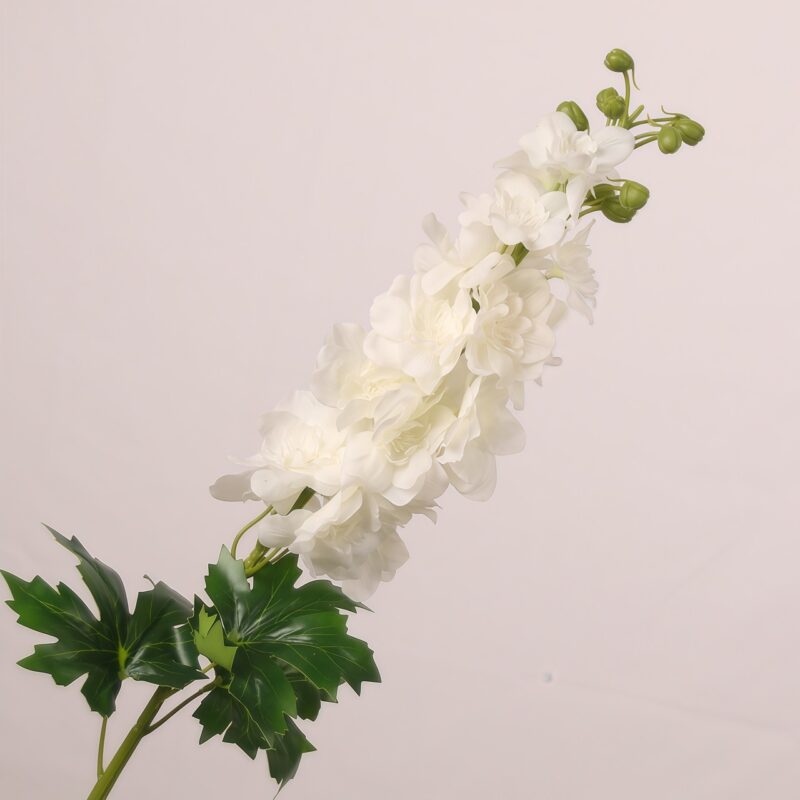
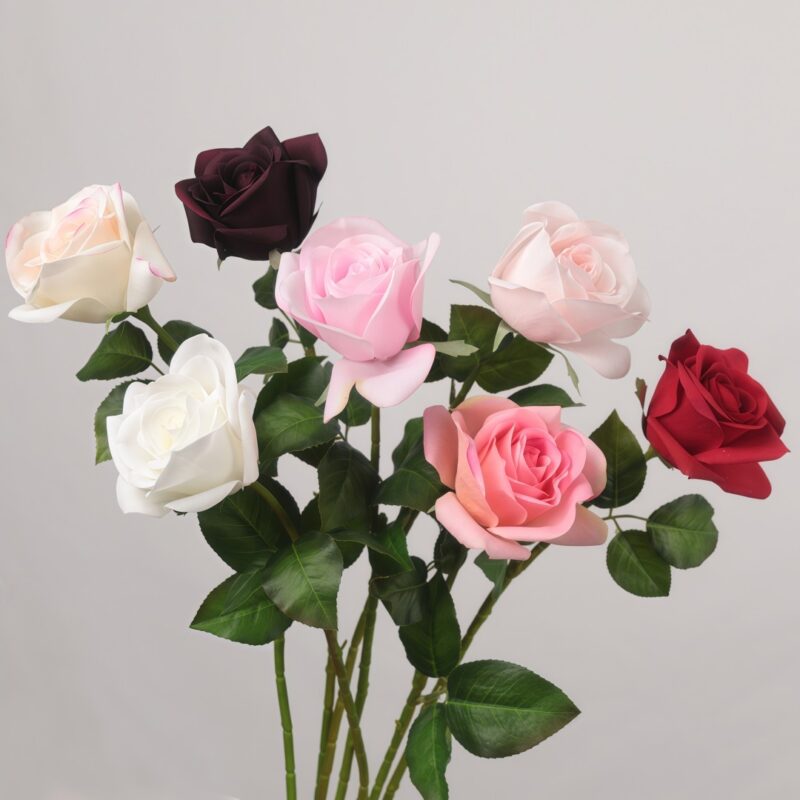
The same artificial flower can look elegant in a tall entry vase, crowded on a coffee table, or too small on a ceremony arch. Good floral styling begins with scale: the shaped stem length, flower spread, vase opening, viewing distance, and how the arrangement will be used.
Start with the room and the vase, then choose the flowers. That one change prevents the two most common mistakes: a small arrangement disappearing in a big space, or a beautiful bunch that looks jammed into the wrong vessel.
The Short Answer
Shape the stems first, then measure them. A balanced vase arrangement usually shows flowers about one to one-and-a-half times the vase height. Keep dining-table flowers low or very slim and tall; give entry tables and floor vases more height and volume. For weddings, spend on close-up flowers where guests and cameras will notice them, then build the rest for scale and stability.
Measure the Flower Before Choosing a Vase
Packaging can compress petals and bend stems, so dimensions should be taken after gentle shaping. For each stem or bundle, record total length, usable stem length after trimming or bending, flower-head diameter, widest shaped spread, stem count, and weight. These details are more useful than a single “height” number.
Measurement
Why it matters
Total stem length
Shows the maximum height available before shaping or cutting
Usable stem length
Shows how much height remains after the stem is inserted, bent, or trimmed
Flower-head diameter and shaped spread
Helps prevent an arrangement from looking sparse, crowded, or out of scale
Stem count and weight
Helps assess vase stability, bundle fullness, and installation support
Bendable or cuttable section
Shows whether the product can be adjusted safely for the intended container
A Practical Starting Point for Vase Proportion
There is no one vase formula that works for every flower shape, but proportion is a useful starting point. For a balanced vase arrangement, the visible floral section often measures about one to one-and-a-half times the vase height. A wider, relaxed arrangement may need a broader base or extra support; a tall, narrow arrangement needs enough vase weight and a smaller opening to keep stems upright.
For loose stems: begin with a vase opening around one-quarter to two-fifths of the intended floral spread. Adjust with greenery, floral tape, or an appropriate support method if the stems fall too wide.
For compact bouquets: use a narrower neck that gathers the stems and keeps the flower faces at the planned angle.
For tall branches or heavy stems: use a stable, weighted vase and make sure the base will not tip after the arrangement is shaped.
For short stems: choose a lower vessel or raise the stem internally rather than forcing the flower to sit too deep in a tall vase.
These are styling guidelines, not a replacement for product specifications. Before buying by photo, ask for the measurements above and test the actual stem in the planned vase. The Artificial Flower Arrangements Guide offers more arrangement formats and placement ideas.
Choose by Room and Surface
Placement
Better direction
Common issue to avoid
Dining table
Low centerpiece or slim tall design with clear sight lines
Wide or dense flowers blocking conversation, plates, or glassware
Entry table or lobby
Taller vase arrangement with enough flower spread to read from a distance
A small bouquet disappearing in a large space
Coffee table
Low, stable, compact arrangement
Top-heavy stems competing with sight lines or nearby objects
Bookshelf or nightstand
Small bud vase, compact bloom, or simple greenery
Oversized arrangements crowding a tight surface
Floor vase
Long branches, tall stems, or layered greenery with a stable base
Short stems that sink too low or a light vase that tips
Once the scale is correct, color and material make the arrangement feel more believable. Use natural changes in stem height, mix flower sizes, add greenery or fillers, and avoid placing every flower at the same angle. The How to Make Artificial Flowers Look Real guide covers those finishing choices.
Can Artificial Stems Be Bent or Cut?
Many stems use an internal wire, but it is not universal and the wire strength varies. Confirm the construction for the exact SKU before planning an arrangement around bending or cutting. Bend supported stems gradually with both hands rather than making one sharp fold. If a stem has a metal core, use wire cutters—not household scissors—to trim it.
Place a trimmed end safely inside the vase or arrangement and check that the shortened stem still has the support it needs. For overhead or freestanding event work, do not rely on a flower stem alone as an installation method; confirm the separate structural support and safety plan.
Different Standards for Home, Weddings, and Events
Project
Buying priorities
Daily home decor
Vase fit, room scale, harmonious color, easy dusting, and placement away from harsh sunlight
Bridal bouquets and close-view wedding tables
Petal realism, color match, touch, flower-head security, photo appearance, and comfortable weight
Large arches, backdrops, and installations
Visible volume, consistent color across quantity, flexible stems, secure mechanics, packing recovery, and efficient budget use
For a wedding or event, spend the close-up budget where guests will actually look: bouquets, welcome tables, head tables, photo moments, and front-facing focal areas. Use suitable supporting flowers and greenery for background volume. If close-up petal texture is a priority, compare options through the Real Touch Flowers Guide.
The Specification to Request Before Ordering
Total length and usable stem length after shaping
Flower-head diameter and shaped spread
Stem count, bundle size, and product weight
Whether the stem has wire, plus the bendable and cuttable section
Recommended vase height and opening for the intended style
Flower-head attachment and any care or packing instructions
Approved sample, color reference, and inspection standard for a larger order
These details make product selection more concrete and reduce the risk of ordering a flower that is attractive online but impractical in the planned space. For a structured sample comparison, see the Artificial Flower Samples Guide.
Bottom Line
Buy for the finished arrangement, not the product photo. Shape the stems, measure them, test the vase, then decide where to spend: home decor needs the right scale, wedding flowers need close-up polish, and big events need volume that stays put. For materials, read Real Touch vs. Silk vs. PU Flowers.
To check scale, color, and vase fit before a larger order, REQUEST SAMPLES.
FAQ
How tall should artificial flowers be compared with a vase?
As a starting point, the visible floral part often measures around one to one-and-a-half times the vase height. Adjust for the flower shape, vase weight, arrangement width, and the surface where it will be displayed.
Can I cut wired artificial flower stems?
Usually, but confirm the specific construction first. Use wire cutters for a metal core, place the cut end safely, and check that the shortened stem remains supported in the finished arrangement.
NB8 Floral supplies wholesale artificial flowers to florists, event professionals, and retailers in the US. Our guides are written from what we see in production, QC, and customer orders.
Dahlia is the flower that exposes how an artificial bloom was made, because its whole structure is petal tips and there is nowhere for a shortcut to hide.
Lilies and calla lilies sit in the same collection on most sites, including ours, and that grouping hides the fact that they do opposite things in an arrangement.
Most wedding flower budget advice is a single percentage — flowers are "about 8 to 10 percent of the total," a planning rule of thumb that has been repeated for decades. It is a fine starting point an
The arithmetic that starts most DIY plans is simple: the florist quoted $4,200, the stems cost $900, so DIY wedding flowers save $3,300. That number is wrong in both directions, and the gap between it
A palette chosen on a laptop screen in a bright room has almost nothing to do with how those flowers will look at 7pm in the room where the wedding actually happens. This is the most common and least
This is not about how long flowers last outdoors over a season. It is about a single afternoon — the six hours between install and the last dance, which is the only window that matters for outdoor wed
You picked the flower before you picked the date, and now the quote has come back at three times what you expected — or the answer is simply that nobody can get it that month. Wedding flowers out of s
Every wedding budget spreadsheet eventually arrives at the same idea: build the flowers once, use them twice. The ceremony arch becomes the head table garland, the aisle markers move to cocktail table