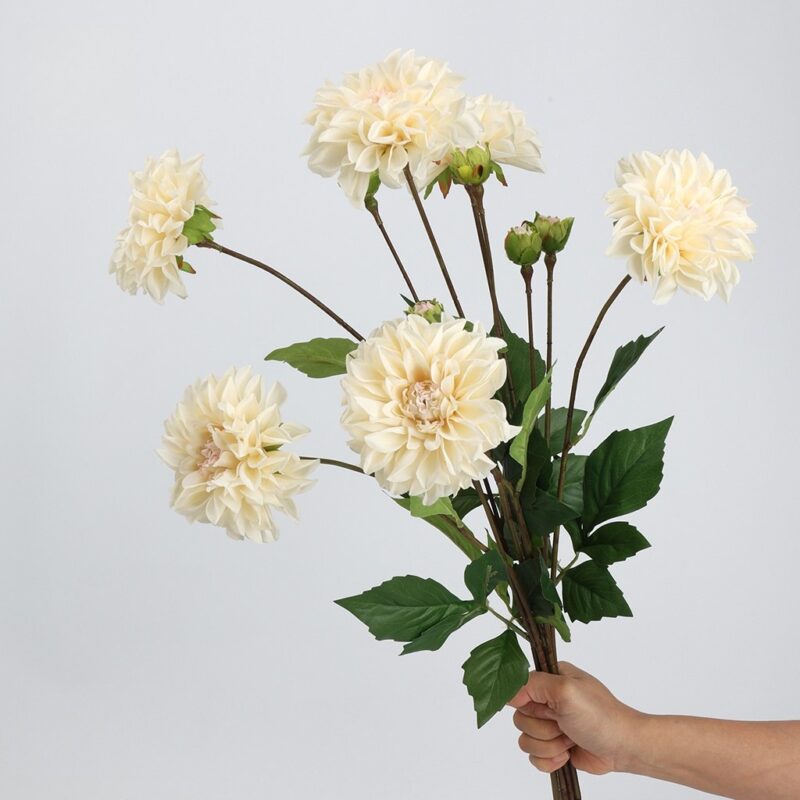
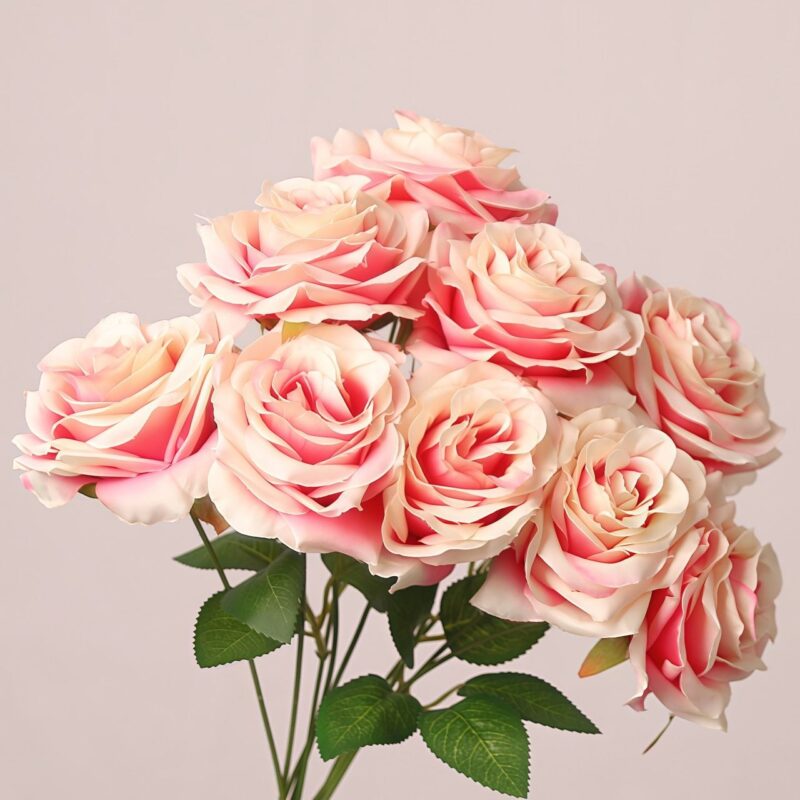
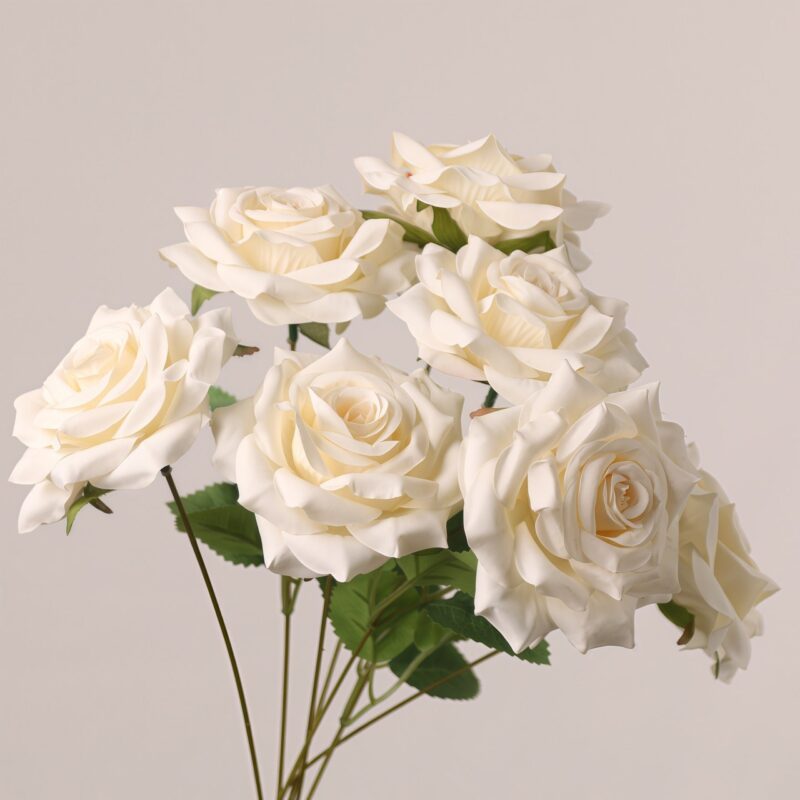
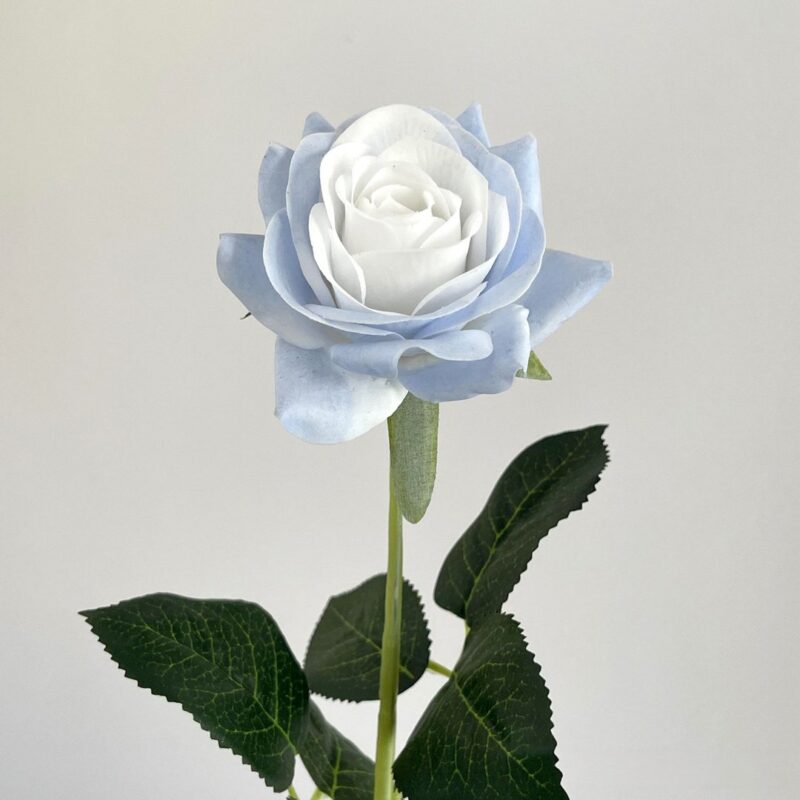
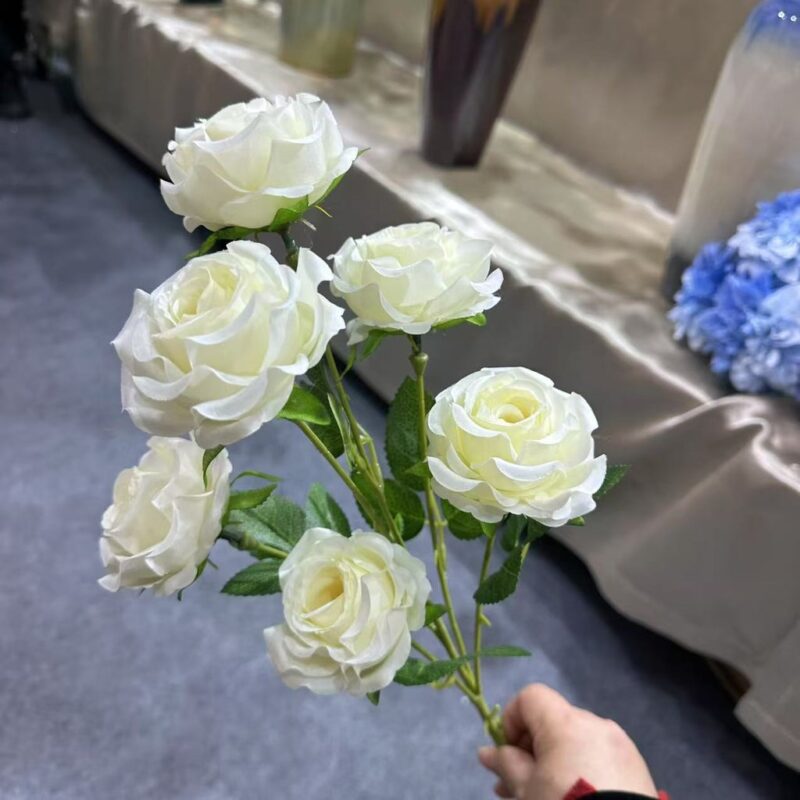
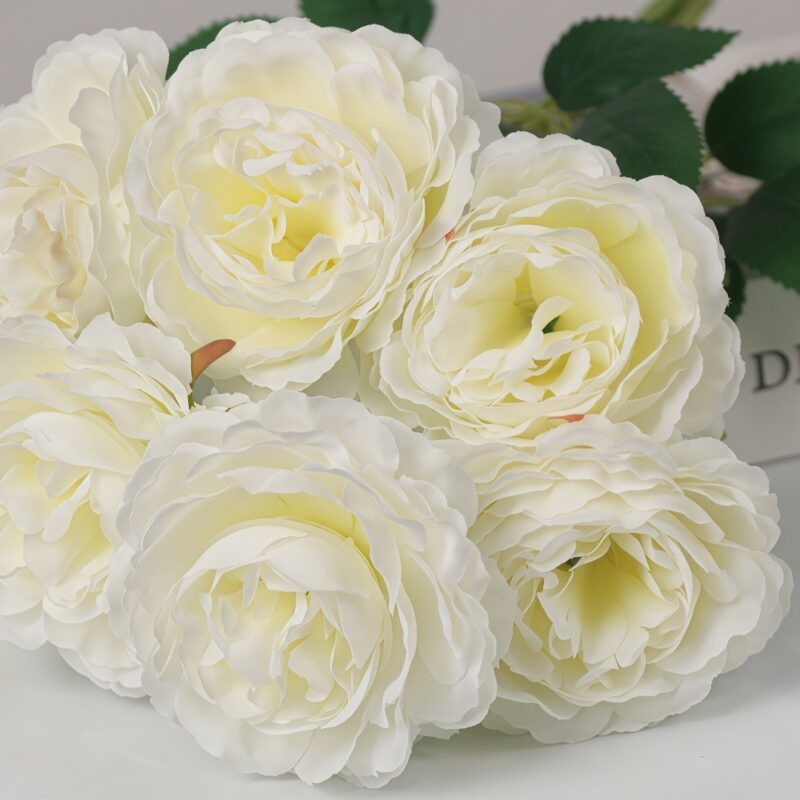
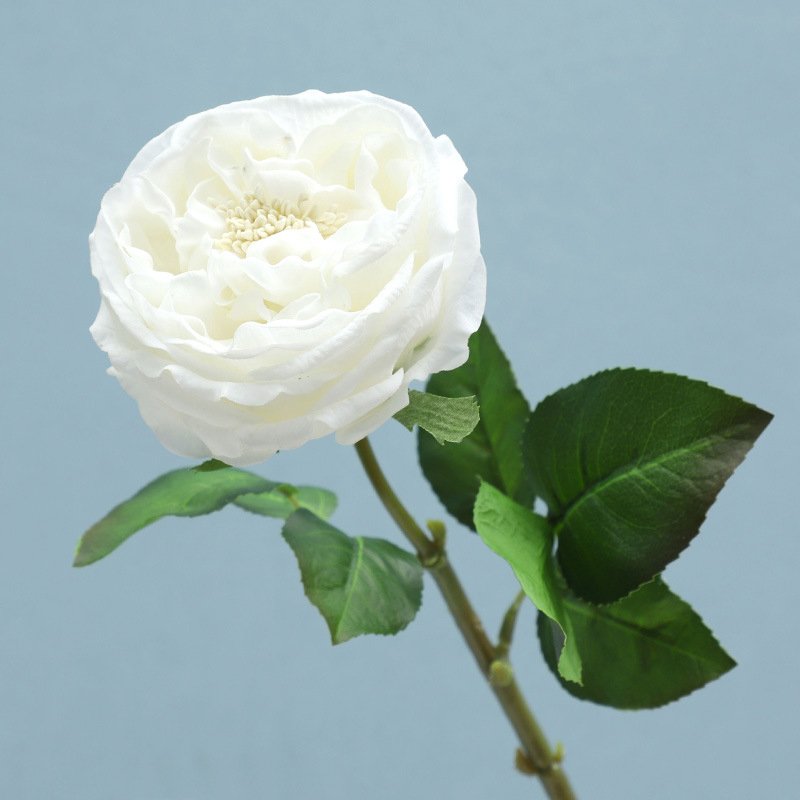
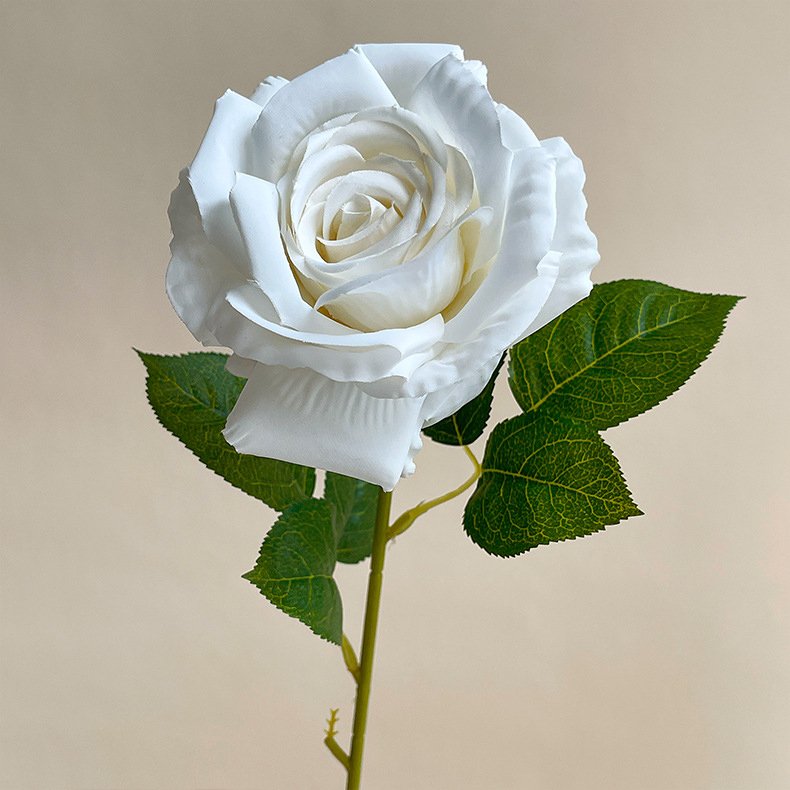
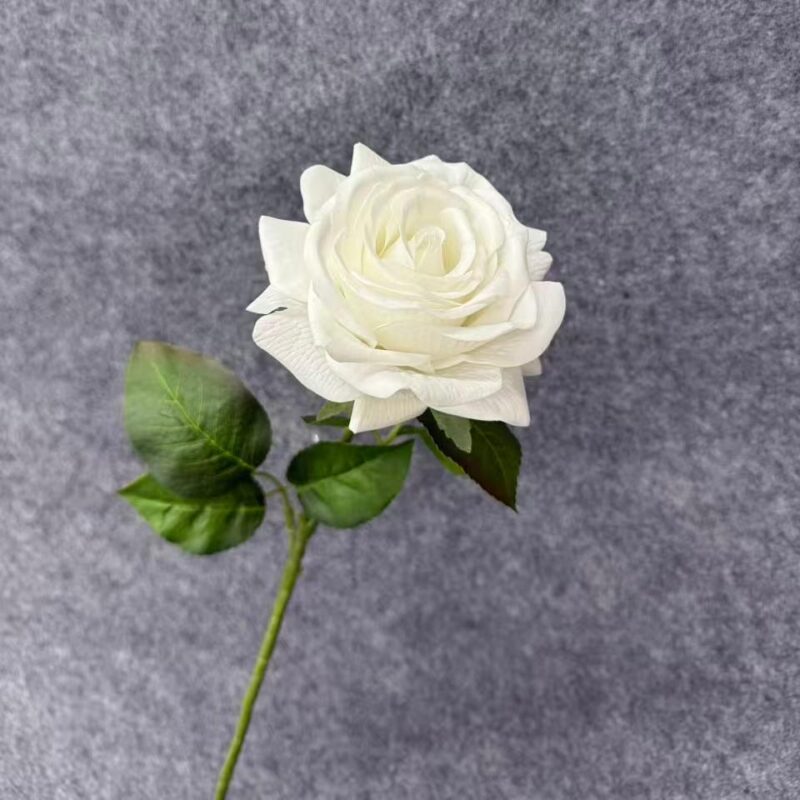
Real touch flowers are one of the most requested categories in artificial floral design because they are made for close-up beauty. When a flower will be held, photographed, displayed on a dining table, used in a bridal bouquet, or seen by customers in a retail setting, texture matters. The flower should not only look realistic from a distance. It should also feel convincing when someone gets close.
For wedding planners, florists, decorators, retailers, and wholesale buyers, real touch flowers can be a practical choice when realism is part of the final customer experience. They are often used for bridal bouquets, centerpieces, home decor arrangements, showroom displays, event installations, and premium artificial flower assortments.
NB8 Floral has worked in the artificial flower industry for more than 20 years, and real touch flowers are one category where material selection, color review, and sample checking matter a lot. This guide explains what real touch flowers are, how they compare with other artificial flowers, and how to choose the right styles before buying.
What Are Real Touch Flowers?
Real touch flowers are artificial flowers designed to feel more natural than many standard faux flowers. They are usually made with materials or surface finishes that create a soft, flexible, or slightly lifelike texture.
The goal is simple: when someone touches the petals, the flower should feel closer to a fresh flower than a basic plastic or thin fabric stem.
Real touch does not mean every flower will feel identical to a fresh flower. It also does not mean every real touch flower has the same material. Different suppliers and product styles may use different blends, coatings, petal thickness, stem construction, and finishes. That is why samples are important, especially for wholesale and wedding buyers.
In practical buying terms, real touch flowers are best understood as a premium artificial flower category for close-view designs.
Why Buyers Choose Real Touch Flowers
Buyers usually choose real touch flowers for three main reasons: realism, texture, and confidence in close-up settings.
They work well when the final arrangement will be inspected, held, photographed, or reused. A real touch rose in a bridal bouquet, for example, may need to look soft in photos and feel pleasant when handled. A real touch peony in a centerpiece may need to look natural when guests sit near it. A real touch flower in a retail display may need to make shoppers feel that the product is worth a higher price point.
Real touch flowers are useful for:
Bridal bouquets and bridesmaid bouquets.
Wedding centerpieces and sweetheart tables.
Home decor arrangements.
Retail artificial flower displays.
Showroom and studio styling.
Premium event decor.
Sample boards and design presentations.
Close-up product photography.
For large ceiling installations, high arches, distant stage decor, and volume-heavy flower walls, real touch may not always be necessary for every stem. In those cases, buyers often mix real touch focal flowers with silk-style flowers, greenery, and filler stems.
Real Touch Flowers vs. Silk Flowers
Real touch flowers and silk-style flowers are both artificial flowers, but they serve different design needs.
Silk-style flowers are often lightweight, flexible, and available in wide color selections. They are useful for bouquets, garlands, arches, retail assortments, seasonal displays, and high-volume event decor. The term “silk” in artificial flowers usually refers to a fabric-like appearance, not always actual silk.
Real touch flowers focus more on petal feel and close-up realism. They can be a better choice when the flower will be held or viewed from a short distance.
Choose real touch flowers when:
The arrangement will be photographed closely.
Guests or customers may touch the flowers.
The design needs a premium look and feel.
The flowers will be used in bridal bouquets, centerpieces, or home decor.
The buyer wants a more natural petal texture.
Choose silk-style flowers when:
You need broader style and color selection.
The flowers will be used in larger installations.
Lightweight stems are important.
You need volume for arches, garlands, or flower walls.
Budget and quantity are more important than close-up petal feel.
Many strong artificial flower designs use both. Real touch flowers can become the focal blooms, while silk-style flowers, greenery, and fillers complete the arrangement.
Real Touch vs. Silk vs. PU: What to Inspect on a Sample
Most artificial flowers are made from several materials: a single stem may have fabric-like petals, a plastic center, wire inside the stem, plastic leaves, glue and a coating. “Silk” usually means a fabric-style petal rather than actual silk, “real touch” describes the intended hand feel, and “PU” names a polymer material or finish. None of these names guarantees a fixed quality level, so inspect the sample:
Type
Where it can work well
What to inspect on a sample
Silk-style or fabric-style flowers
Lightweight bouquets, broad color programs, garlands, arches, and supporting volume
Petal edges, fraying, sheen, color depth, and how the bloom looks from the side
Real touch flowers
Bridal bouquets, close-view tables, premium home decor, and retail display
Petal feel, flexibility, color, surface finish, odor, and recovery after handling
PU or PU-finish flowers
Close-up focal blooms where a soft or substantial surface matters
Seam lines, surface tackiness, color consistency, storage needs, and heat sensitivity
Plastic flowers and greenery
Leaves, stems, centers, structural parts, greenery, and distant volume
Gloss, molded seams, brittleness, and whether the finish suits the viewing distance
Judge realism in the actual setting: view the sample from the front, side and back, in daylight and indoor light, next to the planned vase, fabric or greenery. For more on materials, see the Artificial Flower Materials Guide.
Why Real Touch Costs More, and by How Much
In NB8 Floral’s own catalogue (2,383 list prices, read on 21 September 2026), real touch stems had a median price of $2.82 per stem, against $2.43 for silk and $2.36 for PU: about 16% more than silk. Pack size moves the price more than material does: across all materials, the median per stem falls from $3.36 in cartons of 25 stems or fewer to $1.64 in cartons of more than 60. (Per-stem price is pack price divided by the stated stem count; materials are taken from product names.)
Between two similar-looking flowers, price differences usually come from:
Material and structure: a soft, layered, well-supported flower head uses more than a simple flat construction.
Color: natural-looking variation and clean transitions need more control than a single flat finish.
Handling: stem core, wire, wrapping, joints and head attachment affect styling and transport.
Consistency and packing: repeatable color and size across a batch, and packing that reduces reshaping after delivery.
Ask a supplier to compare two specific SKUs feature by feature. “Better quality” alone is not a buying specification.
Odor, Safety and Care
A sealed carton can have a temporary packaging or material odor when first opened; air the flowers in a well-ventilated space. Do not treat a material name as a safety claim for a nursery, pregnancy or people with sensitivities: for a safety-sensitive project, ask for the product material declaration and any compliance documents before buying, and keep stems with small loose parts or exposed wire away from children.
For display, keep real touch and silk flowers out of direct sunlight, heat and heavy humidity. Dust smooth real touch petals with a soft cloth or a gentle stream of air; thinner silk petals may crease in transit and can usually be reshaped by hand. Our materials guide covers what sunlight and heat do to plastics, with sources.
Best Uses For Real Touch Flowers
Real touch flowers are most valuable when the audience can see details.
Wedding Bouquets
Wedding bouquets are one of the strongest uses for real touch flowers. The bouquet is held, photographed, and viewed closely throughout the day. Petal texture, color softness, and flower shape all matter.
Real touch roses, peonies, tulips, orchids, calla lilies, and hydrangeas can work well for wedding bouquets when the style matches the overall design.
For wedding buyers, it is smart to order samples before confirming a full floral plan. A sample helps check whether the flower color works with the dress, table linens, bridesmaid dresses, lighting, and venue style.
Centerpieces And Tablescapes
Table arrangements are also close-view designs. Guests may sit near the flowers for a long time, so the flower surface should look polished from multiple angles.
Real touch flowers can help centerpieces feel more refined, especially for sweetheart tables, guest tables, restaurant styling, hotel decor, and event tablescapes.
Home Decor
Home decor buyers often want artificial flowers that can stay beautiful without daily care. Real touch flowers are useful for living rooms, bedrooms, entry tables, offices, shelves, and dining spaces where the flowers will be seen often.
For home decor, buyers should consider the vase height, room color palette, lighting, and whether the flowers will be viewed from eye level or tabletop height.
Retail Displays
Retailers can use real touch flowers as a premium category inside an artificial flower assortment. They can also use them as styling props for boutiques, showrooms, gift shops, wedding studios, and home decor stores.
Real touch flowers may help customers understand the value of a higher-end faux flower product because the difference can be felt, not only seen.
Event Styling
Event planners can use real touch flowers where guests will be close to the design: welcome tables, sign displays, cake tables, head tables, photo areas, and VIP tables.
For large background structures, buyers can combine real touch focal flowers with other artificial flowers to control budget and keep the design practical.
How To Choose Real Touch Flowers
Choosing real touch flowers is not only about picking a flower type. Buyers should compare use case, color, material feel, stem flexibility, flower size, and availability.
Start with these questions:
Will the flower be used in a bouquet, centerpiece, retail display, or large installation?
Will people touch the flowers?
Will the flowers be photographed closely?
Does the design need soft romantic color, bold color, or neutral decor color?
Will the flowers be reused?
Do stems need to be cut, bent, or shaped?
Is timing urgent, or can the buyer pre-order?
Once the use case is clear, it becomes easier to choose the right real touch flower style.
Check The Petal Feel
The petal feel is the main reason buyers choose real touch flowers. But not every real touch style feels the same. Some petals feel soft and flexible. Some feel thicker and more structured. Some have a coating that creates a natural surface.
When reviewing samples, touch the petals, bend the stem gently, and check whether the flower returns to shape after handling.
For wedding bouquets, a soft and natural petal feel may be important. For retail displays, the flower may need to hold its shape after repeated handling. For home decor, the buyer may care more about the look in a vase than the exact feel.
Review Color In Real Lighting
Color is one of the biggest reasons to request samples. A real touch flower may look different in studio photos, indoor lighting, warm evening lighting, and natural daylight.
Before buying in larger quantity, check:
Color under natural light.
Color under indoor warm light.
Color next to fabric swatches.
Color next to other artificial flowers.
Color across multiple sample pieces.
Whether the color is too cool, too warm, too bright, or too muted for the design.
This is especially important for weddings, where small differences in blush, ivory, champagne, dusty rose, mauve, peach, and white can change the final look.
Compare Flower Size And Stem Structure
Real touch flowers can look very different depending on head size, stem length, and construction.
For bouquets, buyers should check whether the flower head is large enough to be a focal bloom or better as a supporting flower. For centerpieces, the stem height should match the vase or arrangement shape. For retail, the stem should be easy for customers to understand and display.
Review these details:
Flower head diameter.
Stem length.
Stem flexibility.
Number of heads per stem.
Leaf detail.
Weight of the flower.
How the flower packs and ships.
If a flower is too heavy, it may not work for certain suspended designs. If a stem is too short, it may need extra support in tall vases. If a flower head is too large, it may overpower a small bouquet.
Order Samples Before Wholesale Buying
Samples are the best way to reduce risk when buying wholesale real touch flowers. Photos and descriptions help, but samples show the actual color, texture, size, and handling experience.
When ordering samples, evaluate:
Petal texture.
Color accuracy.
Flower head shape.
Stem flexibility.
Packaging condition.
Shape after unpacking.
Whether the style matches the planned use.
How the flower looks with other stems.
NB8 Floral supports sample orders so buyers can compare real touch flowers before placing a larger order. This is useful for wedding planners, event designers, retailers, and wholesale customers who need confidence before buying quantity.
US stock real touch flowers are useful when buyers need faster fulfillment in the United States, want to test samples quickly, or have a near-term event. If a project deadline is close, US stock can help reduce waiting time.
Pre-order real touch flowers are useful when buyers are planning future weddings, seasonal retail assortments, event calendars, or larger wholesale purchases. Pre-order can give more room to choose color, style, and quantity.
For serious wholesale planning, the best approach is often to sample first, confirm the best flower styles, and then plan bulk quantity based on the event date or sales season.
How To Use Real Touch Flowers In A Mixed Arrangement
Real touch flowers do not need to carry the entire arrangement. In many professional designs, they are used as focal flowers.
For example:
Use real touch roses or peonies as the main blooms.
Add silk-style flowers for volume.
Add greenery for shape and movement.
Add filler flowers for softness.
Use branches or leaves for structure.
This approach can make the design look premium without making every stem a high-cost focal flower.
For wedding arches and larger event pieces, place real touch flowers where guests will see them closely, such as the front-facing areas, aisle-level sections, welcome signs, or photo zones. Use other artificial flowers for background volume and height.
Common Mistakes When Buying Real Touch Flowers
The most common mistake is buying only from photos. Real touch flowers are texture-driven, so photos cannot show everything.
Other mistakes include:
Choosing color without checking samples.
Buying too few stems for the arrangement size.
Using premium real touch flowers in areas where guests will not see them.
Ignoring stem length and flexibility.
Not checking how the flowers look after shipping.
Mixing flower styles that do not match in tone or realism.
Waiting too long before ordering for a wedding or event.
The safest buying process is to choose the use case, request samples, compare colors and materials, confirm timing, and then order the quantity needed for the final design.
Minimum Order for Real Touch Flowers
Many real touch suppliers, especially factory-direct ones, sell by the carton and set minimums per style and per colour. That makes it hard to test a material or buy a few colours for one project. We are NB8 Floral, an artificial flower manufacturer based in Yiwu, China, and our ready-made real touch styles have no minimum order: one pack is a normal order.
Pack sizes: NB8 Floral’s real touch styles come in packs of 24 to 100 stems; 24, 60 and 90 are the most common.
Price: the median price is $2.82 per stem across NB8 Floral’s real touch catalogue, read on 21 September 2026. See the per-stem price analysis for how that compares with silk.
Colours: each pack normally holds one colour. Mixed colours inside one pack can be arranged with our sales team before you order.
Documents: none. You do not need a trade account or resale certificate.
Samples: the Sample Box ($39.90, 10 stems in one colour) mixes silk, PU and real touch materials so you can compare them in hand.
NB8 Floral supplies artificial flowers for wedding, event, retail, decor, and wholesale buyers. With more than 20 years of industry experience, NB8 Floral understands that buyers need more than attractive product photos. They need practical sourcing support, samples, material comparison, stock timing, and flower styles that fit real use cases.
If you are choosing real touch flowers for a wedding, home decor project, retail assortment, or wholesale plan, start by reviewing the real touch flower collection and requesting samples before a larger order.
Real touch flowers are artificial flowers designed with a more natural petal feel than many standard faux flowers. They are often used for close-up designs such as wedding bouquets, centerpieces, home decor, and retail displays.
Are real touch flowers better than silk flowers?
Real touch flowers are often better for close-up realism and petal feel. Silk-style flowers are often better for wider selection, lighter weight, larger installations, and volume. Many arrangements use both.
Are real touch flowers good for weddings?
Yes. Real touch flowers are a strong option for bridal bouquets, bridesmaid bouquets, centerpieces, sweetheart tables, and other wedding designs that guests will see closely.
Should I order samples before buying real touch flowers wholesale?
Yes. Samples help confirm color, texture, size, stem flexibility, and overall quality before a larger wholesale order.
Can real touch flowers be reused?
Many real touch flowers can be reused if they are handled, packed, and stored carefully. Reuse depends on the flower material, event handling, storage conditions, and how the flowers are arranged.
Where should I use real touch flowers in large event decor?
Use real touch flowers in close-view areas such as bouquets, tables, welcome signs, photo zones, and front-facing sections. Use silk-style flowers, greenery, and fillers for background volume when appropriate.
Do silk flowers mean real silk?
Usually not. In today’s artificial flower trade, “silk” normally means a fabric-style petal, commonly polyester, rather than actual silk.
Why are real touch flowers more expensive?
Price reflects the petal material or finish, flower-head construction, color work, stem structure, finishing and packing. In NB8 Floral’s catalogue (read on 21 September 2026), real touch stems had a median of $2.82 per stem against $2.43 for silk, about 16% more.
Can real touch and silk flowers be mixed in one arrangement?
Yes. Many designers use real touch flowers as focal blooms where people look closely and silk flowers and greenery for volume.
NB8 Floral supplies wholesale artificial flowers to florists, event professionals, and retailers in the US. Our guides are written from what we see in production, QC, and customer orders.
Dahlia is the flower that exposes how an artificial bloom was made, because its whole structure is petal tips and there is nowhere for a shortcut to hide.
Lilies and calla lilies sit in the same collection on most sites, including ours, and that grouping hides the fact that they do opposite things in an arrangement.
Most wedding flower budget advice is a single percentage — flowers are "about 8 to 10 percent of the total," a planning rule of thumb that has been repeated for decades. It is a fine starting point an
The arithmetic that starts most DIY plans is simple: the florist quoted $4,200, the stems cost $900, so DIY wedding flowers save $3,300. That number is wrong in both directions, and the gap between it
A palette chosen on a laptop screen in a bright room has almost nothing to do with how those flowers will look at 7pm in the room where the wedding actually happens. This is the most common and least
Large faux installations — flower walls, full arches, backdrop panels — are the one category where renting is genuinely competitive with buying, and the decision is not about taste. It is about how ma
This is not about how long flowers last outdoors over a season. It is about a single afternoon — the six hours between install and the last dance, which is the only window that matters for outdoor wed
You picked the flower before you picked the date, and now the quote has come back at three times what you expected — or the answer is simply that nobody can get it that month. Wedding flowers out of s
Every wedding budget spreadsheet eventually arrives at the same idea: build the flowers once, use them twice. The ceremony arch becomes the head table garland, the aisle markers move to cocktail table
Be the first to know about new arrivals, special offers and early sale access. New here? Stretch the possibilities. Get 20% off your first online order of full-priced items when you sign up. Exclusions apply.