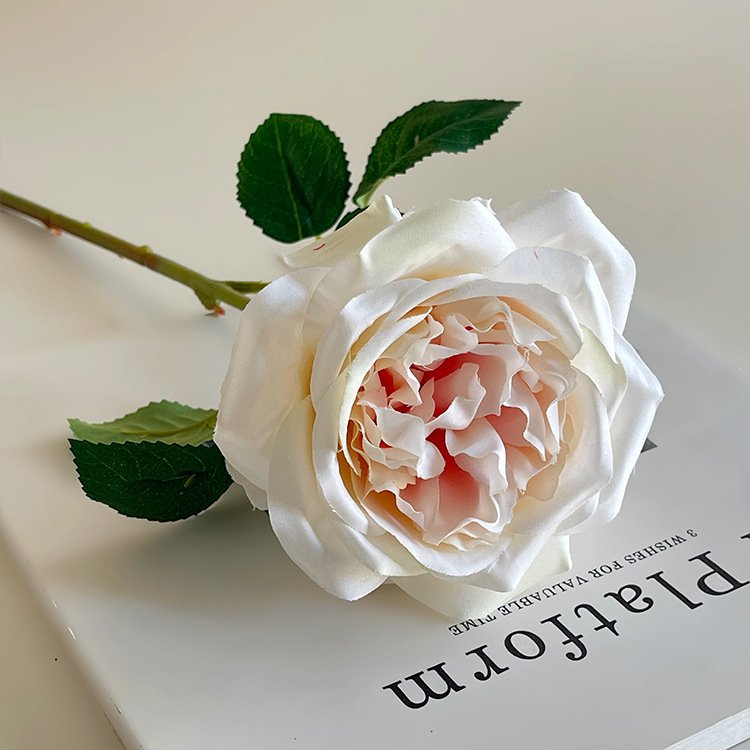
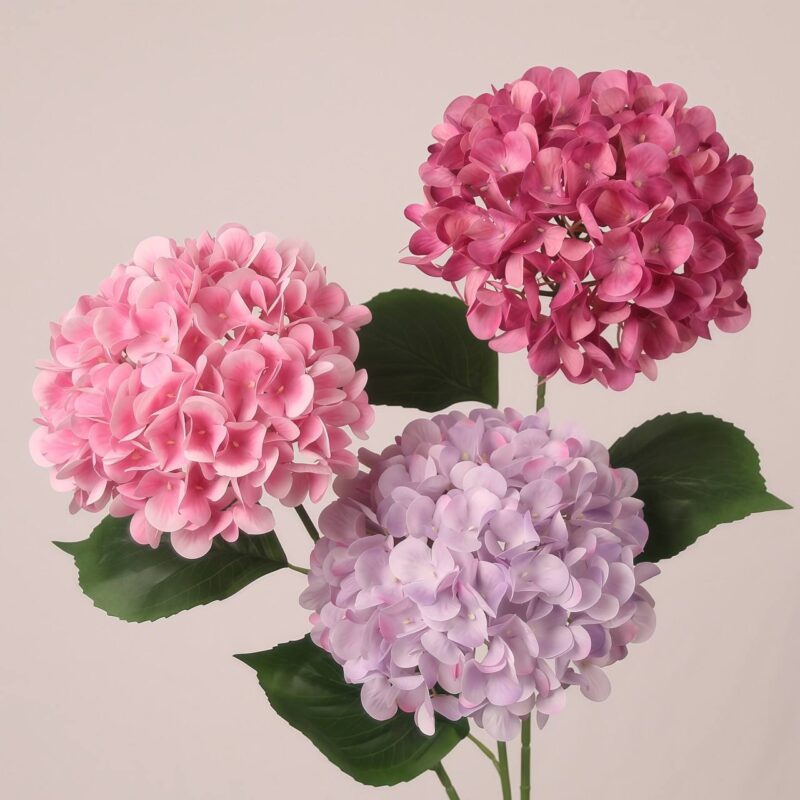
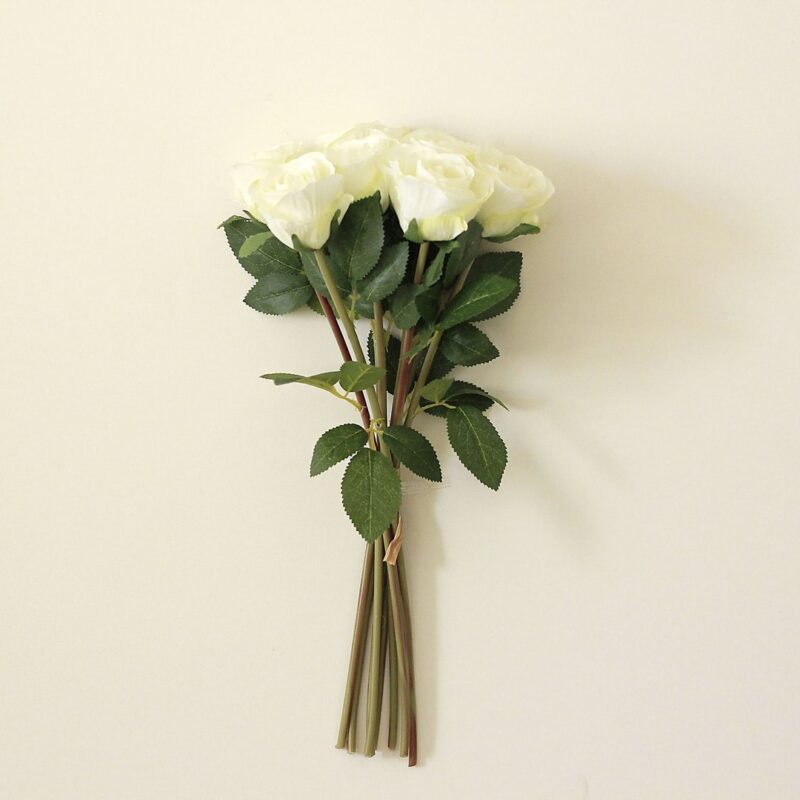
Open a box of faux flowers and they often look nothing like the photos. Petals are folded back, heads are pressed flat, and sprays lie tight against the stem. Here’s how to reshape artificial flowers without adding damage.
Short answer: check the flowers for real damage and take photos first. Then let them stand upright at room temperature and shape the petals gently by hand, starting at the base of each petal. Don’t use steam, a kettle, or a hairdryer unless the care instructions for that product say it’s safe. If you see cracked creases, a loose head, or a broken wire, stop and contact us with photos.
Why They Arrive Flattened
Artificial flowers are packed tightly so that cartons hold more stems and ship more efficiently. Heads get compressed, sprays get folded in, and bunches get sleeved.
Petals are made from different materials, such as fabric, coated, or foam petals, and pressure can leave a temporary set in many of them. Gentle handling often loosens it, but not every stem recovers the same way and not every mark is a shipping wrinkle. That’s why checking comes before shaping. For how cartons are packed, see our packaging guide.
Step 1: Check and Photograph Before You Shape
Our return and refund policy accepts quality claims within 7 days of delivery, and it asks for clear photos or videos of the item and the shipping label. It doesn’t cover damage caused after delivery. So record the condition first, then shape.
Photograph the carton and label before opening, especially if the box is crushed, wet, or torn.
Cut the carton, not the sleeve. Run the blade along the carton seam only. A blade pulled through a plastic sleeve can cut the petals underneath.
Lift by the stem, never by the head. Pulling a stem out by the bloom can loosen the head where it joins the stem.
Unsleeve one bunch at a time. Slide the sleeve up and off instead of tearing it down past the petals.
Look for real damage using the signs in the table below, and photograph anything that looks wrong before you touch it.
Stand the stems upright in a bucket or tall box at room temperature for a while before you judge them. Some stems relax on their own, and you’ll have less to do on the rest. How much they recover and how long it takes depends on the product, the packing, and how long they were in transit, so judge by what you see, not by a set time.
On the “30 to 60 minutes” figure. You will find that number in care guides, and it appeared in an earlier version of this page. We took it out, and we are not replacing it with a different number. A fixed time reads as a threshold — wait it out, then start work — when the actual signal is what the petals look like. A tightly packed carton that sat in transit for two weeks does not recover on the same clock as one that shipped in three days. If someone quotes us a resting time, it is out of date.
Step 3: Reshape Artificial Flowers by Hand
Hand shaping is the gentlest option. Go slowly.
Work from the outer ring inward. Hold each petal between your thumb and forefinger near its base, not its edge, and ease it outward in the direction it should sit. The base is usually where the fold formed. Pulling on the edge can stretch the petal without fixing the fold.
For multi-head sprays, separate the branches first, then the heads, then the petals.
Turn the stem as you go and look at it from a few feet away. A flower that looks right in your hand can still look flat from across the room.
Stop if a petal resists, the surface starts to crack or whiten, or a coating starts to peel. Forcing it further usually makes the mark permanent.
Step 4: Straighten Bent Stems Gently
A bent stem is a separate problem from a crushed head. Many artificial stems have a wire inside a plastic or fabric covering. If yours does, support the stem with both hands and ease the bend out a little at a time along its length rather than forcing it straight at one point. A sharp correction can split the covering or weaken the wire.
If a stem doesn’t bend easily, or you feel the wire kink, stop there.
About Steam and Hairdryers
Many online guides recommend steam or a hairdryer for reshaping faux flowers. We don’t recommend heat as a default step. Petals, coatings, foam, plastic parts, and glue joints vary from product to product. Heat can soften adhesive, warp plastic or coated parts, and cause burns, and damage caused after delivery isn’t covered by our return policy.
To be specific about what we are withdrawing, because an earlier version of this page said it: we no longer tell anyone to hold a stem near a garment steamer or a kettle, shape the petals while they are warm, and let them cool so the shape sets. That sequence assumes every product tolerates the same heat, and we cannot support that assumption across a catalogue that mixes silk, PU, foam, flocking and real-touch coatings on glued heads. If you have seen that advice attributed to us, it is withdrawn.
If the product page or the care instructions for your item cover heat, follow those instructions exactly. If they don’t, ask us before you try it, and include the product name or SKU.
Signs to Stop and Contact Us
What you see
What it usually means
What to do
A crease that has turned white or cracked
The petal fabric or coating is damaged
Don’t keep working it. Photograph it and contact us
A head that turns freely or is coming off the stem
The joint between the head and stem has failed
Set it aside and photograph it. Don’t glue it before contacting us
A wire core that is snapped or sharply kinked
The stem structure is broken
Photograph it and contact us
Color that has transferred between petals
Dye or color transfer
Photograph it and contact us
The same fault in the same place across many stems
Possible packing or production issue
Stop unpacking, photograph the carton and several stems, and contact us
Contact us within 7 days of delivery with clear photos or videos and the shipping label, as the return and refund policy sets out.
For Event and Wholesale Buyers
At volume, reshaping takes real labor time, and how much depends on the product and the packing. Two habits help:
Open and inspect at least one carton when the order arrives, even if the rest go straight into storage. Claims are accepted within 7 days of delivery, so a fault you find on delivery day can still be reported. The same fault found the week of the event may be too late.
Ask how the order will be packed before you place it, and allow time before the install day to unpack and shape.
If your timeline is tight, browse the US Stock collection and check the shipping information for current processing and delivery details.
Once everything is shaped and in place, see our faux flower care guide for dust, cleaning, and sunlight.
FAQ
How long should artificial flowers rest before you reshape them?
There is no fixed time, and we deliberately do not publish one. How much a stem recovers and how quickly depends on the product, how tightly it was packed and how long it was in transit — a carton that sat in transit for two weeks does not recover on the same clock as one that shipped in three days. Stand the stems upright at room temperature and judge by what the petals look like, not by a timer. An earlier version of this page gave a figure of 30 to 60 minutes; we removed it and are not replacing it with another number, so if a resting time is quoted as ours, it is out of date.
Can you use a garment steamer, a kettle or a hairdryer on artificial flowers?
Not as a default step, and we have withdrawn the advice we once published here. Our catalogue mixes silk, PU, foam, flocking and real-touch coatings on glued heads, so we cannot assume every product tolerates the same heat: heat can soften adhesive, warp plastic or coated parts, and cause burns. Damage caused after delivery is not covered by our return policy. If the product page or the care instructions for your item cover heat, follow those exactly; if they do not, ask us first and include the product name or SKU.
What should you do before you start reshaping flowers that arrived flattened?
Record the condition first. Our return and refund policy accepts quality claims within 7 days of delivery and asks for clear photos or videos of the item and the shipping label, and it does not cover damage caused after delivery. Photograph the carton and label before opening, cut along the carton seam rather than through the sleeve, lift stems by the stem rather than the head, and unsleeve one bunch at a time.
When should you stop reshaping and contact us instead?
Stop if a crease has turned white or cracked, if a head turns freely or is coming away from the stem, if the wire core is snapped or sharply kinked, if colour has transferred between petals, or if you find the same fault in the same place across many stems. Photograph it and contact us within 7 days of delivery rather than working it further or gluing it, because forcing a damaged petal usually makes the mark permanent.
About NB8 Floral
NB8 Floral supplies wholesale artificial flowers to florists, event professionals, and retailers in the US. Our guides are written from what we see in production, QC, and customer orders.
The most common way to end up disappointed with faux flowers is to buy too few. Six stems that looked generous in the product photo arrive, go into a vase, and produce something thin and apologetic th
Yes, you can almost always cut artificial flower stems, and most of them bend too. The part people get wrong is the tool. Scissors will crush a wire-cored stem into a flattened, split mess that never