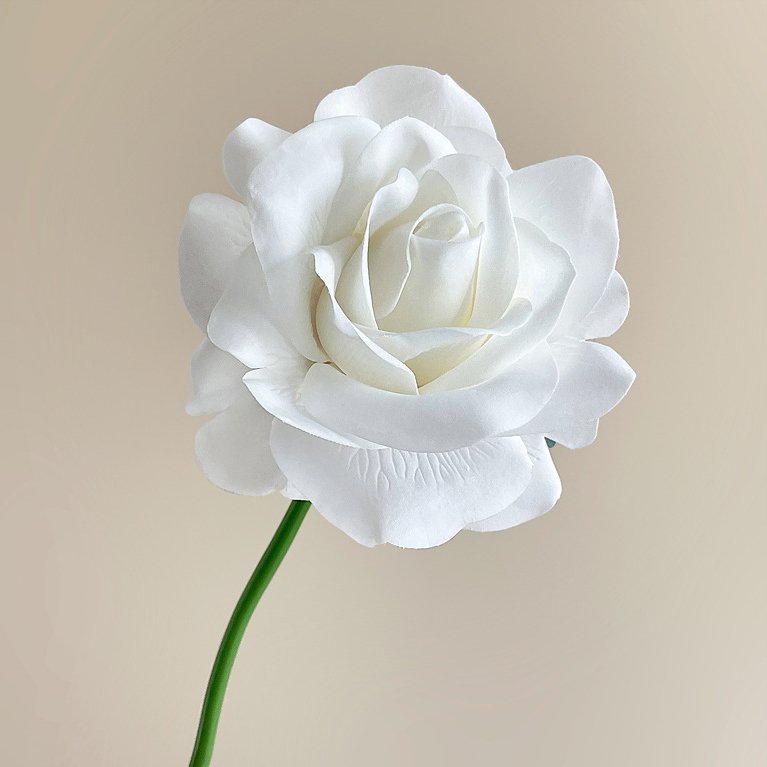
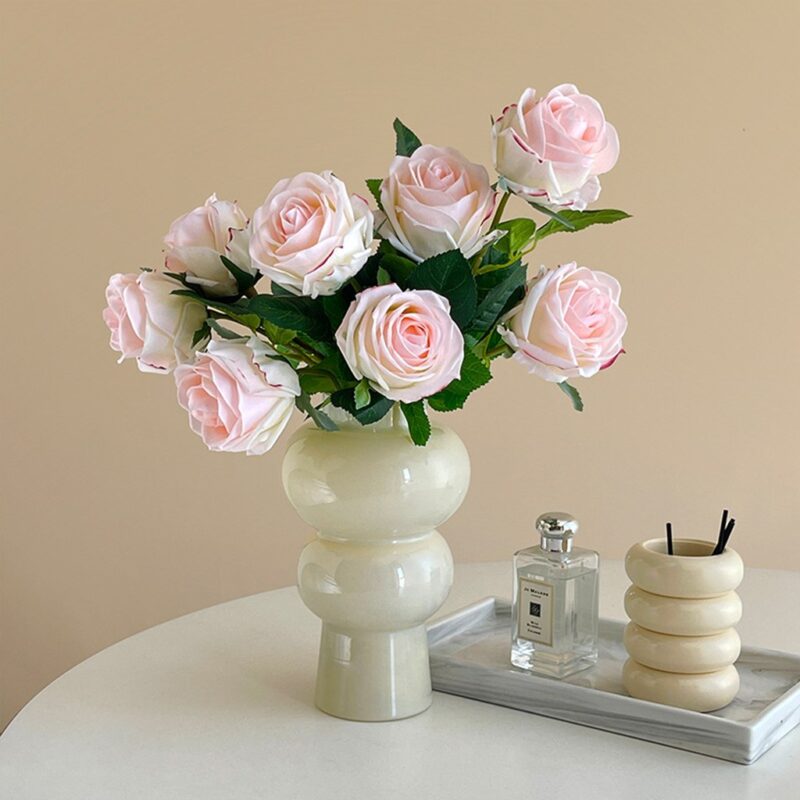
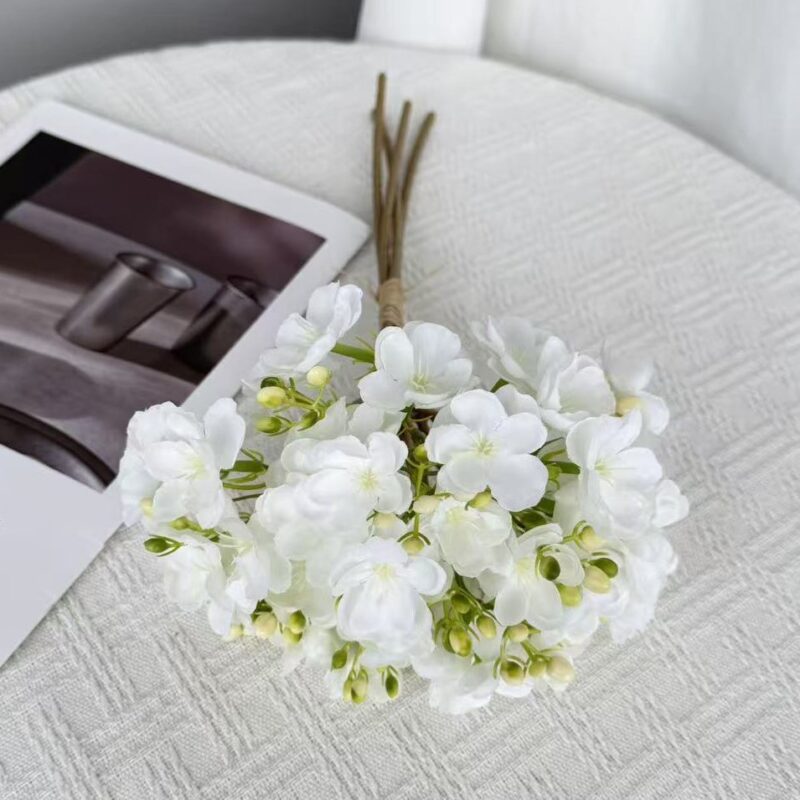
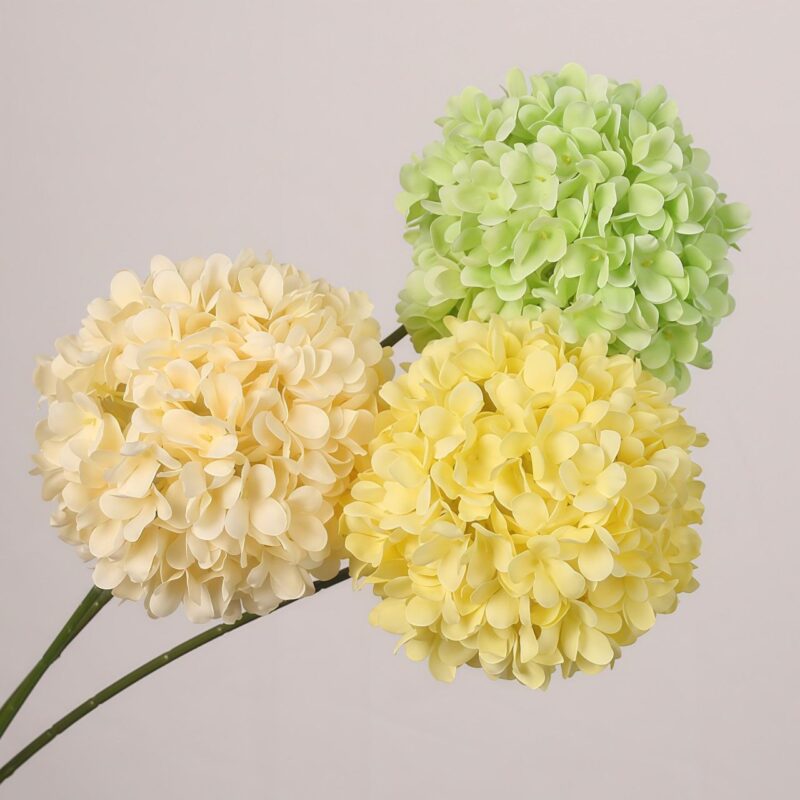
Artificial flowers make indoor styling easier, but outdoor exposure is a different requirement. A stem that looks excellent in a living room or wedding venue may not be made to withstand direct sun, rain, heat, wind, and repeated wet-dry cycles.
Think of this as the care card most faux flowers should come with: where to place them, how to clean them, how to reshape them, and when a product is simply the wrong choice for outdoors.
The Short Answer
Most faux flowers are indoor decor. Put them in a shaded, dry spot; dust them with a soft brush, microfiber cloth, or low cool airflow; and skip water, heat, and harsh cleaners unless the care card says otherwise. Sun, dust, handling, heat, humidity, and storage determine how long they keep looking good.
Can Artificial Flowers Be Used Outdoors?
They can be used outdoors only when the exact product and installation conditions support it. Direct sunlight can fade color; heat can change coatings, glue, fabric, and plastic; moisture can affect assembly; and outdoor dirt can make the surface age faster. Wind and frequent handling can add mechanical stress.
For an outdoor project, request the product-specific information before using words such as UV-resistant, colorfast, waterproof, or all-weather. Ask whether UV additives are used, which test standard and exposure period were used, whether a colorfastness method and grade are available, the recommended temperature and moisture conditions, and any warranty terms. A general claim about a material category is not enough.
Placement
Practical starting position
What to confirm
Indoor room, office, hotel, or venue
Suitable for most standard artificial flowers when kept away from harsh sun and heat
Cleaning method, shaped dimensions, and how the stem is secured
Covered porch or shaded entry
Use cautiously; exposure still varies with reflected light, wind, and moisture
Written supplier guidance and a sample trial in the real location
South-facing balcony or uncovered garden
Do not treat ordinary indoor stems as suitable by default
Documented outdoor performance for the exact SKU and local sample testing
Temporary outdoor event
Plan for the weather window, secure installation, and possible replacement pieces
Exposure duration, wind load, moisture, setup method, and recovery plan
How to Test Outdoor Performance Before a Large Order
When a project will receive unavoidable sun or weather, test a representative sample in the actual location before the bulk order. Photograph it in the starting condition, record the date and location, then inspect it at agreed intervals for color change, hardening, cracking, loose parts, and changes in shape. Compare a protected control sample at the same time.
This does not replace a qualified product test, but it prevents a generic lifespan promise from being used in a climate with different sun intensity, temperature, or moisture. Keep the test result with the SKU, color, and lot information.
How to Clean Artificial Flowers
Start dry and gentle. Support the flower head with one hand, then use a soft brush, clean microfiber cloth, or low, cool airflow to lift dust. Work around petal edges, leaf joins, and the flower center without pulling on glued parts or bending the stem sharply.
Fabric petals and detailed blooms: use dry dusting first; do not soak or scrub unless the care instructions specifically permit washing.
Non-porous plastic or coated surfaces: test a barely damp cloth on an inconspicuous area before using it more broadly.
Commercial reuse: agree on a cleaning method and test it on a sample before purchasing for repeated events, rentals, or displays.
Avoid bleach, solvents, abrasive pads, strong sprays, high heat, and steam unless the exact product care guidance allows them. Those methods can affect fabric, printed color, coatings, glue, and plastic.
What If the Flowers Arrive Compressed?
Compact packing is not automatically a quality failure. Before reshaping a wholesale or event order, photograph representative pieces in their delivered condition. Then separate petals gently from the center outward, open leaves gradually, and adjust the stem a little at a time. Use the approved sample or reference image as the target shape.
Do not apply high heat or steam unless the product instructions expressly allow it. Heat can permanently change finishes and assembly. If a representative product does not recover with the agreed preparation method, record the SKU, carton, quantity, and photos before distributing the order. The Artificial Flower Quality Inspection Checklist can guide this receiving process.
Odor, Bedrooms, and Safety-Sensitive Spaces
Opening a sealed carton may reveal a temporary packaging or material odor. Ventilate the product in a well-aired space and inspect the actual item. Do not use a general phrase such as “eco-friendly” as a safety guarantee for a nursery, pregnancy, or people with sensitivities.
For a safety-sensitive placement, request the product material declaration, applicable compliance documentation for the intended market, and written care instructions before purchasing. If an odor is strong, persistent, or causes discomfort, keep the product out of the intended room and contact the supplier. Keep any product with loose small parts or exposed wire away from children.
How Long Do Artificial Flowers Last Indoors?
Indoor longevity is controlled by the exact materials and conditions. Direct sun, heat sources, dust, cooking residue, smoke, humidity, handling, and storage can each affect color, surface finish, shape, or assembly. A protected home display normally has different demands from a window display or an event-rental inventory.
Rather than promise one number for every artificial flower, ask for a product-specific expected indoor-use range and the conditions used to define it. Keep displays away from direct sun and heat, dust them regularly, avoid damp storage, and reserve spare stems when a long-running display needs visual consistency. For a materials overview, visit the Artificial Flower Materials Guide.
Bottom Line
Keep everyday faux flowers indoors, dust them gently, and reshape them with your hands—not heat. If you need outdoor performance or washability, get that answer for the SKU you are buying. Still choosing material? Start with Real Touch vs. Silk vs. PU Flowers.
For a project sample that needs to be checked in its real environment, REQUEST SAMPLES.
FAQ
Will artificial flowers fade in the sun?
They can. Sun exposure can affect color and material condition, and performance varies by SKU and environment. Confirm documented outdoor guidance and test a sample when the exposure is important.
Can I wash faux flowers with water?
Only if the specific product care instruction allows it. Dry dusting is the safer default because water can affect fabric, glue, printed color, and some surface finishes.
NB8 Floral supplies wholesale artificial flowers to florists, event professionals, and retailers in the US. Our guides are written from what we see in production, QC, and customer orders.