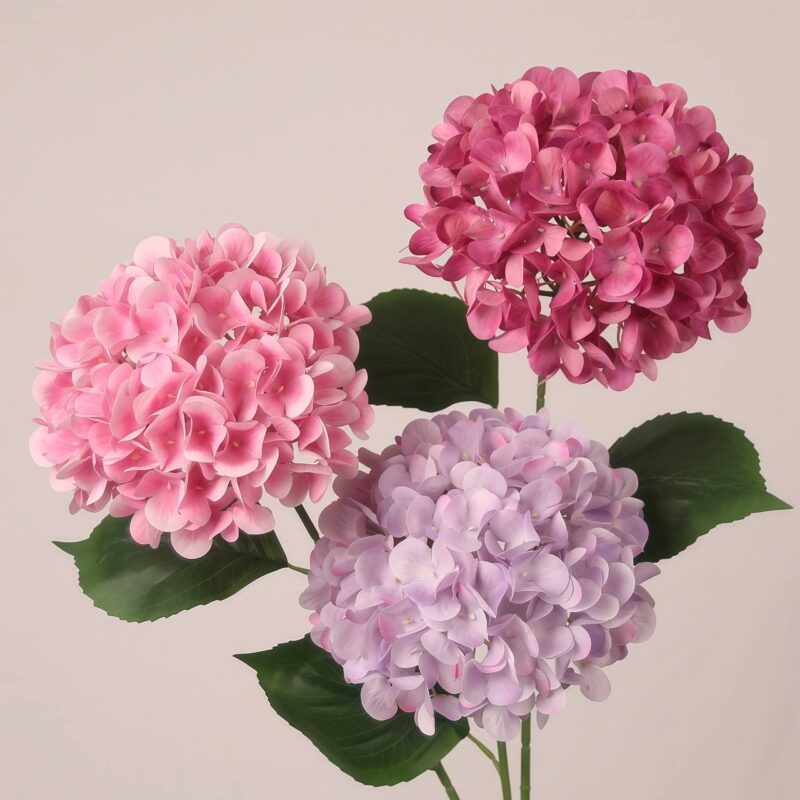
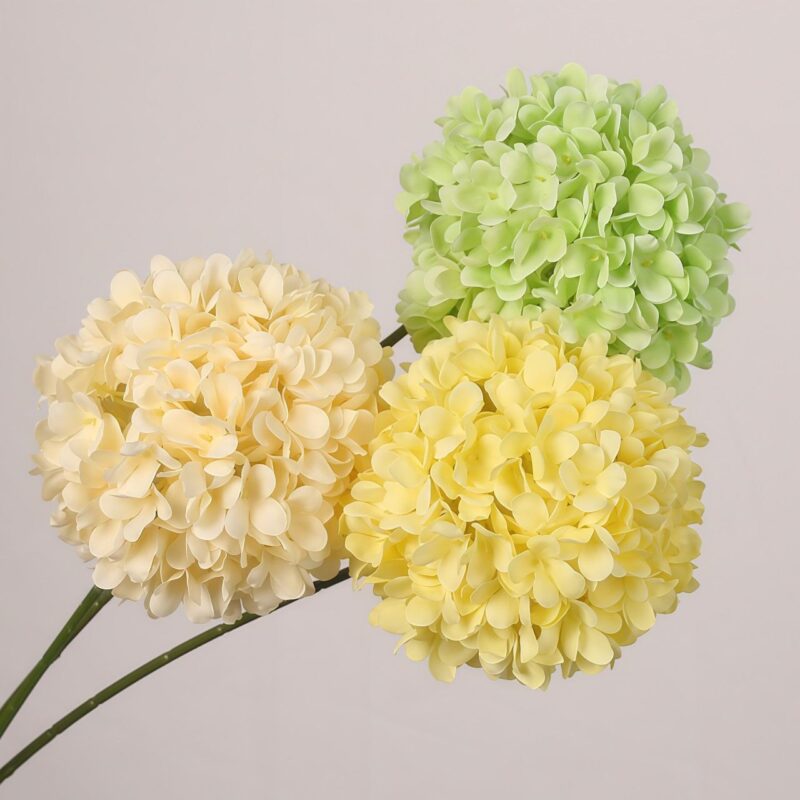
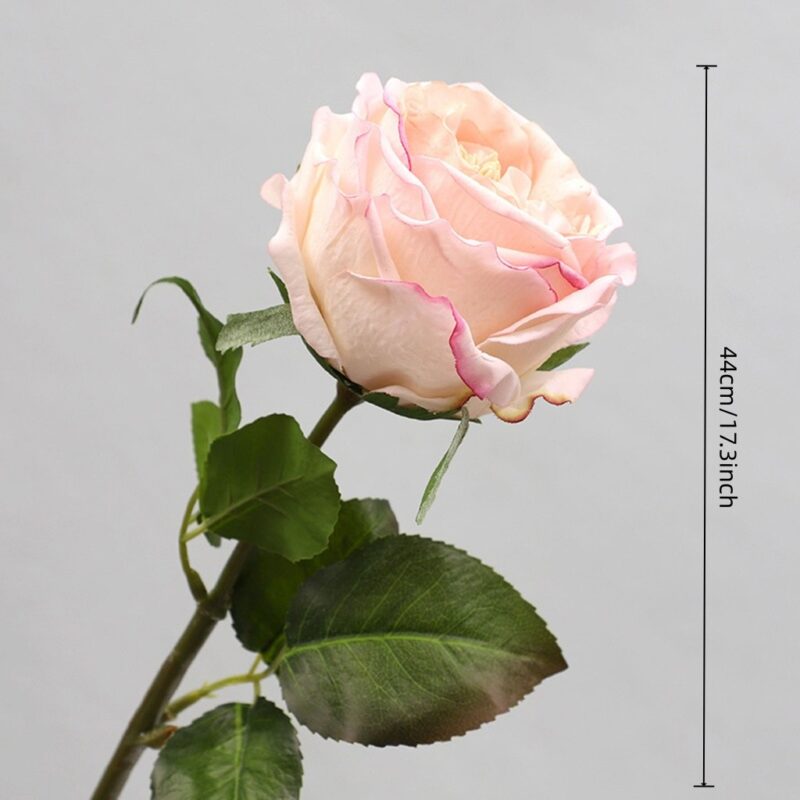
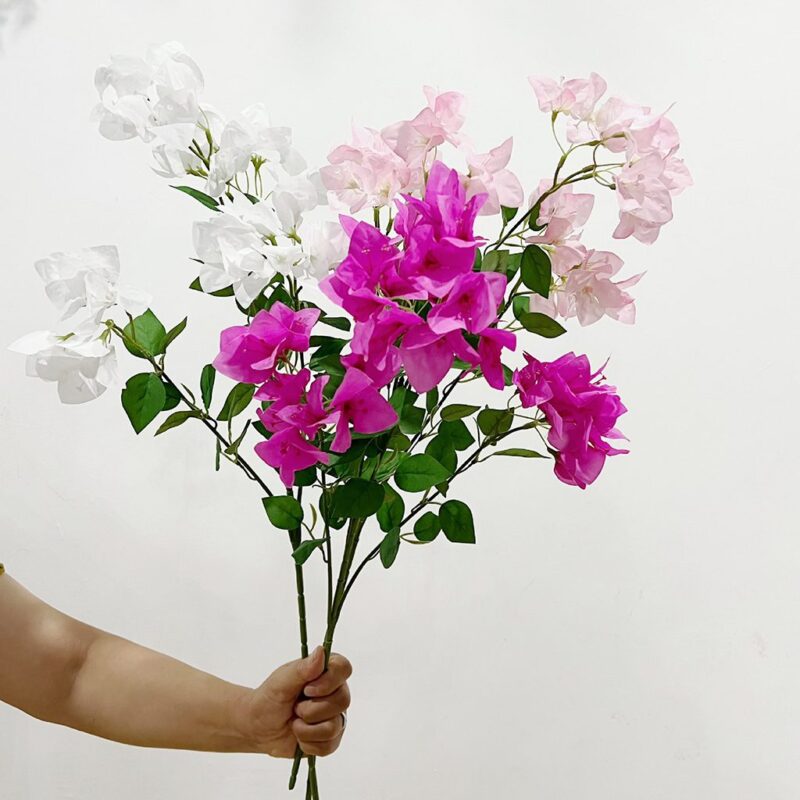
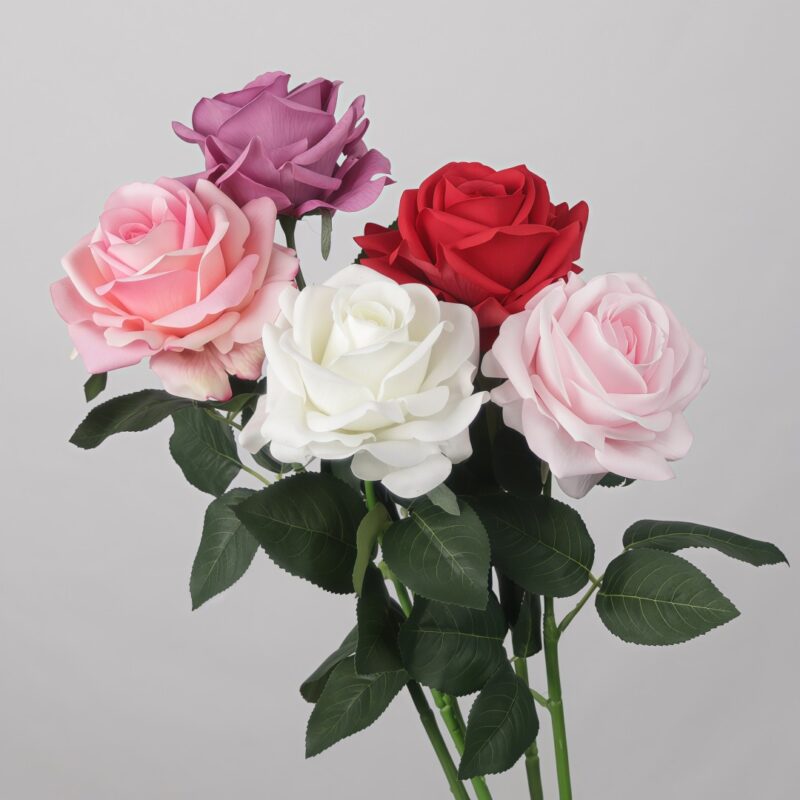
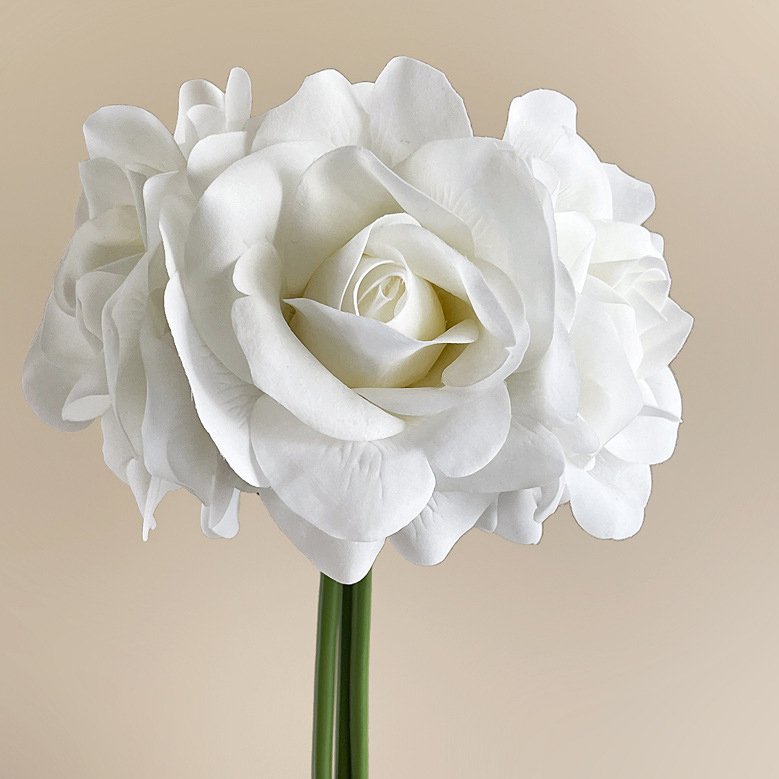
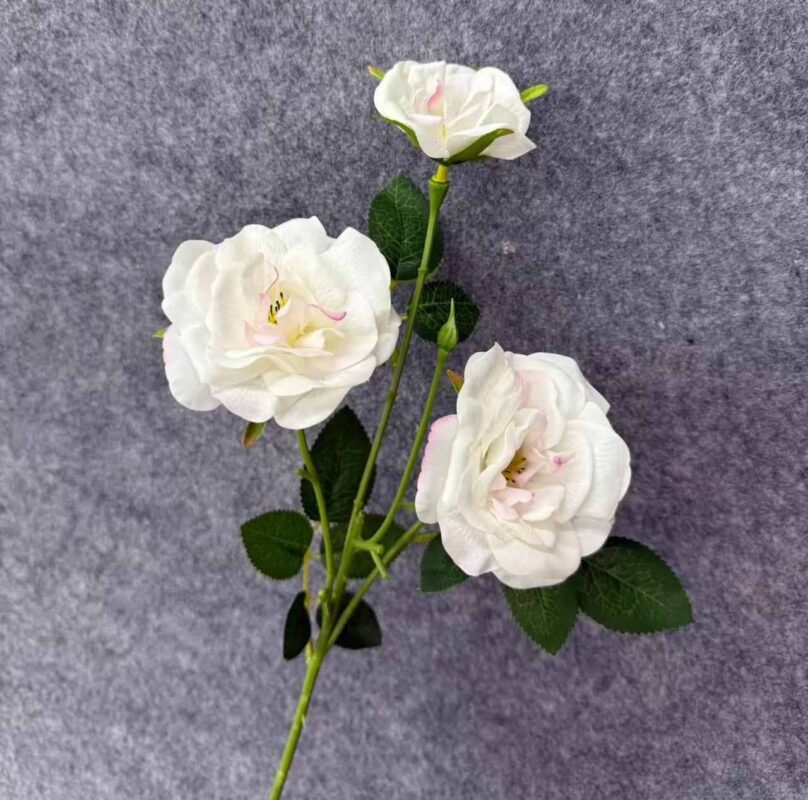
Premium faux flowers should earn their price at the distance where they will actually be seen. A flower on a high shelf can succeed with a simple construction. A stem in a clear vase on a dining table has to withstand close viewing, daylight, handling, and comparison with real flowers.
Here is how to compare them in a store or at home: put both stems in the same vase, stand three feet away, then get close. The better stem should still look good from both distances.
The Short Answer
Silk-style flowers are light and flexible. Real-touch flowers feel softer. Latex can give petals a lovely soft finish, but check the seams, smell, and care notes. Premium stems cost more because the flower head, petal edge, color, leaves, stem, and packing are simply better made. The winner is the stem that still looks believable in your own vase and lighting.
Silk-Style, Real Touch, Latex, and Plastic: What Is the Difference?
Most faux flowers are mixed-material products. A single stem may include fabric-like petals, a plastic center, wire in the stem, molded leaves, glue, and a surface finish. The labels below describe common buying categories; they are not a guarantee that every flower in the category looks or performs the same way.
Category
Common strengths
Close-view checks
Silk-style or fabric-style
Lightweight, flexible, and available in many colors and forms
Petal edge, fraying, sheen, color depth, and how the bloom moves
Designed to create a softer or more natural-feeling petal surface
Actual material, texture, flexibility, surface finish, odor, and recovery after handling
Latex or latex-finish
Can create a soft, substantial petal feel and molded detail
Seam visibility, surface tackiness, heat response, storage guidance, and possible sensitivity concerns
Plastic
Useful for stems, centers, leaves, greenery, and structural parts
Gloss, molding seams, brittle areas, and whether the finish suits the viewing distance
“Silk” in modern faux florals often means fabric-style, not necessarily natural silk. “Real touch” is a performance description, not one fixed chemical formula. “Latex” may also describe different formulations or finishes. If allergies, pets, children, or a sensitive indoor environment are a concern, request the exact material declaration and care guidance for the SKU rather than relying on the category name.
Which Faux Flowers Look Most Like Real Flowers in a Vase?
For a vase on a console, dining table, or coffee table, assess the whole stem—not only the flower face. Check the petal edge, flower center, leaf surface, color variation, stem diameter, and the transition between flower head and stem. Then put the sample in the actual vase and view it at seated height, standing height, daylight, and evening lighting.
For touch: premium real-touch or latex-finish flowers may feel more convincing when a guest handles the petals.
For photography and room-distance realism: a high-quality silk-style flower can be highly effective when its color, edge, and movement are natural.
For greenery and structure: plastic can be practical, but avoid a glossy finish where it will be viewed closely.
The $15–$30 and $2–$5 price bands are useful shopper examples, not universal market prices. Two similar-looking stems can cost very differently because the more expensive product may include a more complex head, a cleaner surface finish, more controlled color, a stronger stem, a higher inspection standard, or packing that protects delicate petals.
Flower-head construction: layered components, a believable center, secure attachment, and clean joins are more demanding than a flat or simple head.
Surface detail: petal thickness, molded texture, leaf veining, edges, and controlled gloss all affect close-view realism.
Color finishing: compare color transitions and any documented finishing method; do not infer a number of dye or paint layers from a photo.
Stem construction: wire core, wrapping, joint quality, and the way the head is secured affect styling and repeated handling.
Consistency and packing: predictable color and shape across stems, plus protection during shipping, reduce surprises in a finished vase arrangement.
Ask for Evidence, Not Marketing Words
If a supplier claims that one faux flower is premium, ask for an approved sample and a product-specific specification. Useful fields include the actual petal, leaf, stem, and coating materials; total length and shaped spread; flower-head construction; stem core and bending guidance; cleaning limits; packaging method; and the defined inspection standard.
For a technical comparison, a supplier may also be able to provide measured leaf-vein detail, fabric weight, color-finishing specification, head-attachment test method and result, coating specification, or a documented visual review protocol. These are not universal standards and should never be invented. If the data is unavailable, use a physical sample and a clear acceptance checklist instead.
Bottom Line
Pay more when you can see the difference: a believable center, clean petal edges, natural color, a stem that bends well, and a finish that looks right in your light. Put samples in the vase before you commit.
Before buying a full arrangement, compare the material, color, and scale in person. REQUEST SAMPLES.
FAQ
Are latex flowers more realistic than silk flowers?
Not automatically. Latex-finish flowers may feel more natural to touch, while high-quality silk-style flowers may look more natural in a photograph or from room distance. Compare the exact product in your actual lighting.
What should I check before paying more for a faux flower?
Check the petal edge, flower center, leaf finish, color depth, stem construction, head security, packing recovery, cleaning instructions, and the way the stem looks in your planned vase.
NB8 Floral supplies wholesale artificial flowers to florists, event professionals, and retailers in the US. Our guides are written from what we see in production, QC, and customer orders.
The most common way to end up disappointed with faux flowers is to buy too few. Six stems that looked generous in the product photo arrive, go into a vase, and produce something thin and apologetic th
What silk, real touch, PU, EVA, PE and PVC artificial flowers are really made of, what each costs per stem, and the questions that matter more: sunlight, heat, venue fire rules, chemicals and latex.
Be the first to know about new arrivals, special offers and early sale access. New here? Stretch the possibilities. Get 20% off your first online order of full-priced items when you sign up. Exclusions apply.