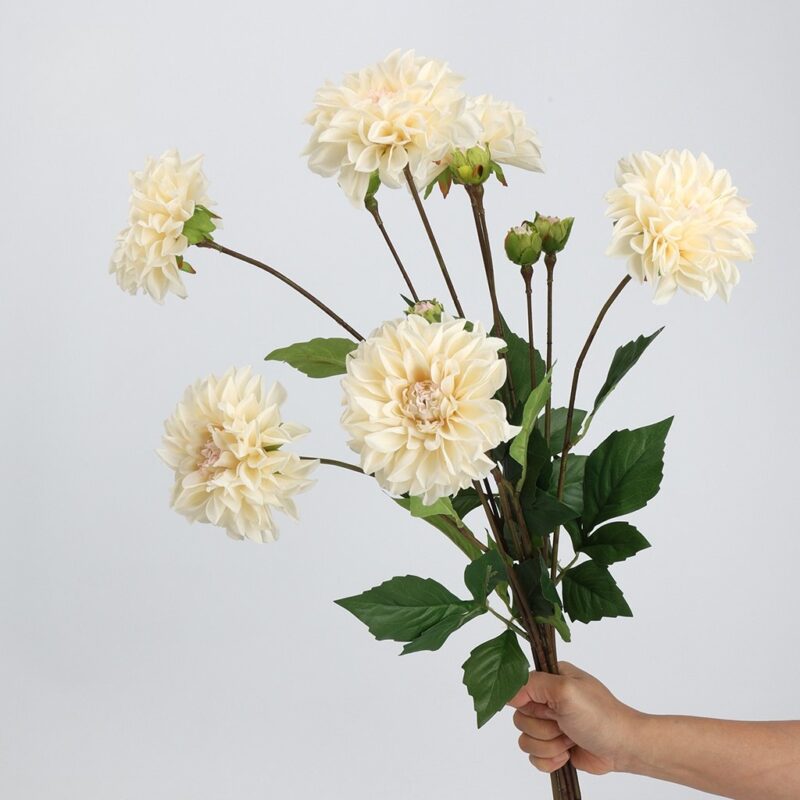
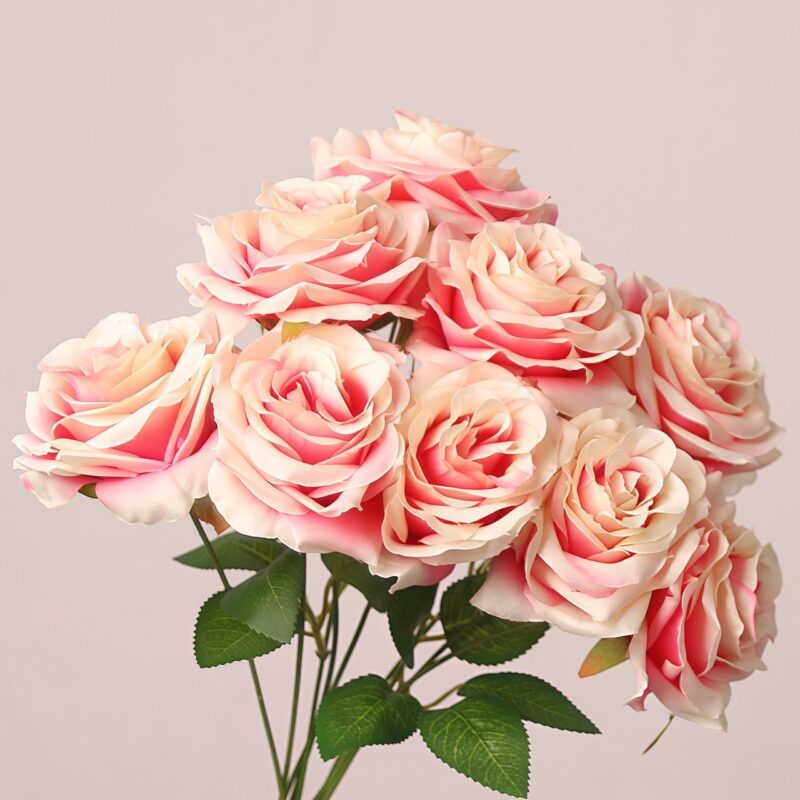
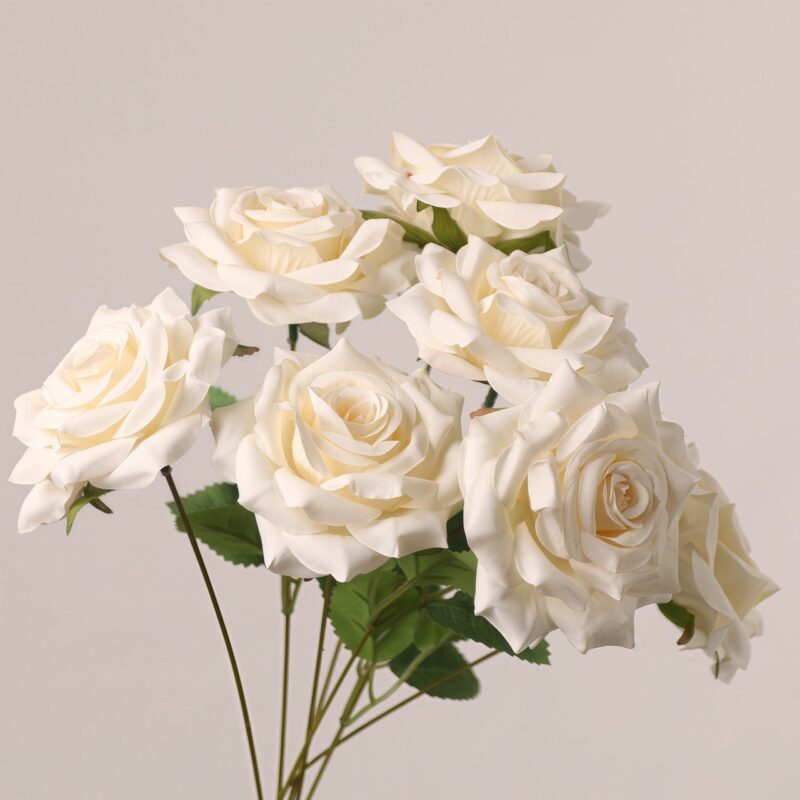
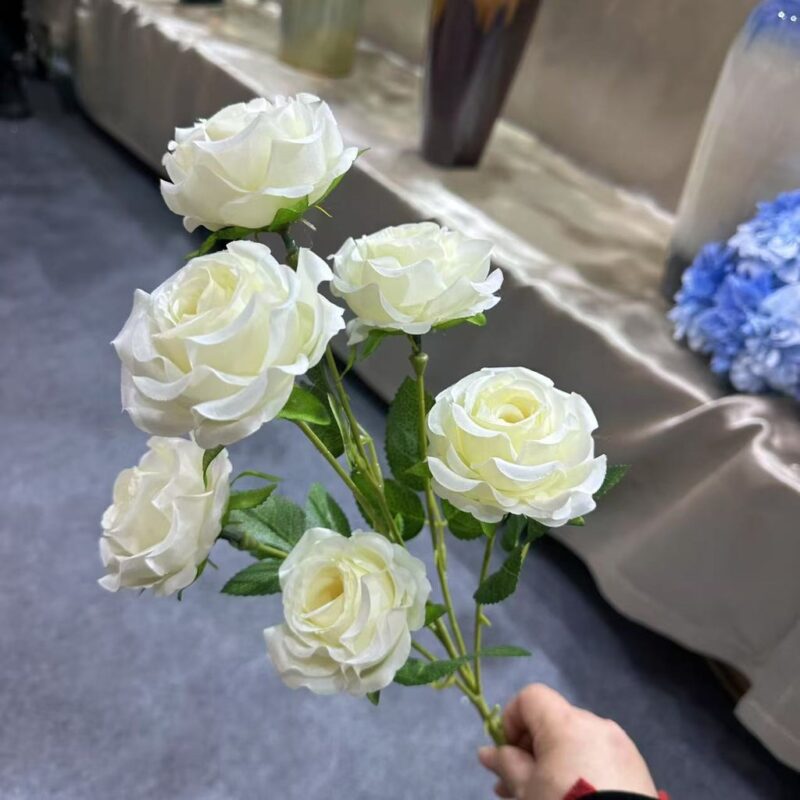
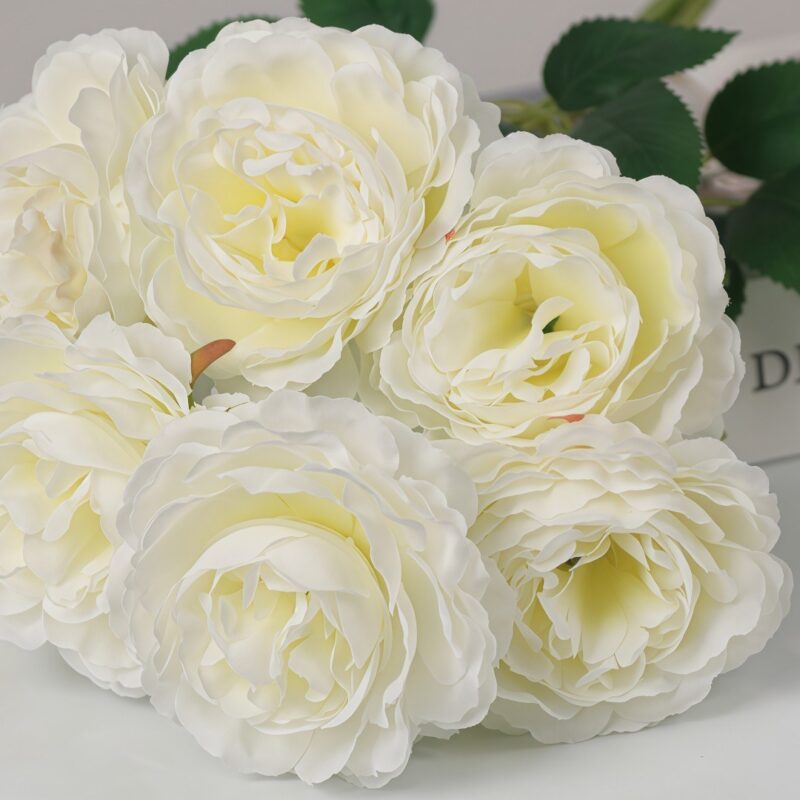
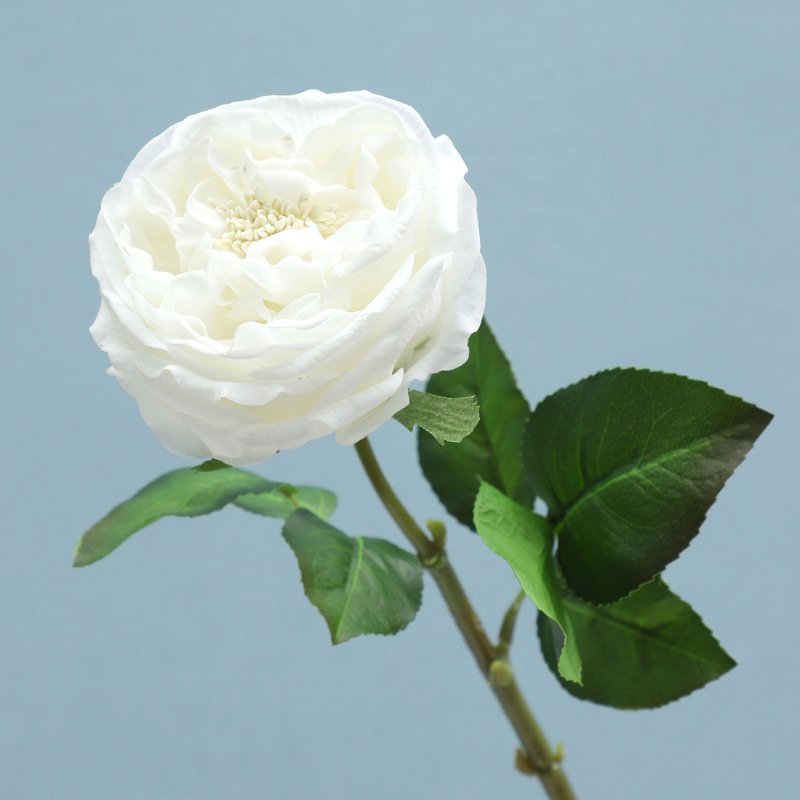
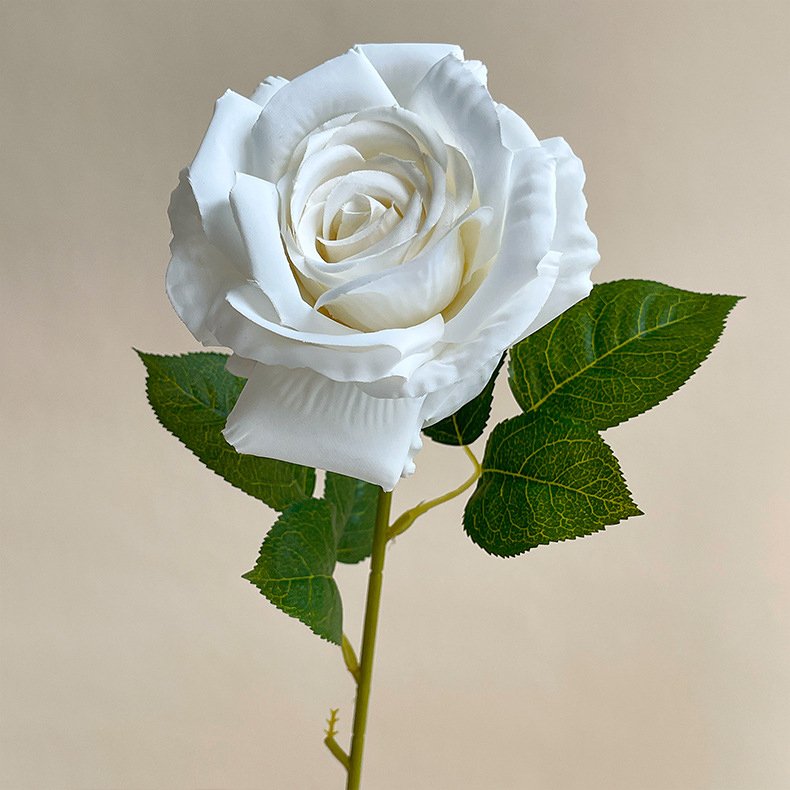
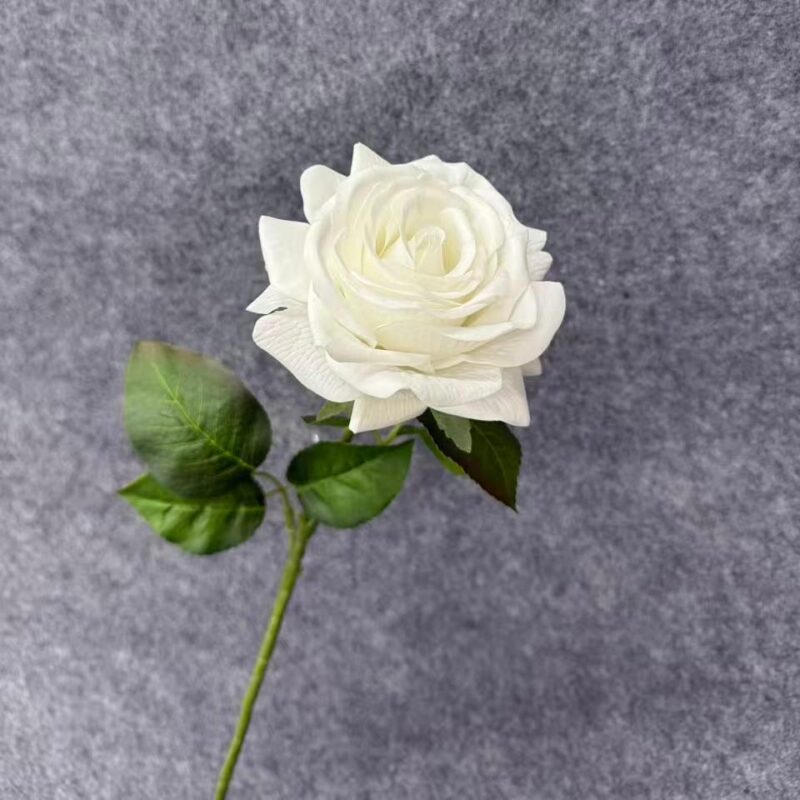
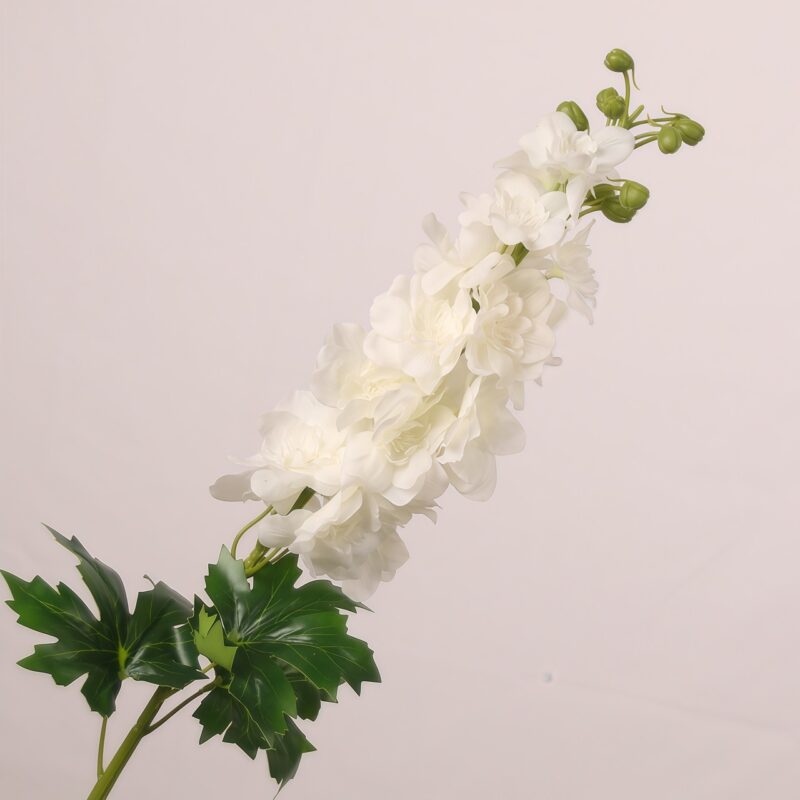
Artificial flower materials affect almost every part of a floral project: how realistic the flowers look, how they feel, how heavy they are, how they pack, how they photograph, and where they should be used. A flower that works well in a ceremony arch may not be the best choice for a bridal bouquet. A lightweight stem that is practical for a large installation may not have the close-up texture needed for a premium centerpiece.
For wedding planners, florists, decorators, retailers, home decor buyers, and wholesale customers, understanding artificial flower materials makes buying easier. It helps buyers compare silk-style flowers, real touch flowers, PU flowers, plastic greenery, foam flowers, and mixed-material stems before placing a larger order.
NB8 Floral has worked in the artificial flower industry for more than 20 years, and material selection is one of the most common reasons buyers request samples before ordering. Photos can show color direction and flower shape, but materials determine the real handling experience.
Why Artificial Flower Materials Matter
Artificial flowers are not all made the same way. Two roses can look similar in a product photo but feel different in hand. Two peonies can have similar colors but different petal softness, stem weight, and packing behavior. Two greenery stems can both look lush from a distance but perform differently in an arch, vase, wall panel, or retail display.
Material affects:
- Close-up realism.
- Petal texture and softness.
- Stem flexibility.
- Weight and shipping efficiency.
- Color appearance under different lighting.
- How the flower holds shape after packing.
- Whether the style works better for bouquets, centerpieces, arches, walls, or background decor.
This is why buyers should choose artificial flowers by use case, not only by flower name.
Common Artificial Flower Materials
Most artificial flowers use a combination of materials. A single stem may include fabric petals, plastic centers, wire inside the stem, plastic leaves, coating, glue, and wrapped surface details. The terms below describe common material categories buyers may see when comparing faux flowers.
Silk-Style Artificial Flowers
Silk-style flowers are among the most common artificial flowers. In modern use, “silk flowers” usually means fabric-style artificial flowers, not necessarily flowers made from real silk. These flowers are often lightweight, flexible, and available in many flower types and colors.
Silk-style flowers are useful for:
- Bouquets.
- Centerpieces.
- Flower walls.
- Ceremony arches.
- Retail displays.
- Seasonal home decor.
- High-volume event decor.
The main advantage of silk-style flowers is versatility. They can create volume without too much weight, which is useful for large installations and wholesale orders. They also often come in broader color selections than more specialized materials.
The limitation is that quality varies. Some silk-style flowers look soft and layered, while lower-quality options may look flat, shiny, or thin. For close-up designs, buyers should check petal shape, edge finishing, color blending, and whether the flower looks natural from normal viewing distance.
Browse NB8 Floral artificial flowers to compare different flower styles, colors, and materials.
Real Touch Flowers
Real touch flowers are artificial flowers designed to feel more natural than many standard faux flowers. They may have soft, flexible, or slightly lifelike petals depending on the flower type and construction.
Real touch flowers are often a strong choice for:
- Bridal bouquets.
- Bridesmaid bouquets.
- Premium centerpieces.
- Sweetheart tables.
- Welcome signs.
- Close-up event photos.
- Home decor arrangements viewed at eye level.
- Retail displays where customers may touch the product.
Real touch does not mean every flower feels exactly like a fresh flower. It also does not mean every real touch flower uses the same material. Some feel soft and flexible. Some have thicker petals. Some have a coated finish. Some are more realistic visually than they are tactile.
For buyers who need close-up realism, real touch flowers are worth comparing through samples. This is especially important for weddings, premium event decor, and wholesale buying.
For a deeper explanation, read the Real Touch Flowers Guide or browse the real touch flowers collection.
PU Flowers
PU flowers are artificial flowers made with polyurethane or PU-style materials. They are often used when buyers want a molded, soft, or more structured petal feel. PU construction can help create certain realistic textures, but it can also change the weight, flexibility, and cost of the flower.
PU flowers may be useful for:
- Close-view floral designs.
- Premium arrangements.
- Small accent flowers.
- Wedding details.
- Realistic flower heads.
- Designs where texture matters.
The key is to compare the specific product, not only the material name. A PU flower can look refined when the shape, color, and finish are well made. It can also feel too heavy or too firm for some arrangements if the project needs lightweight volume.
For wholesale buyers, PU flowers should be checked for color consistency, petal thickness, packing behavior, and how well the flower recovers after shipping.
Plastic Greenery And Leaves
Plastic is often used for greenery, leaves, stems, centers, and structural parts of artificial flowers. Plastic greenery can be practical because it can hold shape, support volume, and handle repeated use better than very delicate materials in some applications.
Plastic greenery is useful for:
- Background volume.
- Ceremony arches.
- Garlands.
- Wall installations.
- Retail displays.
- Outdoor-style event decor where close-up realism is less critical.
- Mixed arrangements that need structure.
The risk is shine. If plastic greenery has a very glossy surface, it may look less natural in photos or strong lighting. Better greenery often balances shape, color variation, leaf size, and finish.
When choosing greenery, check whether it will be used close to guests or mainly as background volume. Close-view table arrangements may need more realistic leaves, while large arches or wall designs may prioritize fullness and structure.
NB8 Floral artificial greenery and floral stems can be planned together with US stock or pre-order options depending on timing and quantity.
Foam Flowers
Foam flowers are lightweight and can be useful for certain craft, display, and decorative uses. They may work well when buyers need soft shapes, light weight, or budget-friendly volume. However, foam flowers may not always be the best choice for luxury close-up wedding designs if petal texture and natural movement are important.
Foam flowers may be useful for:
- DIY decor.
- Props.
- Large visual volume.
- Craft projects.
- Lightweight installation accents.
- Displays where flowers are not viewed closely.
Buyers should check the surface texture, edge quality, color depth, and whether the foam compresses during packing. Foam can be practical, but it should match the design goal.
Mixed-Material Artificial Flowers
Many high-utility artificial flowers are mixed-material stems. For example, a flower may have fabric petals, a plastic center, wire-supported stems, plastic leaves, and a wrapped outer stem. Greenery may combine plastic leaves with wired branching. A bouquet stem may mix real touch flower heads with fabric fillers and plastic foliage.
Mixed-material construction is not a problem. In many cases, it is the most practical option. The real question is whether the finished flower works for the project.
When reviewing mixed-material flowers, ask:
- Does the flower look natural from the viewing distance?
- Does the stem bend or hold shape as needed?
- Do the leaves match the flower quality?
- Is the flower too heavy for the arrangement?
- Does the material recover after packing?
- Does the color match the design palette?
Material Comparison By Use Case
Different projects need different material priorities.
For bridal bouquets, choose materials that look realistic in close-up photos. Real touch flowers, premium silk-style flowers, and carefully selected mixed stems can all work. The key is to request samples and check the flowers beside dress fabric, ribbon, bridesmaid colors, and natural light.
For centerpieces, material choice depends on viewing distance. Guest tables are close-view areas, so petal quality, leaf finish, and color softness matter. Tall centerpieces may use premium flowers near eye level and more economical fillers higher or deeper in the arrangement.
For ceremony arches, flower walls, and large installations, weight and volume matter. Silk-style flowers, greenery, fillers, and mixed stems can create a full look without making the structure too heavy. Real touch flowers can be placed in front-facing or close-view areas.
For retail displays, materials should balance shelf appeal, durability, and price point. Buyers may need a mix of premium close-up flowers, colorful silk-style stems, greenery, seasonal styles, and sample-friendly options.
For home decor, buyers should think about room lighting, vase height, viewing distance, and color palette. A flower that looks realistic in a living room may not need the same material as a wedding bouquet, but it still needs good shape and color.
For wholesale orders, buyers should compare material, packing, replacement risk, color consistency, carton quantity, and whether samples match the bulk order.
How To Choose Materials For Weddings
Wedding flowers are photographed often and viewed in many settings. A bridal bouquet may be seen in detail, while a ceremony arch may be viewed from several feet away. This means one wedding can use several material levels.
A practical wedding material plan may include:
- Real touch or premium silk-style flowers for bouquets.
- Realistic focal flowers for centerpieces.
- Silk-style flowers and greenery for arches.
- Lightweight fillers for ceiling or wall installations.
- Durable greenery for transport between ceremony and reception areas.
- Sample-reviewed flowers for color-sensitive areas.
For more wedding planning detail, read the Wedding Artificial Flowers Guide.
How To Choose Materials For Wholesale Buying
Wholesale buyers should treat material as part of the sourcing decision, not just a product detail. The material affects the customer experience, return risk, shipping cost, and repeat buying potential.
Before buying artificial flowers wholesale, confirm:
- What material is used for petals, leaves, and stems.
- Whether the product is close-view or background-use.
- Whether samples are available.
- Whether the bulk order matches the sample.
- Whether the material can handle packing and reshaping.
- Whether the color is stable across cartons.
- Whether the flower fits the target buyer: wedding, retail, event, home decor, or resale.
Read the Wholesale Artificial Flowers Buying Guide for a broader buying process.
Why Samples Are Important
Samples are one of the best ways to reduce material risk. A product page can show color and shape, but a sample helps buyers check feel, size, flexibility, finish, and how the flower looks in real lighting.
Samples are especially important when:
- The project is color-sensitive.
- Flowers will be photographed close up.
- The buyer is choosing between silk-style and real touch flowers.
- The order is for a wedding or premium event.
- The buyer is preparing a wholesale purchase.
- The material must match existing inventory or decor.
Use REQUEST SAMPLES before larger orders when color, texture, and scale need to be confirmed.
How Lighting Changes Material Appearance
Artificial flower materials can look different under natural light, warm indoor lighting, cool LED lighting, camera flash, or venue lighting. A white flower may look ivory in warm light. A blush flower may look peach beside certain fabrics. Glossy greenery may reflect more light than expected.
Before confirming a large order, test samples in the environment where the flowers will be used. For weddings, compare samples with table linens, dresses, ribbons, candles, backdrops, and venue lighting. For retail, compare samples under store lighting. For home decor, check the room where the flowers will actually sit.
Common Material Mistakes To Avoid
Avoid choosing artificial flowers by photo alone when the project is important. Photos help, but they cannot fully show petal feel, weight, stem flexibility, or packing recovery.
Avoid using premium materials everywhere in a large installation when only some areas will be seen closely. Use better materials in close-view zones and practical volume materials in background areas.
Avoid assuming all silk flowers, real touch flowers, or PU flowers are the same. Material names are helpful, but product quality depends on construction, color, shape, finish, and use case.
Avoid skipping samples for wholesale orders. A sample can prevent expensive mismatch problems later.
Avoid choosing flowers without thinking about transport, installation, and storage. Some materials are easier to reshape and reuse than others.
How NB8 Floral Helps Buyers Compare Materials
NB8 Floral supplies artificial flowers for weddings, events, retail displays, home decor, and wholesale buying. With more than 20 years of industry experience, NB8 Floral understands that buyers need more than attractive product photos. They need clear material comparison, realistic use-case guidance, sample support, stock timing, and wholesale planning help.
Start with the project goal. Decide whether the flowers need close-up realism, lightweight volume, durable greenery, broad color selection, or wholesale consistency. Then compare materials and request samples before confirming a larger order.
If you need help planning a wholesale assortment, event project, or floral buying process, review NB8 Floral partner support options and compare available artificial flower collections.
FAQ
What are the most common artificial flower materials?
Common artificial flower materials include silk-style fabric, real touch materials, PU, plastic greenery, foam, wire, wrapped stems, and mixed-material construction.
Are silk flowers made from real silk?
In modern artificial flower buying, “silk flowers” usually means fabric-style artificial flowers. They are not always made from real silk. Buyers should check the actual product material and sample quality.
Are real touch flowers better than silk-style flowers?
Real touch flowers are often better for close-up realism and petal feel, while silk-style flowers are often lighter, more versatile, and available in broader color selections. Many projects use both.
What material is best for wedding bouquets?
Real touch flowers and premium silk-style flowers are both strong options for wedding bouquets. Buyers should request samples and check color, texture, weight, and photo appearance before finalizing the bouquet plan.
What material works best for large flower installations?
Large installations often use silk-style flowers, plastic greenery, fillers, and mixed-material stems for volume and structure. Premium real touch flowers can be placed in close-view or front-facing areas.
Should I order samples before choosing artificial flower materials?
Yes. Samples help confirm color, texture, petal finish, stem flexibility, scale, and packing recovery before a larger wedding, event, retail, or wholesale order.
Flowers mentioned in this guide
- Real Touch Flowers — Real Touch Freesia – B-GZWH5008, Real Touchdelphinium TY10002, Real Touch Anthurium – ZX1002, Real Touch Anthurium – DFHY3009
- Greenery — Real Touch Eucalyptus – ZX2008, Silk Reed – AHHY3008, Real Touch Lotus Leaf – ZZHY8005, Silk Greenery – 50-YWMR3005
- Peonies — Silk Peony 2 Heads – V-TJLL3000, Silk Peony 2 Heads – 119-YWHB6009, Silk Peony XWMD1008, Silk Butterfly Peony – AHHY5000
- Roses — Real Touch Rose –JY0005, Real Touch Rose – FJH7000, Real Touch Rose – YWHQ6005, Velvet Rose – 59-YWMR1002