Yes, you can almost always cut artificial flower stems, and most of them bend too. The part people get wrong is the tool. Scissors will crush a wire-cored stem into a flattened, split mess that never looks right again, and once a stem is too short there is no growing it back.
This guide covers what is actually inside a faux stem, how to tell which type you are holding before you cut it, the right way to trim and bend one, and what to do when you have already cut too far.
What Is Inside the Stem
Before you cut artificial flower stems, it helps to know what the cutters are going through.
Three stem constructions cover almost everything on the market:
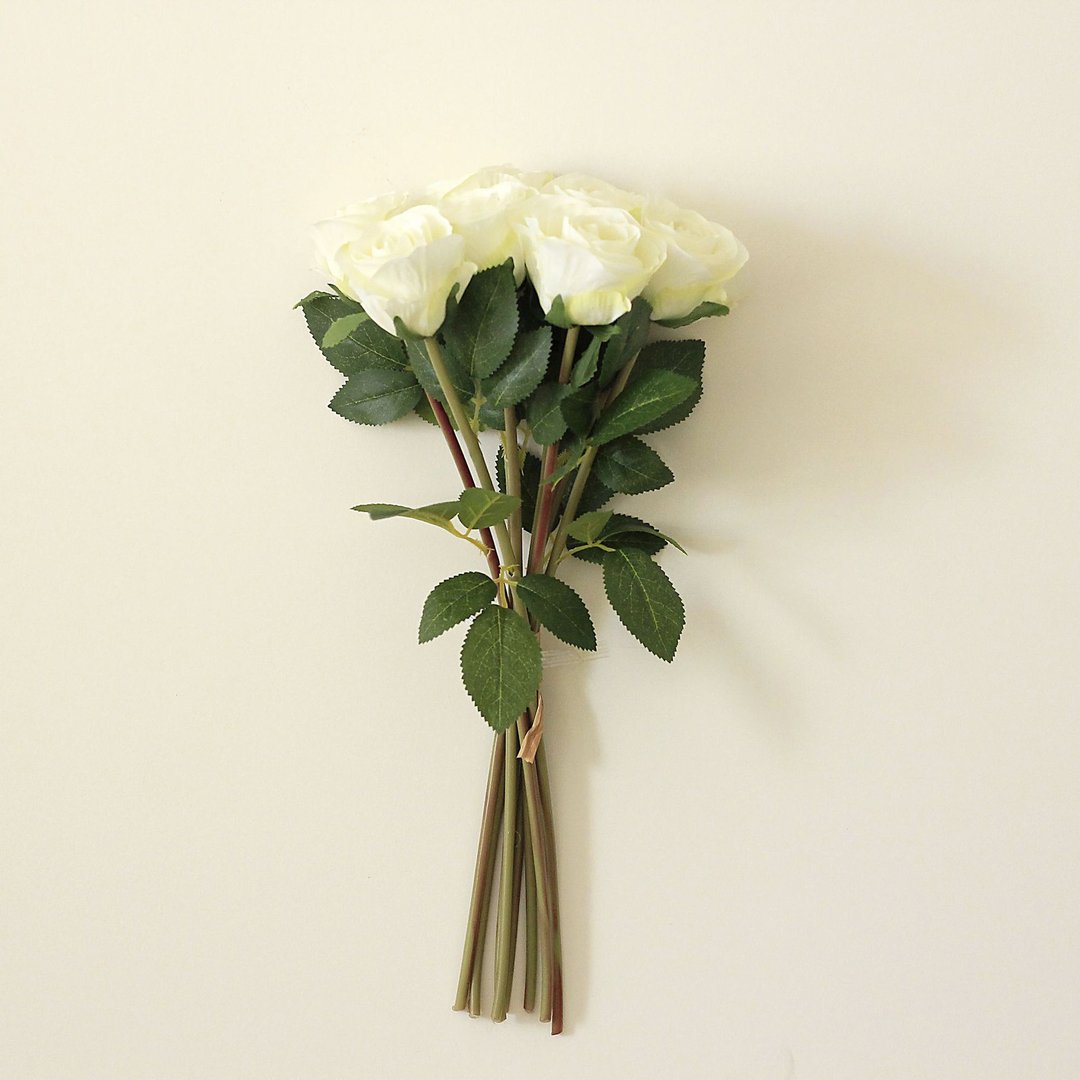
Plastic-coated wire core. A metal wire wrapped in a plastic or tape sleeve. Cuts cleanly with wire cutters, bends and holds a shape. This is the most common construction in our catalog — product pages list it as “silk petals + plastic coated stem.”
Solid plastic rod. A moulded stem with no metal inside. Cuts with a small saw or heavy cutters, but it will not hold a bend. Force it and it whitens, then snaps.
Paper-wrapped wire. Thin florist-style wire under paper tape, common on filler stems and sprays. Cuts easily, bends easily, but kinks if you bend too tightly.
How to Tell Which One You Have
Do this before the first cut, not after.
Bend the bottom 2 inches gently. A wire core gives slowly and stays where you put it. A plastic rod springs back or resists completely.
Squeeze the stem. A coated wire stem has a hard core under a slightly soft sleeve. A solid rod feels uniform all the way through.
Look at the cut end of a sister stem if you have a bunch. One cut end tells you what the whole batch is made of.
Check the product page. Any listing that names a “plastic coated stem” has a wire core.
How to Cut Artificial Flower Stems
Use wire cutters or floral snips, not kitchen scissors and not garden pruners. Pruners are built for green wood and will bind on wire. A $10 pair of flush-cut wire cutters is the single best tool upgrade for working with faux stems.
Cut low, below a leaf node. Cutting directly above a leaf or a branch junction leaves a bare stub that reads as fake from across the room. Going just below the junction removes the stub with it.
Cut long first, then shorten. Put the stem in the vase at full length, mark the height with your thumb, remove an inch, and check again. Two extra minutes beats an unfixable stem.
Never cut through the ferrule — the thicker collar where the flower head joins the stem. That joint is usually glued over a wire tang, and cutting into it releases the head.
Construction
Cut it?
Tool
Holds a bend?
Plastic-coated wire
Yes
Wire cutters
Yes, holds shape
Solid plastic rod
Yes, with care
Small saw or heavy cutters
No, springs back or snaps
Paper-wrapped wire
Yes
Floral snips
Yes, but kinks easily
Bending Without Breaking
A wire-cored stem wants to bend as a curve, not a corner. Support the stem with both hands, thumbs about two inches apart, and walk the bend along the length in small increments. One sharp bend at a single point is where the coating splits and the wire eventually fatigues and breaks.
Three shapes cover most arrangements:
The gentle arc — for stems that should lean out of a vase rather than stand straight up
The S-curve — one bend near the head, an opposite bend near the base, which is what makes a stem look like it grew rather than got installed
The head tilt — bend the last inch below the flower head so the bloom faces the room instead of the ceiling
Real touch stems with thicker cores take a firmer hand than silk sprays. Work slowly and check the shape from across the room, not from above.
If You Cut Too Short
Not fatal. Three fixes, in order of how well they hide:
Extend the stem. Tape a bamboo skewer or a length of floral wire to the cut end with stem tape, overlapping by at least two inches. Bury the join below the vase rim or the foliage line.
Change the vase. A shorter, wider vessel rescues a stem that is now too short for a tall cylinder. This is usually the best-looking fix.
Demote it. A too-short stem becomes a filler at the back of the arrangement, or the whole bunch moves to a bud vase in the bathroom.
Cutting to Fit a Vase
The usual guideline is that the finished arrangement should be about 1.5 to 2 times the height of the vase. For a 10-inch cylinder, plan on 15 to 20 inches of visible stem and flower above the rim.
Stems in our catalog run roughly 28 cm to 120 cm (11 to 47 inches), with the typical stem around 67 cm (26 inches). That means most stems need trimming for a standard table vase, and the taller ones exist specifically for floor vases and event installations where cutting would be a waste. Check the Total Height figure on the product page before you buy, not after the box arrives.
Browse Real Touch Flowers for the thicker wire cores that hold a shape best, or US Stock if you need stems this week.
For Bulk and Event Buyers
If stems will be cut down at scale — centerpiece runs, arch builds, retail kitting — the stem construction matters more than the petal material, because it decides how long the job takes and how many stems you lose to bad cuts.
Three things to confirm before you cut artificial flower stems in production quantities:
Is the stem wire-cored or solid? Wire cores cut faster and waste less.
How thick is the wire? A thicker core holds an arch shape in an installation; a thin core sags under its own flower head.
Does the head pull off the stem? Give a sample stem a firm tug at the ferrule. That is a five-second test that predicts the complaint rate for the entire carton.
Order a small sample set and run all three tests before committing to a full carton. See our Best Sellers for the styles that most often go out in volume, and the Artificial Flower Quality Inspection Checklist for what else to check when the shipment lands.
For background on wire sizing conventions, the wire gauge reference explains why a lower gauge number means a thicker, stiffer core.
FAQ
Can you cut artificial flower stems?
Yes, almost always, and most of them bend too. The part people get wrong is the tool: kitchen scissors crush a wire-cored stem into a flattened, split mess that never looks right again. Use wire cutters or floral snips, not scissors and not garden pruners, which are built for green wood and will bind on wire. Cut long first, then shorten an inch at a time and check the height again.
How do you tell whether a stem has a wire core?
Bend the bottom two inches gently: a wire core gives slowly and stays where you put it, while a solid plastic rod springs back or resists completely. Squeezing helps too, because a coated wire stem has a hard core under a slightly soft sleeve and a solid rod feels uniform all the way through. Any listing that names a plastic coated stem has a wire core, and that is the most common construction in our catalogue.
Where should you cut, and what should you never cut through?
Cut low, just below a leaf node or branch junction, because cutting directly above one leaves a bare stub that reads as fake from across the room. Never cut through the ferrule, the thicker collar where the flower head joins the stem. That joint is usually glued over a wire tang, and cutting into it releases the head.
What can you do if you cut a stem too short?
Three fixes, in order of how well they hide. Extend the stem by taping a bamboo skewer or a length of floral wire to the cut end with stem tape, overlapping by at least two inches, and bury the join below the vase rim or the foliage line. Change to a shorter, wider vessel, which is usually the best-looking fix. Or demote the stem to filler at the back of the arrangement, or move the whole bunch to a bud vase.
NB8 Floral supplies wholesale artificial flowers to florists, event professionals, and retailers in the US. Our guides are written from what we see in production, QC, and customer orders.
The most common way to end up disappointed with faux flowers is to buy too few. Six stems that looked generous in the product photo arrive, go into a vase, and produce something thin and apologetic th
Artificial flowers usually arrive compressed. Before you shape anything, check for real damage and take photos. Then work gently by hand, and skip steam or heat unless that product's own care instructions allow it.





2 thoughts on “Can You Cut Artificial Flower Stems? How to Trim, Bend, and Fix Them”