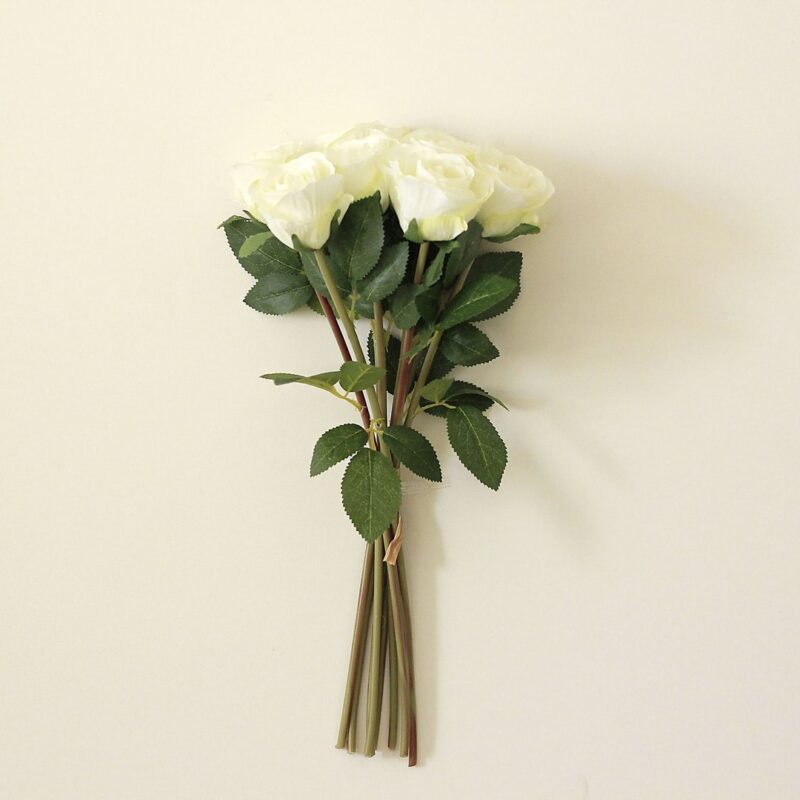
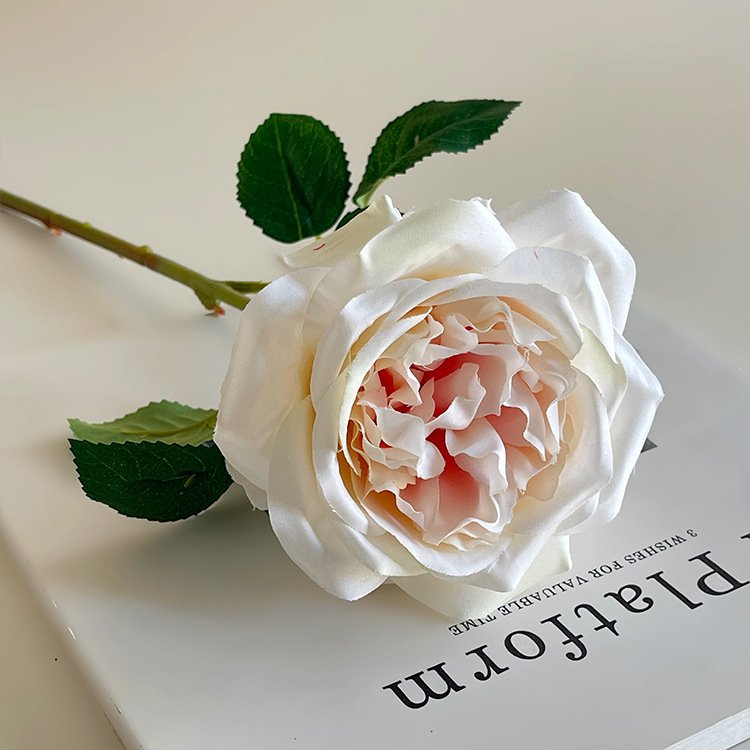
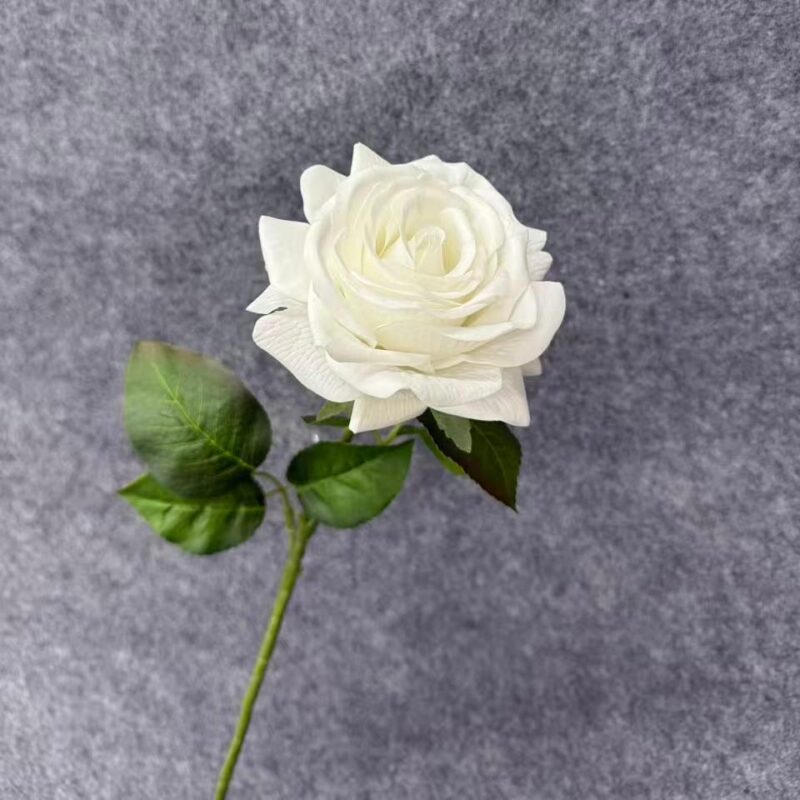
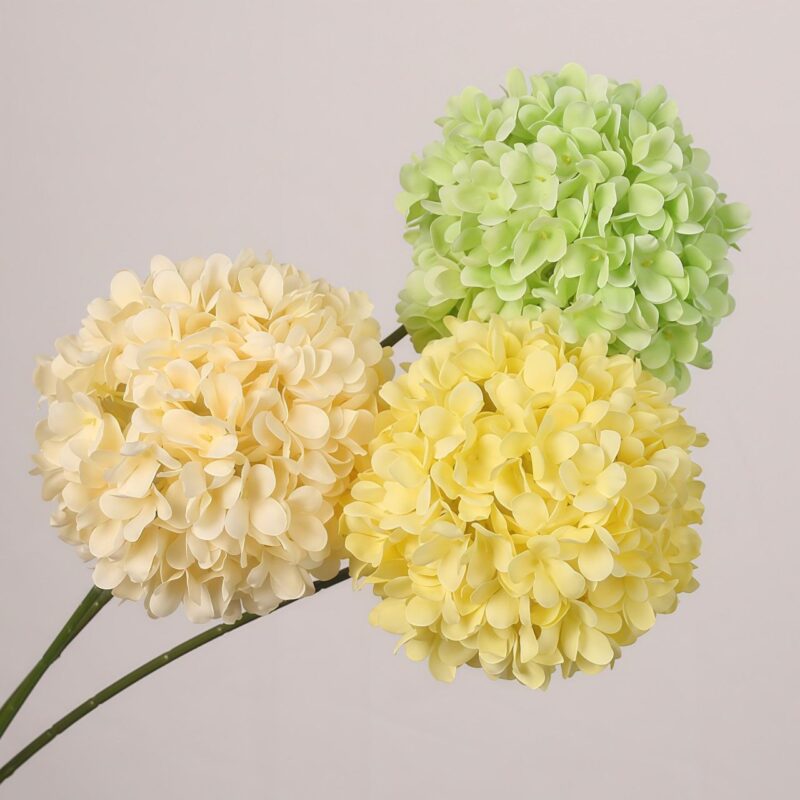
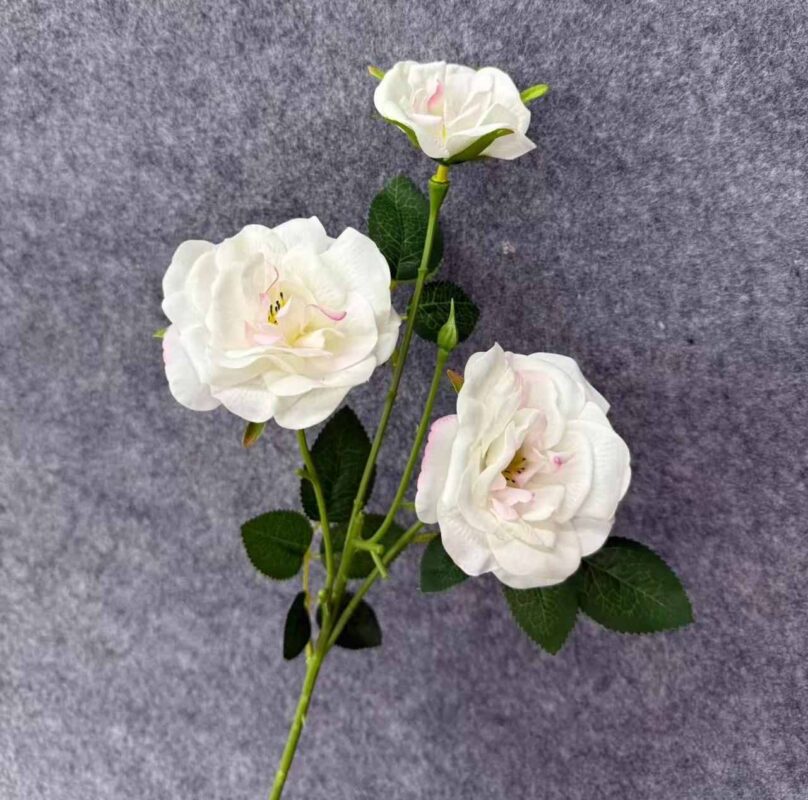
The most common way to end up disappointed with faux flowers is to buy too few. Six stems that looked generous in the product photo arrive, go into a vase, and produce something thin and apologetic that no amount of rearranging fixes.
Working out how many stems for a vase is not guesswork. It comes down to one measurement most people never take.
How Many Stems for a Vase: Measure the Opening, Not the Height
Vase height decides how long the stems need to be. Vase opening diameter decides how many you need. Almost everyone shops on height and is surprised by the result.
A useful starting formula for medium-headed blooms:
Stems ≈ opening diameter in inches × 3
A 3-inch opening wants around 9 stems. A 5-inch opening wants around 15. The multiplier moves with the size of the flower head: use ×2 for large heads like hydrangea or peony, ×3 for medium heads like roses, and ×4 or more for small or spray-type stems.
Size-by-Size Table
Vase opening
Large heads
Medium heads
Small heads or sprays
2 in (bud vase)
1–3
3–5
5–7
3 in
4–6
8–10
12–15
4 in
6–8
10–14
16–20
5 in
8–10
14–18
20–25
6 in
10–14
18–22
25–30
8 in (floor vase)
15–20
25–35
40+
These counts assume a full, rounded arrangement. They are starting estimates for a first try, worked out from the formula above rather than measured tests: head size, how open the flowers are and the look you want all change the number, so arrange one vase before buying for a whole event. A deliberately sparse, ikebana-style design uses a fraction of them — but that is a design choice, and it only reads as intentional when the stems are individually beautiful.
Why the Count Matters More Than the Price Per Stem
Faux stems are usually compared on unit price, which is the wrong comparison. The number that decides whether an arrangement looks expensive is density, and density is a count, not a quality.
Ten good stems in a vase that needs eighteen will always look worse than eighteen ordinary stems in the same vase. The eye reads gaps before it reads petal detail. This is why the same flowers look lavish in a showroom and thin at home — the showroom used twice as many.
So when the budget is fixed, work out how many stems for a vase first, then choose the grade you can afford at that count. Buying fewer premium stems than the vase requires is the most reliable way to be disappointed with an expensive purchase.
The Height Rule: Measure Everything From the Table
Height is where most arrangements go wrong, because “height” gets used for several different things. Measure everything from the table surface and keep these apart:
Vase height: from the table to the rim.
Height above the rim: from the rim straight up to the highest bloom.
Finished height: from the table to the highest bloom. Finished height = vase height + height above the rim.
Depth in the vase: how far the stem sits below the rim.
Stem length: the full length of the stem along its own line. For a stem standing straight up, stem length is roughly depth in the vase + height above the rim. Angled or curved stems need to be longer than that.
A common starting proportion is a finished height of about 1.5 to 2 times the vase height. For a 10-inch vase, that means a finished height of 15 to 20 inches, which is 5 to 10 inches above the rim. If the stems sit about 8 inches deep in the vase, straight stems need to be roughly 13 to 18 inches long. Treat this as a first try, not a fixed rule: tall, airy designs often go higher, and low table centerpieces go lower.
The mistake this rule invites. The 1.5× figure gets quoted as inches above the rim — “a 10-inch vase, so about 15 inches of flowers above the rim.” That is the same number applied to the wrong measurement, and it produces an arrangement roughly twice as tall as intended: 15 inches above a 10-inch vase is a finished height of 25 inches, not 15. An earlier version of this page mixed the two measurements in the same way, which is why every figure here now says which line it is measured from. If you see a stem length or an above-the-rim figure quoted from us without that qualifier, check it against the definitions above.
Where our product pages list a Total Height, stems range from about 28 cm to 120 cm (11 to 47 inches), so many stems are longer than a table vase needs and will need trimming — check the Total Height figure on the product page before ordering, and see how to cut artificial flower stems for doing it without ruining them.
The Greenery Ratio
Arrangements that look professionally done are rarely all flowers. A working ratio is one greenery stem for every two to three blooms, built in three layers:
Greenery base first. It creates the silhouette and holds the flowers apart. Without it, blooms collapse into the center and the arrangement looks like a bunch, not an arrangement.
Focal blooms second. The largest heads, placed at varying heights — never all at the same level.
Filler and small stems last. These hide the mechanics and fill the gaps that show from the side.
Skipping the greenery layer is the second most common mistake after buying too few stems. See Greenery for the base layer.
Wide Openings Need Help
Any vase with an opening over about 5 inches will let stems slide to the edges and leave a hole in the middle, no matter how many you buy. Three fixes:
A clear tape grid across the opening, which is invisible once the greenery is in
A smaller vessel hidden inside the decorative one
Chicken wire or a flower frog for repeated use
This is why a narrow-necked vase feels fuller with fewer stems — the neck does the arranging for you.
Order More Than the Maths Says
Once you have worked out how many stems for a vase you need, add 10 to 15 percent to that number. Reasons:
You will cut a stem too short at some point
Heads look different in your room than in the photo, and some end up facing backwards
One or two stems always end up in a bud vase somewhere else
Reordering later risks a different production batch and a slightly different color
That last one is the important one for anything over a few stems — color varies between batches, so buying short and topping up later is how you end up with two shades of the same flower.
Example Starting Points
These are worked calculations using the guidelines above, not photographed NB8 projects. Use them as a first try and adjust after you see the arrangement in place.
Dining table centerpiece, 6-inch bowl, medium blooms: 18–22 blooms plus 8–10 greenery, with the finished height kept under about 12 inches so guests can see across the table
Console or entry, 10-inch vase, mixed sizes: 12–15 blooms plus 6 greenery, finished height 15–20 inches (5–10 inches above the rim)
Floor vase, 8-inch opening: 25–35 long stems, minimum 36 inches, mostly greenery with a few focal blooms
Bathroom bud vase: 3 stems, and it will look better than 6
For the design principles behind the layering approach, the floral design overview covers proportion and balance in more depth.
FAQ
How many stems do you need for a vase?
Size it from the opening diameter, not the vase height. A useful starting point for medium heads such as roses is the opening diameter in inches multiplied by 3, so a 3-inch opening wants around 9 stems and a 5-inch opening around 15. Use 2 times for large heads like hydrangea or peony, and 4 times or more for small or spray-type stems. These are starting estimates worked out from the formula rather than measured tests, so arrange one vase before buying for a whole event.
Does the 1.5 times height rule mean 1.5 times the vase height above the rim?
No, and this is the most common way the rule is misread. The 1.5 to 2 times figure describes finished height measured from the table surface, which is vase height plus height above the rim. For a 10-inch vase that means a finished height of 15 to 20 inches, which is only 5 to 10 inches above the rim. Reading it as inches above the rim gives 15 inches above a 10-inch vase, a finished height of 25 inches, roughly twice as tall as intended. An earlier version of this page mixed the two measurements, which is why every figure here now states which line it is measured from.
How much greenery should you use with the blooms?
A working ratio is one greenery stem for every two to three blooms, built in three layers: the greenery base first, because it creates the silhouette and holds the flowers apart; the focal blooms second, placed at varying heights rather than all at one level; then filler and small stems last to hide the mechanics. Skipping the greenery layer is the second most common mistake after buying too few stems, because without it the blooms collapse into the centre and read as a bunch rather than an arrangement.
Should you order more stems than the calculation says?
Yes, add 10 to 15 percent. You will cut a stem too short at some point, some heads end up facing backwards once they are in the room, and one or two always migrate to a bud vase somewhere else. The reason that matters most for anything over a few stems is batch colour: reordering later risks a different production batch and a slightly different shade, so buying short and topping up later is how you end up with two shades of the same flower.
NB8 Floral supplies wholesale artificial flowers to florists, event professionals, and retailers in the US. Our guides are written from what we see in production, QC, and customer orders.
Yes, you can almost always cut artificial flower stems, and most of them bend too. The part people get wrong is the tool. Scissors will crush a wire-cored stem into a flattened, split mess that never
Artificial flowers usually arrive compressed. Before you shape anything, check for real damage and take photos. Then work gently by hand, and skip steam or heat unless that product's own care instructions allow it.