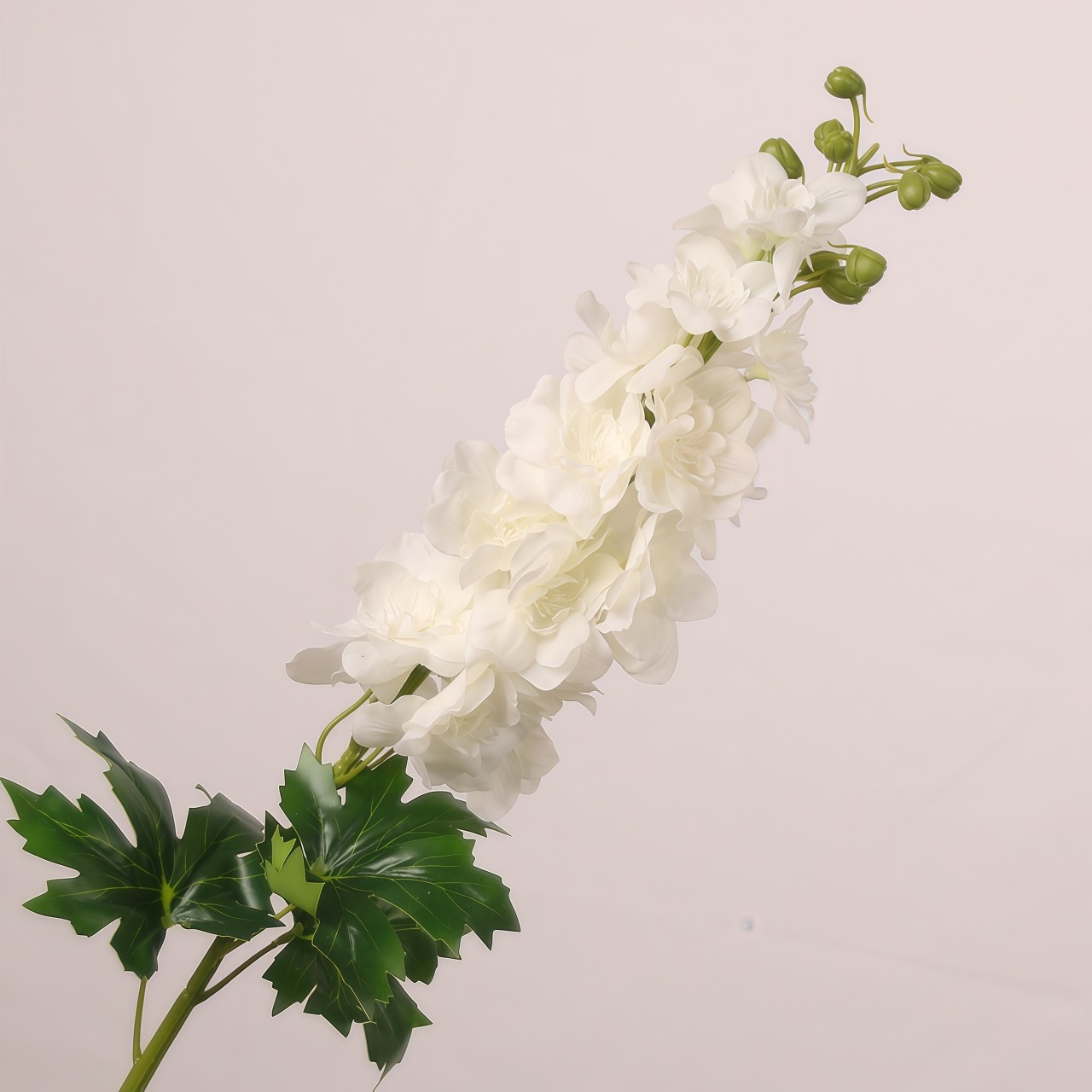
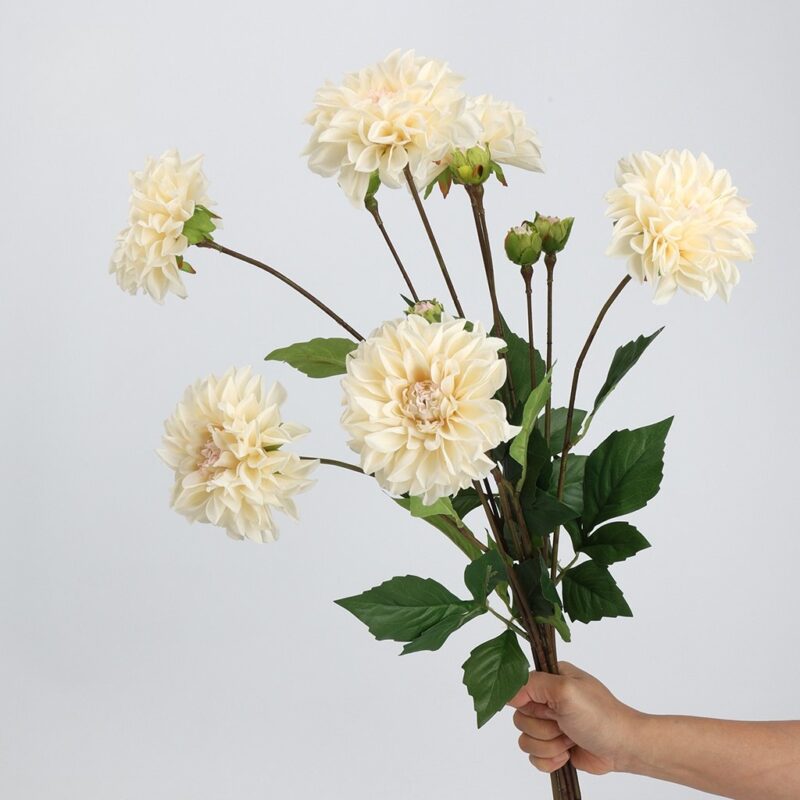
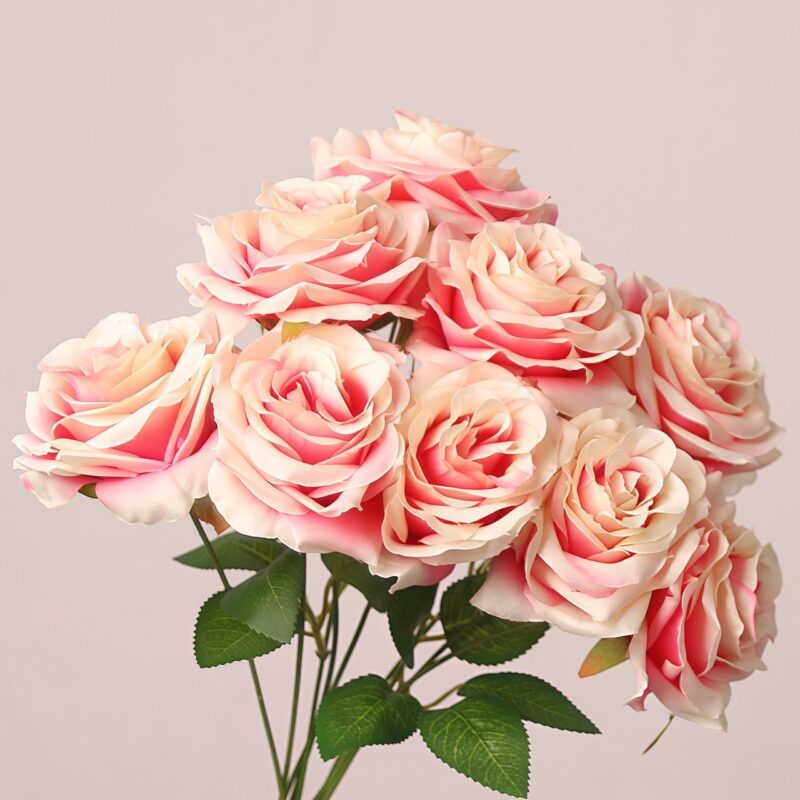
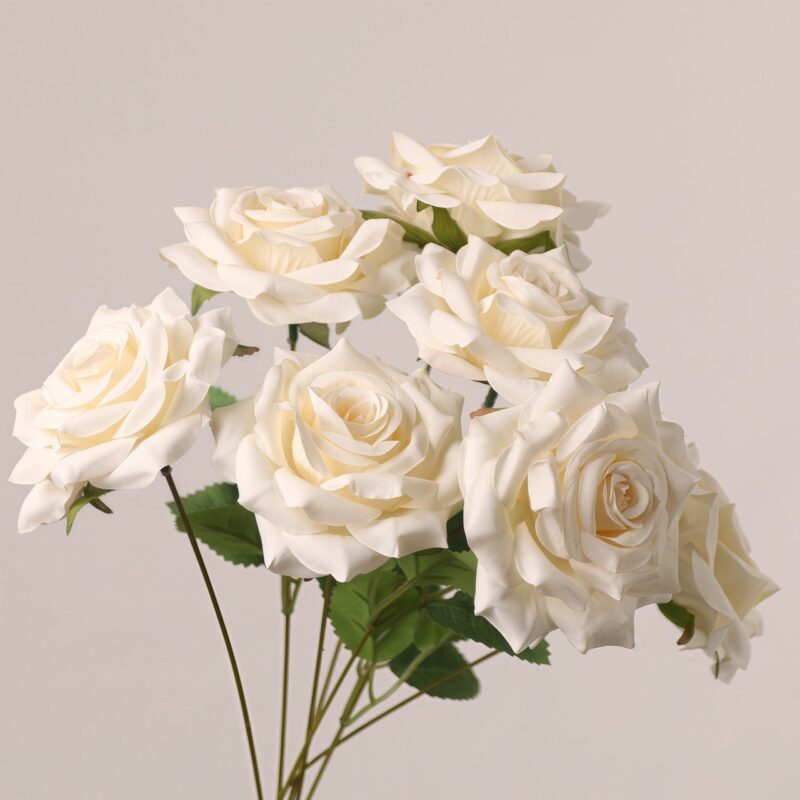
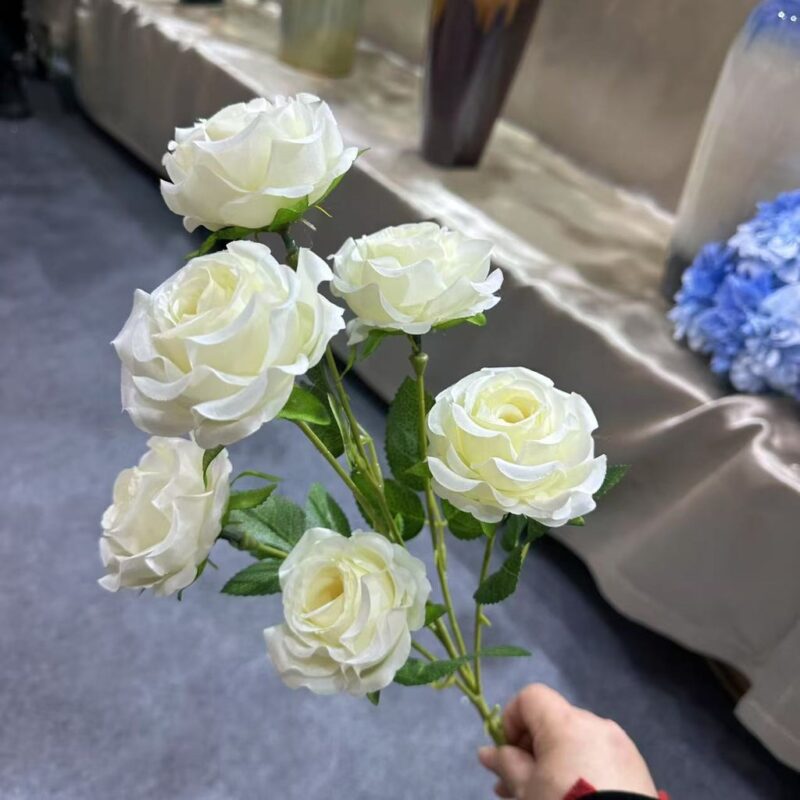
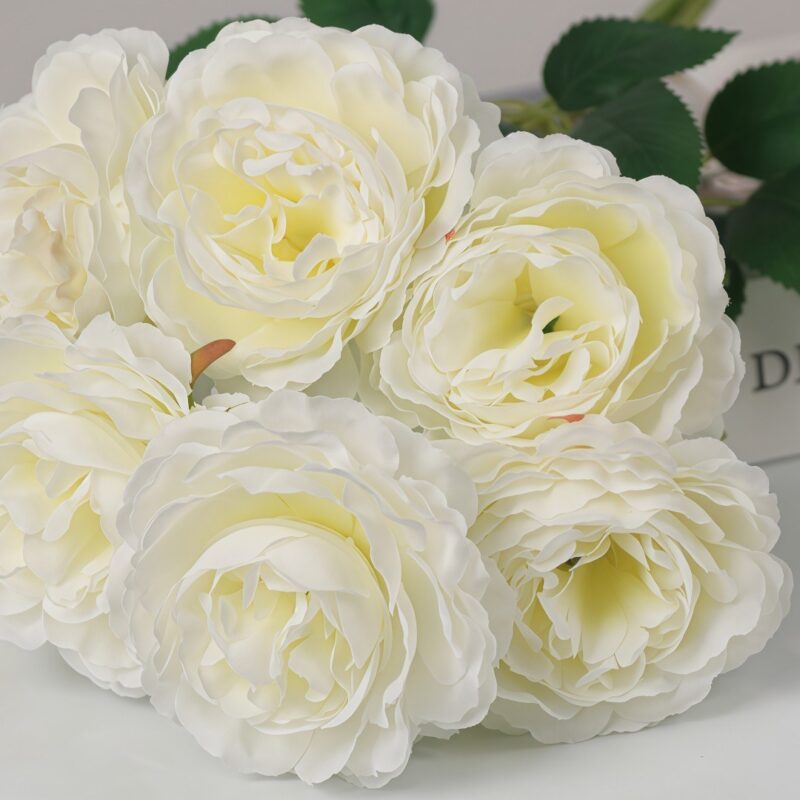
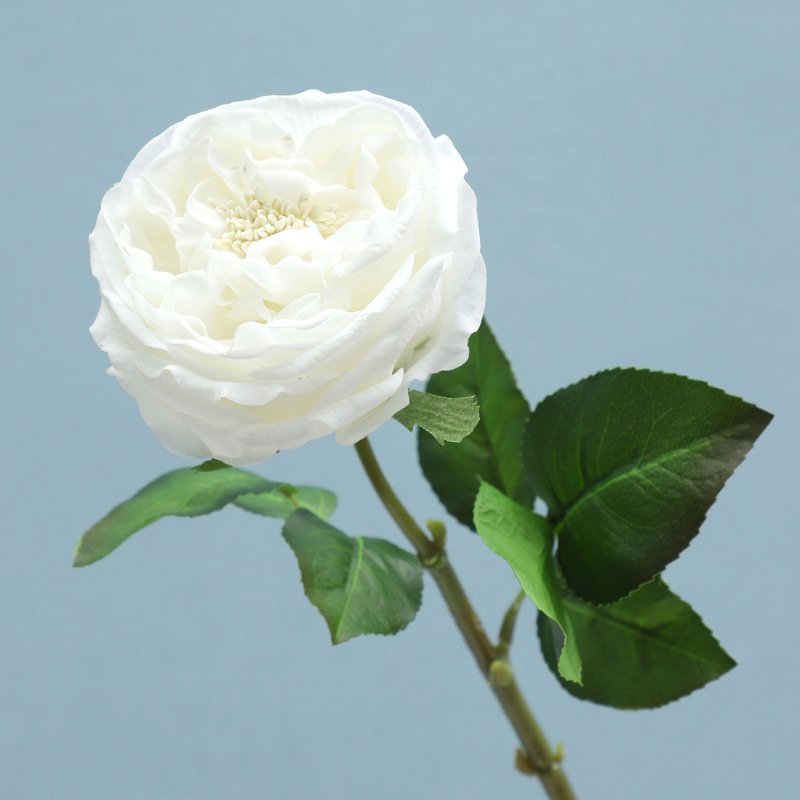
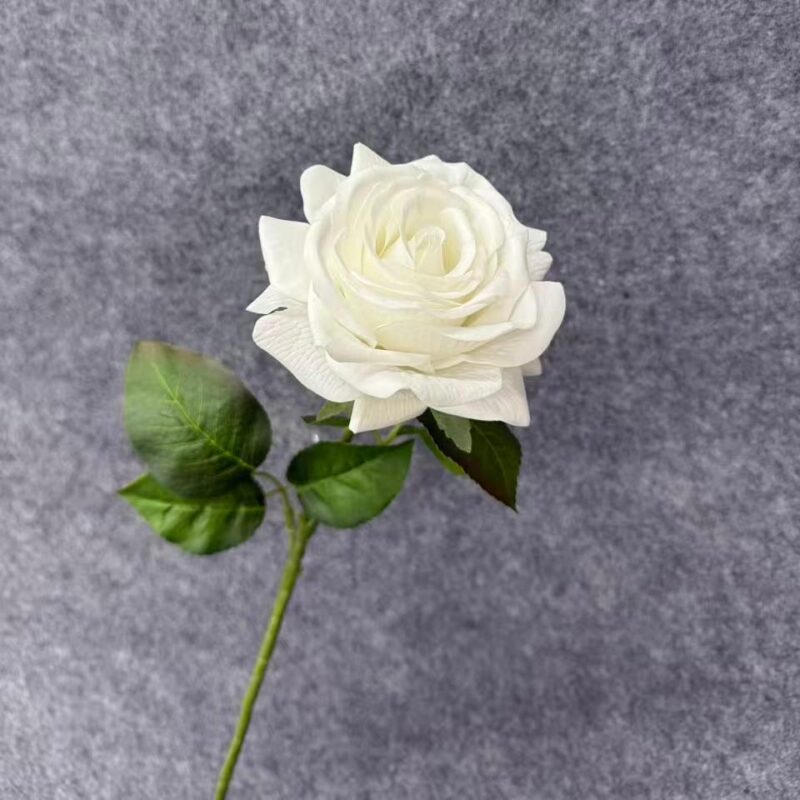
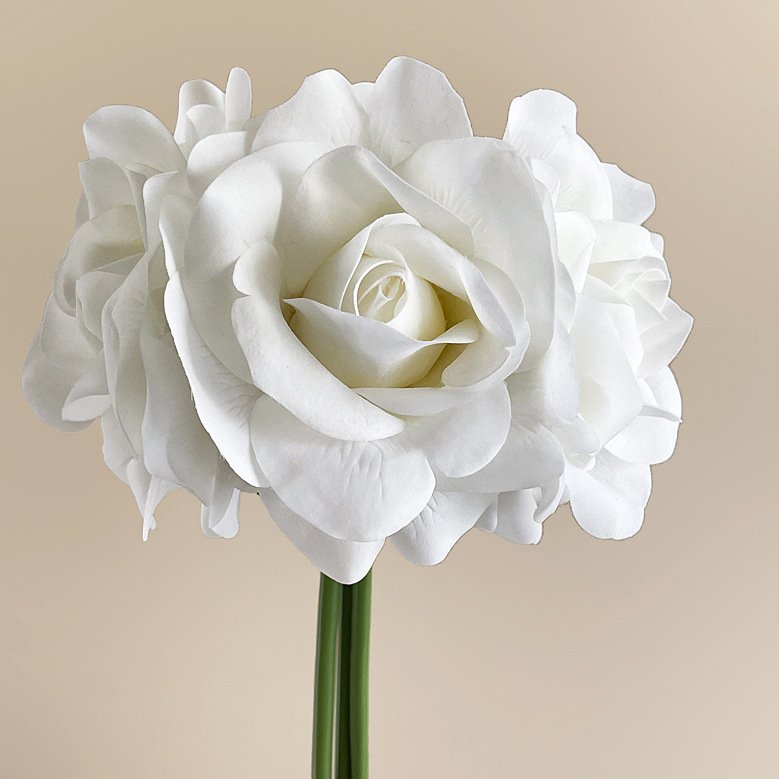
Real touch, silk-style, PU, and plastic artificial flowers are often compared as if each name guarantees a fixed quality level. It does not. The same flower type can look and feel very different depending on petal construction, color finishing, stem structure, and the distance at which it will be seen.
Here’s the practical way to choose: pay for real touch where people will hold or photograph the flowers; use silk-style stems when you need lighter, fuller volume; use plastic where it does its job best—stems, centers, leaves, and greenery.
The Short Answer
For bouquets, centerpieces, and home vases, real-touch or PU-finish blooms usually win on feel. Good silk-style flowers often look just as convincing in photos and make large designs much easier to build. Plastic belongs in structural parts and greenery. Choose the sample that looks right in the real setting—not the one with the fanciest label.
What Do These Material Names Mean?
Most artificial flowers are made from several materials. A single stem may have fabric-like petals, a plastic center, wire inside the stem, plastic leaves, glue, and a coating or wrapped finish. Ask for the actual product construction when a material detail matters to the purchase.
Type
Where it can work well
What to inspect on a sample
Silk-style or fabric-style flowers
Lightweight bouquets, broad color programs, garlands, arches, and supporting volume
Petal edges, fraying, sheen, color depth, and how the bloom looks from the side
Real touch flowers
Bridal bouquets, close-view tables, premium home decor, and retail display
Petal feel, flexibility, color, surface finish, odor, and recovery after handling
PU or PU-finish flowers
Close-up focal blooms where a soft or substantial surface matters
Seam lines, surface tackiness, color consistency, storage needs, and heat sensitivity
Plastic flowers and greenery
Leaves, stems, centers, structural parts, greenery, and distant volume
Gloss, molded seams, brittleness, and whether the finish suits the viewing distance
“Silk flower” in modern artificial floral buying often means fabric-style rather than actual silk. “Real touch” describes the intended hand feel and may use different materials or finishes by SKU. “PU” identifies a polymer material or finish, but it does not make every PU bloom identical. The Artificial Flower Materials Guide explains the wider material landscape.
Which Looks Most Realistic Up Close?
There is no dependable one-word answer. A carefully made real-touch or PU-finish flower may feel most natural when held. A premium silk-style flower can sometimes look more natural under photography or normal indoor light because its petal movement, edge, and color transition are better. A shiny plastic flower may work perfectly in a high arch and look less convincing in a dining-table centerpiece.
Judge realism in the actual setting. View the sample from the front, side, and back; look at it in daylight and indoor lighting; place it beside the planned vase, fabric, or greenery; and touch it as a customer or guest would. For close-view work, inspect the flower center, petal edge, color transitions, leaf finish, visible glue, and stem connection as closely as the main flower face.
Why Can Similar-Looking Flowers Cost Several Times More?
The visible silhouette is only one part of the product. Cost can vary with petal material and thickness, the number of flower components, molding detail, color finishing, flower-head assembly, leaf and stem construction, manual finishing, inspection level, and protective packing.
Material and structure: a soft, layered, well-supported flower head typically uses more than a simple flat construction.
Color: natural-looking variation and clean transitions need more control than a single flat finish.
Handling: stem core, wire thickness, wrapping, joints, and head attachment affect styling and transport.
Consistency: coordinated wedding and retail programs need repeatable color, size, and assembly across a batch.
Packaging: protection can reduce damage and labor needed to reshape delicate flowers after delivery.
Ask a supplier to compare two specific SKUs feature by feature. Useful evidence includes the materials of each component, flower-head construction, stem structure, packing method, approved sample, and any documented inspection or pull test. “Better quality” alone is not a buying specification.
How to Choose the Right Value Level
Choose close-up realism for bridal bouquets, welcome tables, hero product photography, premium retail, and home arrangements viewed at arm’s length.
Choose lightweight volume for large arches, ceiling pieces, flower walls, garlands, and background areas where guests view the design from farther away.
Use a mixed-material plan when the design needs both. Put premium focal flowers where people will look closely, then use compatible supporting blooms and greenery for volume.
Order samples first when the final work requires color matching, repeated SKUs, a sensitive client approval, or a large order.
NB8 Floral has more than 20 years of artificial flower industry experience. For material-led buying, the practical first step is still sample comparison: confirm the exact flower, color, texture, size, and handling experience before scaling the order. Read the Real Touch Flowers Guide for close-view uses, or use the Artificial Flower Samples Guide to set up a comparison process.
Material, Odor, and Safety Questions
A sealed carton can have a temporary packaging or material odor when first opened. Ventilate the product in a well-aired space and inspect the specific item. Do not turn a material name into a universal safety claim for a nursery, pregnancy, or people with sensitivities. For a safety-sensitive project, request the relevant product material declaration, applicable compliance documentation, and written care guidance before purchasing. Keep products with small loose parts or exposed wire out of children’s reach.
Bottom Line
Buy real touch for close-up feel, silk-style for light, useful volume, and plastic where it supports the design. Then judge the sample in the room or venue where it will live. That is the only comparison that matters.
Once material is selected, review artificial flower outdoor care before placing flowers in sun-exposed or high-use locations. To compare the real flower, color, feel, and stem construction before a larger order, REQUEST SAMPLES.
FAQ
Are real touch flowers better than silk flowers?
Not in every application. Real touch flowers are often useful where guests will handle or inspect the petals closely. Silk-style flowers can be lighter, more versatile, and better suited to volume-heavy designs. Compare actual samples for the final setting.
Why are real touch flowers more expensive?
Price may reflect specialized petal material or finish, flower-head construction, color work, stem structure, finishing, quality control, and packaging. Confirm which of those features are present in the specific SKU.
NB8 Floral supplies wholesale artificial flowers to florists, event professionals, and retailers in the US. Our guides are written from what we see in production, QC, and customer orders.
Dahlia is the flower that exposes how an artificial bloom was made, because its whole structure is petal tips and there is nowhere for a shortcut to hide.
Lilies and calla lilies sit in the same collection on most sites, including ours, and that grouping hides the fact that they do opposite things in an arrangement.
Most wedding flower budget advice is a single percentage — flowers are "about 8 to 10 percent of the total," a planning rule of thumb that has been repeated for decades. It is a fine starting point an
The arithmetic that starts most DIY plans is simple: the florist quoted $4,200, the stems cost $900, so DIY wedding flowers save $3,300. That number is wrong in both directions, and the gap between it
A palette chosen on a laptop screen in a bright room has almost nothing to do with how those flowers will look at 7pm in the room where the wedding actually happens. This is the most common and least
This is not about how long flowers last outdoors over a season. It is about a single afternoon — the six hours between install and the last dance, which is the only window that matters for outdoor wed
You picked the flower before you picked the date, and now the quote has come back at three times what you expected — or the answer is simply that nobody can get it that month. Wedding flowers out of s
Every wedding budget spreadsheet eventually arrives at the same idea: build the flowers once, use them twice. The ceremony arch becomes the head table garland, the aisle markers move to cocktail table