You picked the flower before you picked the date, and now the quote has come back at three times what you expected — or the answer is simply that nobody can get it that month. Wedding flowers out of season are one of the most common budget shocks in the whole planning process, and the fix is rarely the one couples reach for first.
Paying the import premium is only one of three options, and usually the worst of them.
Why the Price Jumps So Hard
A flower out of its natural window has to come from somewhere else — a greenhouse, or a farm in the opposite hemisphere, flown in and cold-chained the whole way. You are paying for airfreight, refrigeration, and shrinkage on a product with a shelf life measured in days.
Two things follow. The price premium is real and not negotiable, and the quality is less predictable: stems that have spent three days in transit open faster and bruise more easily than local seasonal material. Spending triple does not guarantee a better-looking flower on the day.
What to Do About Wedding Flowers Out of Season
1. Swap the variety. Keep the look, change the flower. Most “must-have” flowers are actually a shape and a colour, and something in season does that shape.
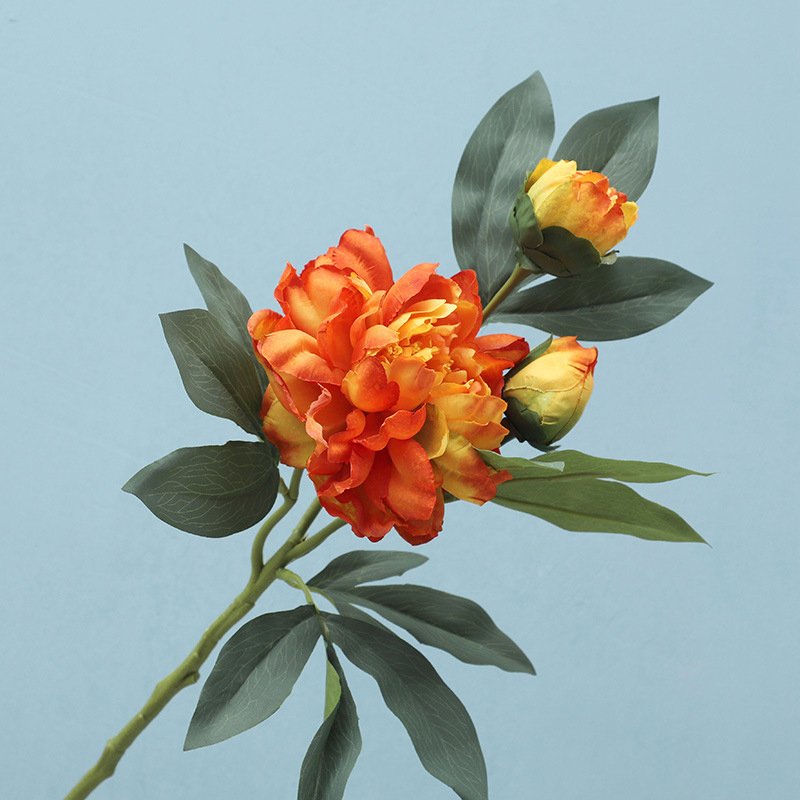
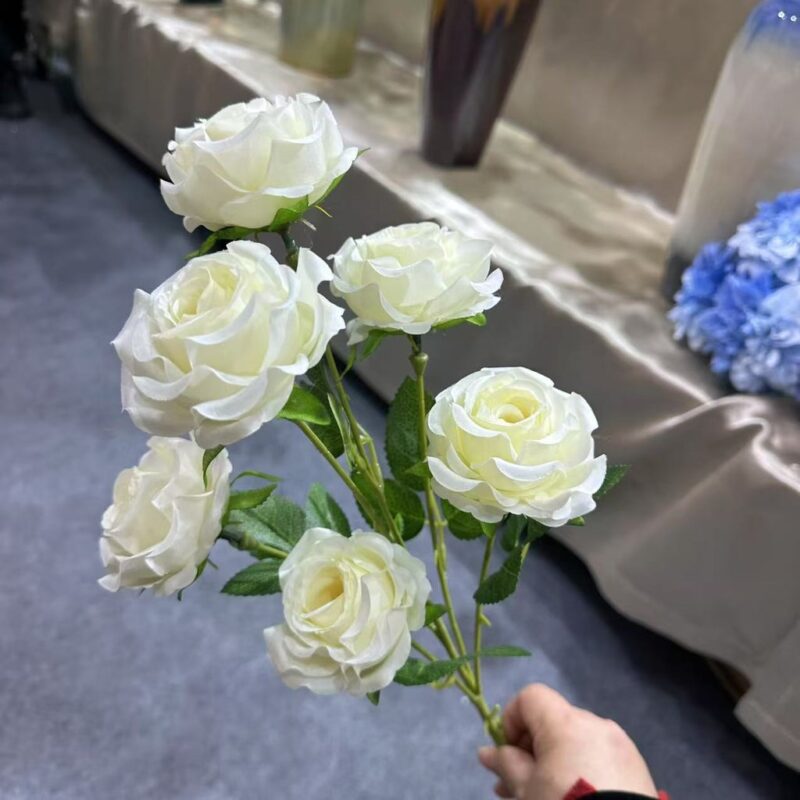
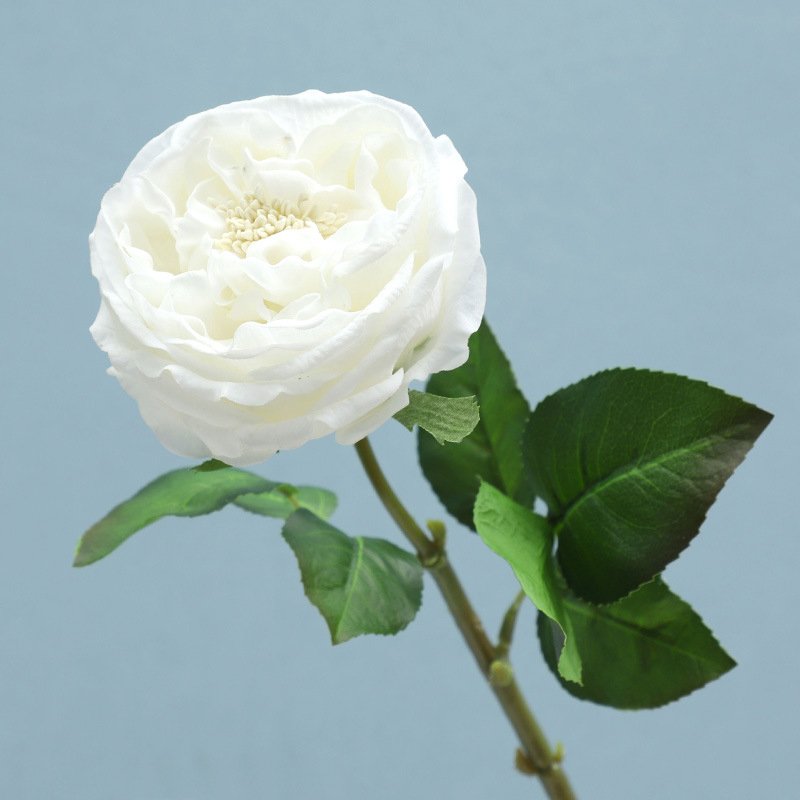
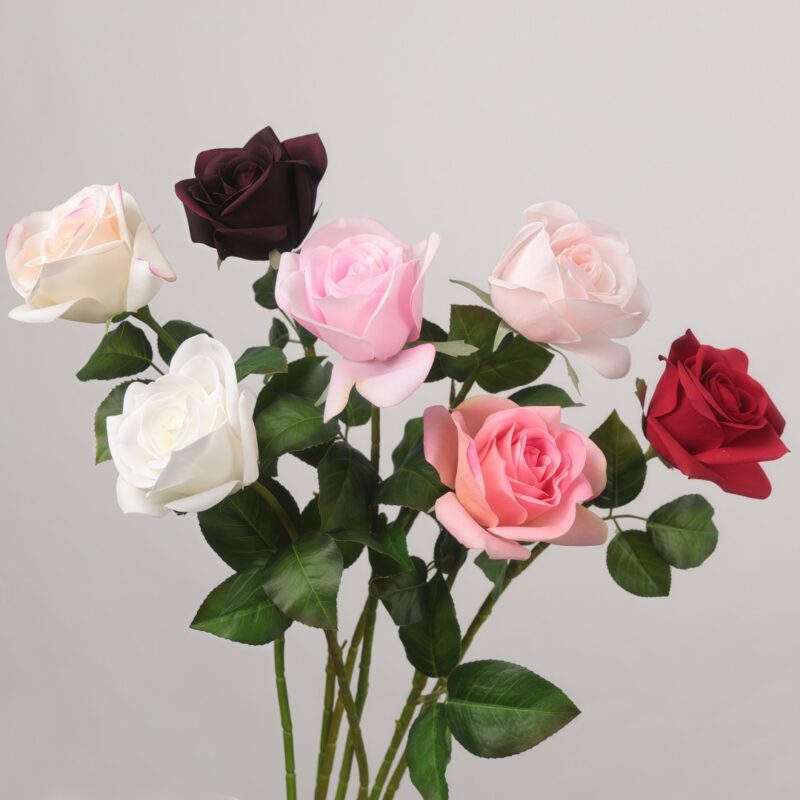
2. Swap the material. Use a faux version of the exact flower you wanted. This is the only option that gets you the actual silhouette of a peony in November.
3. Swap the silhouette. Redesign around what is abundant that month. Cheapest of the three, but it means letting go of the original picture.
There is no single right answer for wedding flowers out of season — the choice depends on whether the flower, the colour, or the shape is the part you actually care about. Most couples end up combining the first two: seasonal fresh for the pieces guests handle, faux for the hero flower that started the whole palette.
Strong — tiny bells are hard to get fresh at any price
Dahlia
Late summer to first frost
Chrysanthemum, garden rose
Good
Anemone
Cool months
Ranunculus with a dark centre, cosmos
Fair — the dark eye is what sells it
Hydrangea
Summer, wilts fast anywhere
—
Strong — the classic case for faux in hot venues
Sweet pea
Very short spring
Spray stock, freesia
Fair — the ruffle is subtle and hard to reproduce
Two of these deserve a note. Hydrangea is the flower most often swapped to faux even when it is in season, because it drinks heavily and collapses in heat — a fresh hydrangea arch at a summer wedding is a gamble. Lily of the valley is expensive in every month of the year; the faux version removes a line item that has made more than one couple rewrite the whole palette.
Making a Mixed Arrangement Read as Real
The mistake is to buy faux to match the fresh. Do it the other way round.
Choose the faux stems first, then take one to the florist and have the fresh selected to match it. Faux comes in a fixed palette; fresh comes in dozens of cultivars and can be matched to almost anything. Matching in that direction is easy. Matching in the other direction is how you end up with a blush that fights a blush.
Then place them by distance:
Faux goes where guests look but do not touch — arch, backdrop, elevated arrangements, anything above eye level
Fresh goes where guests are close — bouquets, boutonnieres, low table centres, anything they will pick up or lean over
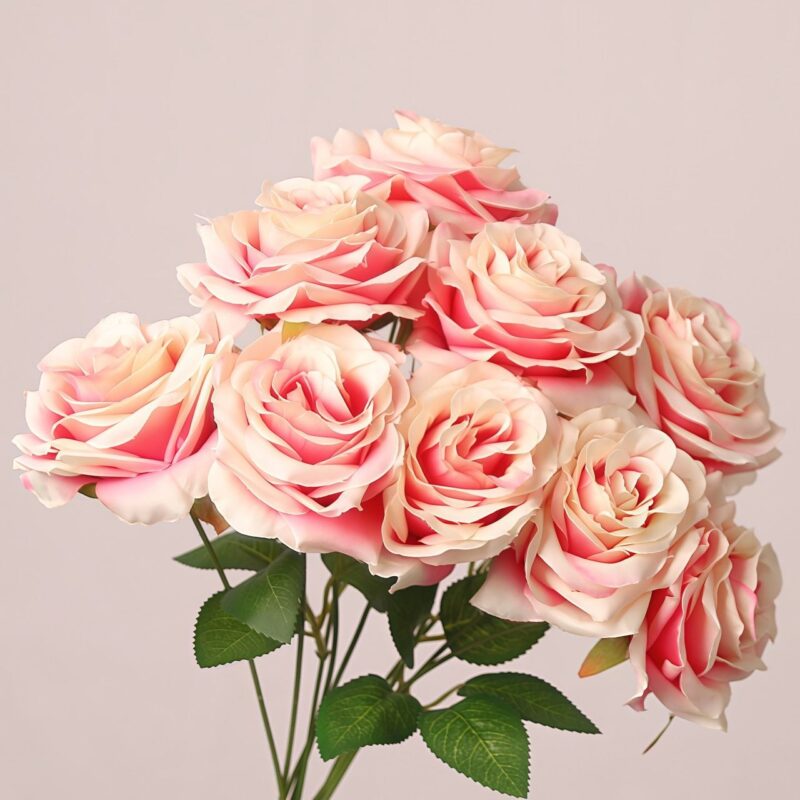
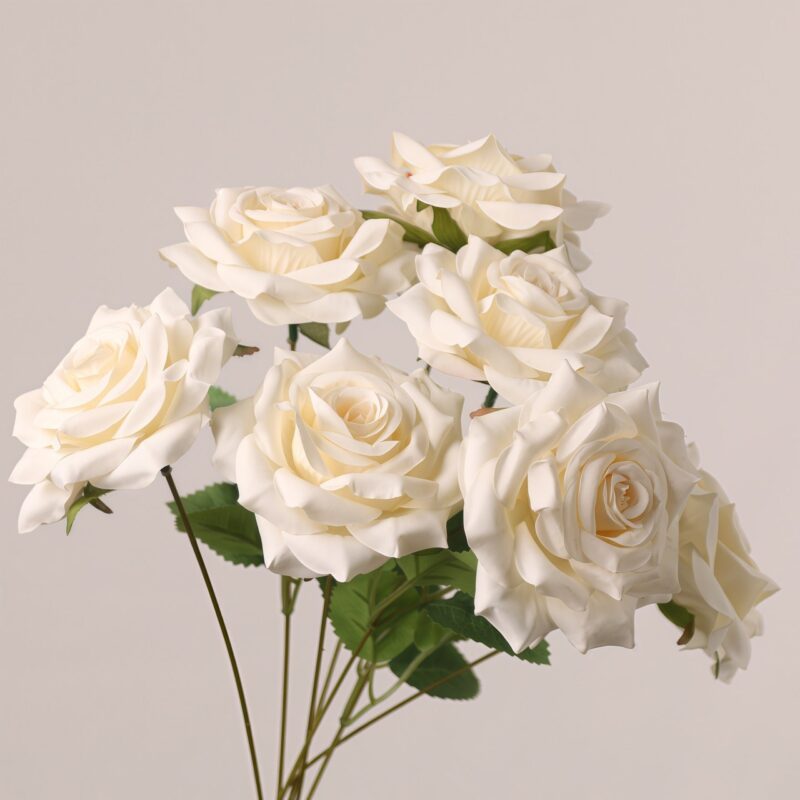
Never mix the same flower in both materials in one arrangement. Two peonies side by side, one real and one not, is the single most obvious tell. Use faux peonies and fresh roses, not faux peonies and fresh peonies.
Fresh flowers for wedding flowers out of season have to be ordered months ahead and still arrive two days before the wedding, sight unseen. Faux arrives whenever you order it.
That means you can have the actual stems in your hands during planning — hold them against the linens, photograph them under the venue’s lighting, decide the arrangement is too pink and change it, all before the week of the wedding. No other part of wedding florals allows that.
Do not accept a substitution you have not seen. “Something similar in that colour” agreed by email in March becomes an argument in September.
Do not let the substitute drive the palette. Pick the palette, then find flowers that serve it, in whichever material.
Do not pay the out-of-season premium for filler. If the budget must stretch to one imported flower, spend it on the bouquet, not on stems that will sit six feet away in a tall arrangement where nobody can tell.
For background on how the cut flower trade moves product across seasons, the cut flowers overview explains the supply chain behind the pricing.
Whatever you choose, decide it early. Wedding flowers out of season is a problem that gets more expensive every week you leave it, and the substitution that would have been invisible in March becomes a compromise in August.
FAQ
Why do out-of-season wedding flowers cost so much more?
A flower outside its natural window has to come from a greenhouse or a farm in the opposite hemisphere, flown in and cold-chained the whole way, so you are paying for airfreight, refrigeration and shrinkage on a product with a shelf life measured in days. The premium is real and not negotiable, and the quality is less predictable: stems that have spent three days in transit open faster and bruise more easily than local seasonal material. Spending triple does not guarantee a better-looking flower on the day.
What are the options if the flower you want is out of season?
There are three, and paying the import premium is usually the worst of them. Swap the variety to keep the look and change the flower, since most must-have flowers are really a shape and a colour. Swap the material to a faux version of the exact flower, which is the only option that gets you the actual silhouette of a peony in November. Or swap the silhouette and redesign around what is abundant that month, which is cheapest but means letting go of the original picture.
Which flowers substitute best as faux?
Peony reproduces well because the layered head carries the look, and lily of the valley is strong because tiny bells are hard to get fresh at any price in any month. Hydrangea is the classic case: it drinks heavily and collapses in heat, so it is the flower most often swapped to faux even when it is in season. Sweet pea and anemone are fairer bets, because the subtle ruffle and the dark eye are the features that sell them and are the hardest to reproduce.
How do you mix faux and fresh without it showing?
Choose the faux stems first, then take one to the florist and have the fresh selected to match it. Faux comes in a fixed palette while fresh comes in dozens of cultivars, so matching in that direction is easy and the other direction is how you end up with a blush that fights a blush. Then place them by distance: faux where guests look but do not touch, fresh where guests are close. Never put the same flower in both materials in one arrangement, because two peonies side by side, one real and one not, is the single most obvious tell.
NB8 Floral supplies wholesale artificial flowers to florists, event professionals, and retailers in the US. Our guides are written from what we see in production, QC, and customer orders.
Real peonies have a two to six week season, cost a fortune outside it, and drop their petals within days of opening. That combination is why peonies are one of the most searched-for artificial flowers
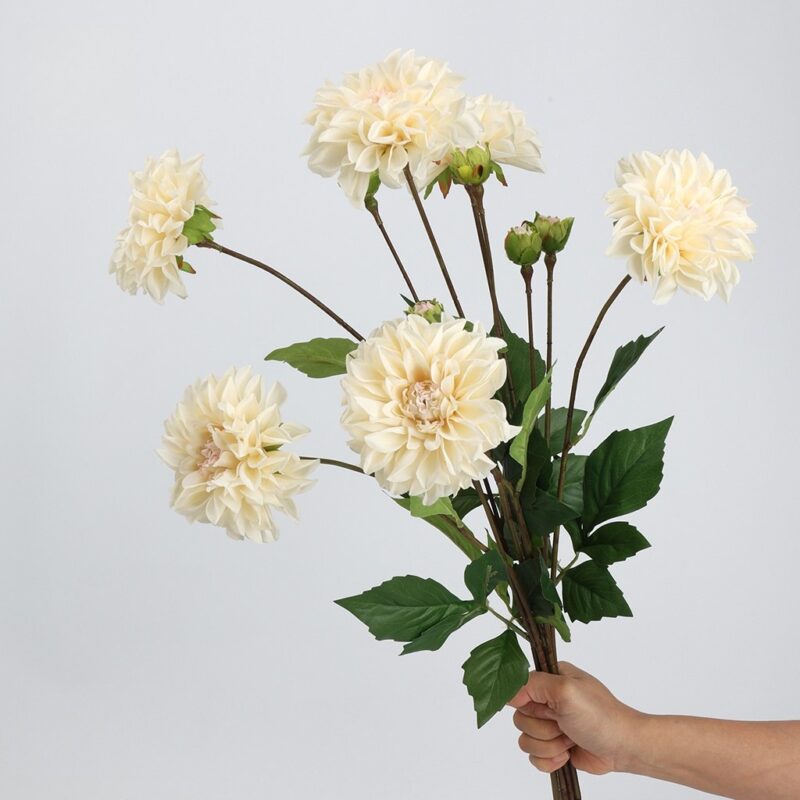
Dahlia is the flower that exposes how an artificial bloom was made, because its whole structure is petal tips and there is nowhere for a shortcut to hide.
Lilies and calla lilies sit in the same collection on most sites, including ours, and that grouping hides the fact that they do opposite things in an arrangement.
Most wedding flower budget advice is a single percentage — flowers are "about 8 to 10 percent of the total," a planning rule of thumb that has been repeated for decades. It is a fine starting point an
The arithmetic that starts most DIY plans is simple: the florist quoted $4,200, the stems cost $900, so DIY wedding flowers save $3,300. That number is wrong in both directions, and the gap between it
A palette chosen on a laptop screen in a bright room has almost nothing to do with how those flowers will look at 7pm in the room where the wedding actually happens. This is the most common and least
This is not about how long flowers last outdoors over a season. It is about a single afternoon — the six hours between install and the last dance, which is the only window that matters for outdoor wed
Every wedding budget spreadsheet eventually arrives at the same idea: build the flowers once, use them twice. The ceremony arch becomes the head table garland, the aisle markers move to cocktail table
Be the first to know about new arrivals, special offers and early sale access. New here? Stretch the possibilities. Get 20% off your first online order of full-priced items when you sign up. Exclusions apply.