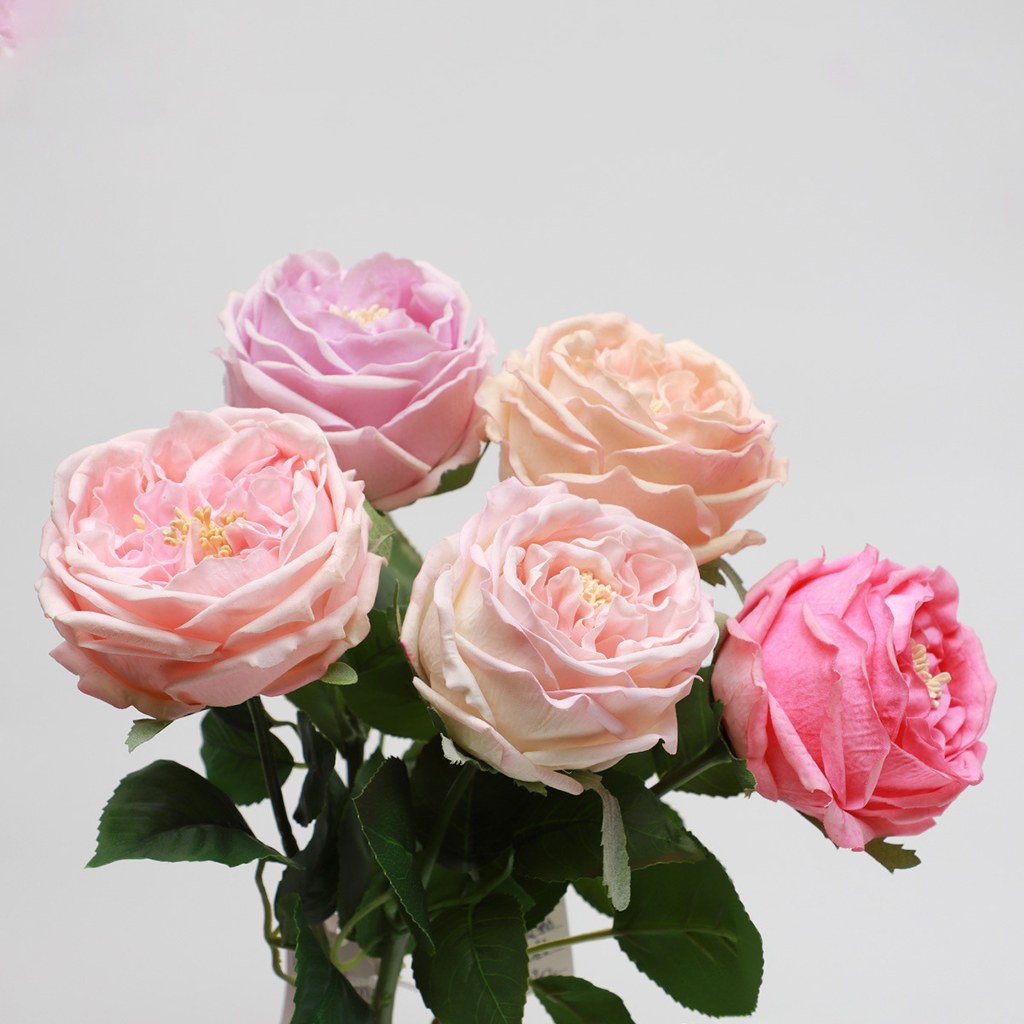
Choosing wedding flowers is not simply a choice between “real” and “fake.” It is a decision about how you want the flowers to look, how much time you have for setup, which blooms are available, how the venue may affect them, and what you want to do with the arrangements after the celebration.
Fresh flowers offer natural fragrance, movement, and the small variations that make every stem unique. High-quality artificial flowers offer consistency, flexibility, and the freedom to prepare designs well before the wedding day. Neither option is right for every couple or every event.
This guide compares artificial and fresh wedding flowers without assuming that one is always better. It also explains when a mixed arrangement may give you the best of both.
The Short Answer
Fresh flowers may be the better choice when natural fragrance, seasonal character, and the traditional experience of live blooms are your highest priorities.
Artificial wedding flowers may be a better fit when you need to prepare early, match a precise color palette, decorate a destination or outdoor venue, or reuse large floral installations. Couples who want both natural details and practical flexibility can combine the two.
Artificial vs. Fresh Wedding Flowers at a Glance
Consideration
Fresh flowers
Artificial flowers
Appearance
Naturally varied, delicate, and seasonal
Consistent; quality depends on material and construction
Touch and fragrance
Natural texture and scent
No natural fragrance; Real Touch styles can feel more lifelike
Availability
Influenced by season, region, and supply
Available in stable colors and styles for longer periods
Preparation
Usually arranged close to the event
Can be arranged, reviewed, and adjusted in advance
Heat and travel
Requires careful conditioning and transport
Does not wilt, but still needs protection from crushing, heat, and direct sun
Reuse
Usually limited after the event
Can be stored, resold, rented, or reused if handled well
Cost
Depends on season, variety, labor, and location
Depends on quality, quantity, shipping, and whether pieces are reused
Sustainability
Biodegradable, but growing and cold-chain transport have impacts
Made from manufactured materials, but repeated use can reduce the cost and impact per event
1. Appearance: Natural Variation or Visual Consistency?
The greatest strength of fresh flowers is that they are alive. Petals curve differently, stems move naturally, and each bloom opens at its own pace. These variations are especially beautiful in loose garden-style bouquets and close-up photography.
Artificial flowers are more consistent. Every stem can stay at the intended stage of bloom throughout the ceremony, reception, and photo session. That consistency can be useful for arches, aisle installations, hanging designs, and other arrangements that need to hold a specific shape for many hours.
Quality makes a major difference. Basic fabric flowers may look flat or repetitive at close range, while carefully made silk and Real Touch artificial flowers can include layered petals, natural color transitions, and detailed stems. Before committing to a large order, look at close-up photographs, check the measurements, and view the flower from more than one angle.
For color-sensitive projects, a physical sample is more reliable than a screen. Lighting, camera settings, and display settings can all change how a shade appears online.
2. Cost: Which Option Is Actually Less Expensive?
There is no universal answer. Fresh flowers are not always more expensive, and artificial flowers are not automatically the budget option.
The price of fresh wedding flowers can change with the season, local availability, stem count, design complexity, florist labor, refrigeration, delivery, setup, and breakdown. A locally available seasonal flower may be reasonably priced, while an imported or out-of-season variety can cost much more.
Artificial flower costs depend on material quality, realism, stem size, quantity, packaging, shipping, design labor, and storage. A premium artificial arrangement may cost more upfront than a simple fresh arrangement. The financial advantage becomes clearer when large pieces can be reused, rented, resold, or repurposed after the wedding.
When comparing quotes, compare the complete project rather than the price of a single stem. Include mechanics, containers, labor, transportation, setup, removal, and post-event plans.
3. Season and Color Availability
Fresh flowers connect a wedding to a particular place and season. Spring peonies, summer garden roses, and autumn dahlias can create a sense of time that is difficult to reproduce. However, availability can change because of weather, crop conditions, shipping delays, and regional supply.
Artificial flowers make it easier to plan around a fixed palette rather than a harvest calendar. This is helpful when a couple needs a specific dusty rose, burgundy, ivory, blue, or champagne tone across bouquets and venue decor. You can begin with a shop-by-color collection and compare several flower types within the same palette.
Even with artificial flowers, color matching should not rely only on a product name. “Blush,” “ivory,” and “champagne” can vary between collections. Order samples when exact coordination with dresses, linens, or printed materials is important.
4. Timing, Setup, and Destination Weddings
Fresh flowers are normally conditioned and arranged close to the event. This keeps them looking their best, but it also concentrates the work into a short period. They need water, appropriate temperatures, careful transportation, and a setup schedule that allows the florist to work shortly before guests arrive.
Artificial arrangements can be prepared weeks in advance. A designer can build the bouquet, test the scale of an arch, photograph the arrangement for approval, and make adjustments without waiting for the wedding week. This is useful for DIY couples, traveling planners, and destination weddings where local flower availability is uncertain.
Advance preparation does not mean careless storage. Finished arrangements should be kept clean, dry, supported, and protected from crushing. Flower heads may also need gentle reshaping after shipping.
For projects with a short timeline in the United States, choosing products from the US Stock collection may reduce the uncertainty associated with an international preorder. Delivery time should still be confirmed before the event.
5. Heat, Wind, and Outdoor Conditions
Outdoor weddings can be challenging for any floral design. Fresh flowers may lose moisture quickly in high temperatures, while delicate petals can bruise during transport or become damaged by wind. A professional florist can reduce these risks through conditioning, water sources, shade, and careful variety selection, but the weather remains a factor.
Artificial flowers do not wilt, which makes them useful for exposed arches, photo backdrops, and installations that must be ready well before the ceremony. However, they are not indestructible. Strong wind can move lightweight arrangements, prolonged direct sunlight may affect some colors or materials, and rain can affect adhesives, dyes, or internal components. Outdoor designs still need secure mechanics and a weather plan.
Always check the product material and care guidance before assuming that an artificial flower is designed for long-term outdoor use.
6. Reuse and What Happens After the Wedding
Fresh bouquets can be enjoyed for several days and may be dried or professionally preserved. Some couples also donate suitable arrangements after the event, although timing and local acceptance policies need to be arranged in advance.
Artificial flowers offer more reuse options. They can become home decor, be incorporated into anniversary celebrations, be resold, or be added to a rental inventory. Event professionals can also redesign the same stems for different clients and color palettes.
Reuse works best when it is planned before purchasing. Choose components that can be separated, use mechanics that allow stems to be removed, and prepare labeled storage boxes for different flower types and colors.
7. Sustainability Is More Complicated Than It Looks
It is tempting to label fresh flowers as sustainable because they are biodegradable, or artificial flowers as sustainable because they can be reused. Neither statement tells the complete story.
Fresh flowers may require heated greenhouses, irrigation, refrigeration, packaging, air freight, and rapid transportation. Their impact varies widely depending on where and how they are grown. Artificial flowers use manufactured materials and eventually need to be disposed of, but their impact per event can change if they replace many single-use arrangements over several years.
A more useful question is: How will these flowers be sourced, transported, used, and handled afterward? Local seasonal flowers, rented artificial installations, reusable mechanics, limited waste, and thoughtful quantities can all be part of a more responsible plan.
8. When Fresh Flowers May Be the Better Choice
Consider fresh flowers when:
Natural fragrance is an important part of the ceremony or reception.
You love seasonal variation and are comfortable allowing the florist to make substitutions.
The design features small, delicate details that guests will view at close range.
You have an experienced local florist and appropriate delivery and setup conditions.
Keeping or reusing the arrangements is not a priority.
Fresh flowers can be especially effective for bridal bouquets, boutonnieres, table details, and intimate arrangements where scent and natural movement matter most.
9. When Artificial Flowers May Be the Better Choice
Consider artificial flowers when:
You need to finish arrangements before the wedding week.
The event involves travel, a remote venue, or a long setup window.
Your palette requires colors that are difficult to source in season.
You are creating large arches, hanging installations, or reusable backdrops.
You want to keep, rent, resell, or redesign the flowers after the event.
You need multiple arrangements to maintain a consistent appearance.
Artificial flowers are often practical for structural decor and high-volume installations. Ordering an artificial flower sample box can help you compare color, scale, and texture before selecting a larger quantity.
10. Can You Mix Fresh and Artificial Flowers?
Yes. A mixed design is often the most flexible option.
You might use fresh flowers for the bridal bouquet and personal flowers, then use artificial flowers for the ceremony arch, aisle markers, ceiling installations, or areas that must be set up early. A florist may also combine fresh foliage or a few fragrant blooms with artificial focal flowers to create natural movement and scent.
The key is visual consistency. Match the scale of the blooms, repeat colors throughout the design, and avoid placing a very basic artificial stem directly beside a highly detailed fresh flower at eye level. Test the combination under the venue lighting before the wedding day.
How to Make the Final Decision
Before choosing, answer these questions:
Which matters most: fragrance, realism at close range, precise color, early preparation, or reuse?
Will the flowers travel, stay outdoors, or remain installed for many hours?
Which flowers are realistically available in your location and season?
What is included in each quote beyond the flowers themselves?
What will happen to the arrangements after the wedding?
Can you review a physical sample before placing a large order?
Your answers may point clearly to fresh flowers, artificial flowers, or a thoughtful combination of both.
Frequently Asked Questions
Do artificial wedding flowers look fake?
Some do, but the category includes a wide range of quality levels. Material, petal construction, color transitions, stem detail, scale, and arrangement technique all affect the result. Review close-up images and order a sample when realism is important.
Are artificial wedding flowers cheaper than fresh flowers?
Not always. A premium artificial arrangement can cost more upfront than a simple fresh design. Artificial flowers may provide better long-term value when they are reused, rented, resold, or used in large installations that would require expensive out-of-season fresh flowers.
How far in advance can artificial flowers be arranged?
They can usually be arranged weeks or even months ahead, provided they are stored in a clean, dry place and protected from crushing, dust, and prolonged sunlight. Check them again before the event and reshape any petals or stems affected by storage.
Can artificial flowers be used for an outdoor wedding?
Yes, especially for ceremony structures and installations that need to remain in place for a long time. Secure them against wind and confirm whether the specific materials, dyes, and adhesives are suitable for the expected weather.
Should I order samples before buying artificial wedding flowers?
Yes, particularly when color accuracy, bloom size, texture, or photography is important. A sample lets you compare the flower with fabric swatches, table linens, venue lighting, and other elements of the wedding palette.
Final Thoughts
The best wedding flowers are the ones that support the design, schedule, venue, and priorities of the people using them. Fresh flowers offer fragrance and natural variation. Artificial flowers offer planning flexibility, color consistency, and opportunities for reuse. A mixed approach can provide the strengths of both.
Start with the experience you want guests to have, then compare samples and complete project costs. The result will feel more personal – and more practical – than choosing based on labels alone.
NB8 Floral supplies wholesale artificial flowers to florists, event professionals, and retailers in the US. Our guides are written from what we see in production, QC, and customer orders.
Median cost per stem for 19 artificial flower types, from hydrangeas ($3.06) to tulips ($1.74), and how real touch and carton size change the price of each.
Almost every guide to the most realistic artificial flowers answers the question with a material: buy real touch, buy silicone, avoid plastic. That advice is not wrong, and it is not the main effect.
Wholesale artificial roses are the largest line in almost every catalog, including ours: 75 products, 563 variations, 29 colours . They are also the flower where buyers most often overpay, because "ro
White is the single most requested colour in artificial florals, and it is the one that most often arrives wrong. Not faulty — wrong. Two boxes labelled white, ordered from the same supplier in the sa
Most flowers have one kind of petal. An iris has two, doing opposite things, and that is why a material choice that works on a rose can fail on an iris.
Baby's breath is the most-used filler in wedding floristry and the one with the most annoying failure mode. The faux version is one of the few substitutions that is a straight upgrade.
Small wedding businesses asking for small wholesale quantities usually get quoted by suppliers running three completely different models — and the price comparison between them is meaningless.
Most cost advice about artificial flowers compares materials. We checked our own catalogue — 2,383 price points — and the material is not where the money is.
The orchid is the only flower in the catalogue that is routinely expected to work alone, and that changes what you should be checking before you buy one.