Eucalyptus is the greenery people reach for first, and it is also the one that survives the move to artificial best. Both facts come from the same place: a eucalyptus leaf is matte, slightly irregular, and holds no fine detail that a factory has to reproduce.
That makes artificial eucalyptus stems unusually forgiving to buy — and the single cheapest way to stop an arrangement looking like a bunch of flowers in a vase.
Why Artificial Eucalyptus Stems Fake Better Than Flowers Do
Three things give away an artificial plant: the seam where material was cut and formed, a surface that is too uniform, and geometry that is too regular to have grown.
Leaves dodge all three more easily than petals. A eucalyptus leaf has no translucent edge to match, no graded colour running from base to tip, and no delicate structure at the centre. Its surface is matte, which means it scatters light rather than reflecting it in the uniform sheet that gives cheap fabric petals away. Shape varies naturally from leaf to leaf, so small manufacturing inconsistencies read as realism rather than as flaws.
The practical consequence: eucalyptus is the wrong place to spend a premium budget. Mid-grade stems pass close inspection, and the money is better spent on more of them.
The Varieties, and Which One You Actually Want
Fresh eucalyptus is sold in several named forms, and faux versions copy them:
Silver dollar — round, coin-shaped, grey-green leaves on a straight stem. The most recognisable, and the most useful for filling space quickly.
Seeded — smaller leaves mixed with clusters of seed pods. Adds texture, reads as more “designed”, works best as an accent rather than the bulk.
Baby blue — smaller, bluer, denser leaves. Softer look, good for bouquets where silver dollar would be too coarse.
Willow or gum — long, narrow, pointed leaves on trailing stems. The one to use when you want length and drape rather than volume.
For a first order, silver dollar does the most work per stem. Seeded is what you add once the shape is right.
What We Carry, and What It Costs
Our eucalyptus line runs to 6 products, all real touch, in green and light green. The useful figure is per stem rather than per bunch, because pack sizes vary:
Per stem
Eucalyptus variations (n=12)
median $2.17, range $0.72–$2.68
All variations in our catalogue (n=1,756)
median $2.46
Eucalyptus sits below the catalogue median, which is the opposite of what happens with large-headed flowers. A leaf stem uses less material than a bloom and packs far more densely into a carton, and carton density is the single biggest driver of per-stem price across our whole range — about a 51% swing, against roughly 16% for material choice. The full dataset is in artificial flower cost per stem.
Twelve price points is a small sample, so treat that median as a guide rather than a market figure. For the wider greenery range, Greenery holds 63 products, and the artificial greenery guide covers garlands, leaves and the other foliage types.
How Many Stems You Actually Need
Artificial eucalyptus stems are bought by the job, not by the vase, and the quantities differ a lot:
Vase arrangement — about one greenery stem for every two to three blooms. Below that ratio, large heads collapse into the centre and the result reads as a bunch rather than an arrangement. See how many stems for a vase for the bloom count itself.
Table runner — plan on roughly 3 to 4 stems per foot of table for a loose, open runner, and double that for a dense one. A 6ft table is therefore 20 to 50 stems depending on the look.
Arch or arbour — greenery is usually 60 to 70% of the total stem count, with flowers clustered at two or three focal points. The eucalyptus is what makes the structure read as floral; the blooms are punctuation.
Bouquet — 5 to 8 stems is normally enough, trimmed short, worked in among the blooms rather than ringed around the outside.
Buy 10 to 15% more than the maths suggests. Greenery is what you cut most, and a stem trimmed too short cannot be lengthened.
Three Checks Before a Bulk Order
Bend the stem. A wire core lets you shape a runner or an arch. A solid stem will not hold a curve — see how to cut artificial flower stems for telling them apart.
Look at the leaf join. Leaves glued flat to the stem read as fake at any distance. Better stems have leaves on short individual stalks set at varying angles.
Check the colour under your own light. Eucalyptus greens run from grey to blue to olive, and the difference is much more visible in a warm room than in a product photo.
For the botanical background on why the leaves look the way they do, the eucalyptus overview covers the genus and its distinctive juvenile foliage, which is the form most faux stems copy.
Frequently Asked Questions
Do artificial eucalyptus stems look real?
More convincingly than most artificial flowers. A eucalyptus leaf is matte, has no translucent edge or graded colour to reproduce, and varies naturally in shape, so small manufacturing inconsistencies read as realism instead of as flaws. It sits in the most forgiving tier for realism, which means a mid-grade stem usually passes close inspection.
How many eucalyptus stems do I need for a table runner?
Roughly 3 to 4 stems per foot of table for a loose, open runner, and about double that for a dense one. A 6ft table therefore takes somewhere between 20 and 50 stems depending on how full you want it. Order 10 to 15% extra, because greenery is the thing you trim most.
Are artificial eucalyptus stems expensive?
They are among the cheaper things in a faux catalogue. In our range the median is $2.17 per stem across 12 measured price points, against $2.46 across all our variations. Leaf stems use less material than blooms and pack more densely into a carton, and carton density drives per-stem price more than anything else.
Which type of artificial eucalyptus should I buy first?
Silver dollar. The round, coin-shaped leaves fill space faster than any other form and are the most recognisable as eucalyptus. Seeded eucalyptus is what you add afterwards for texture, once the overall shape is already right.
Can artificial eucalyptus be used outdoors?
For a single event, yes — nothing degrades in an afternoon. For sustained outdoor placement, colour change is the limit rather than the material, and greens vary a lot in how stable they are. See our guide to artificial flower fade resistance for what to ask and a 90-day test you can run yourself.
NB8 Floral supplies wholesale artificial flowers to florists, event professionals, and retailers in the US. Our guides are written from what we see in production, QC, and customer orders.
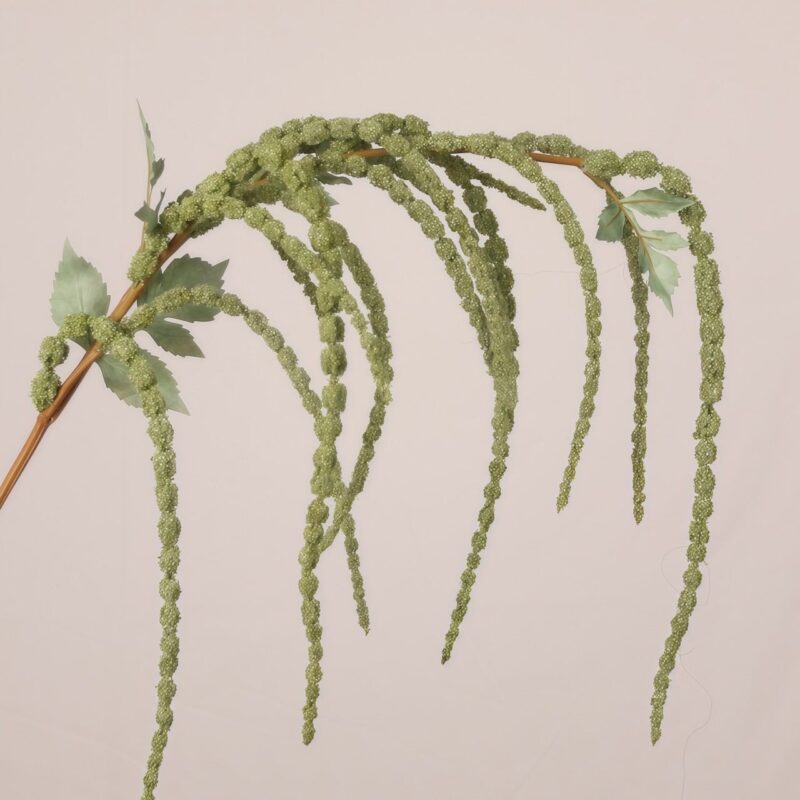
Most arrangements fail in the same direction: everything points up and out, nothing falls down. The fix is a trailing stem, and amaranthus — love-lies-bleeding, in its older name — is the one florists
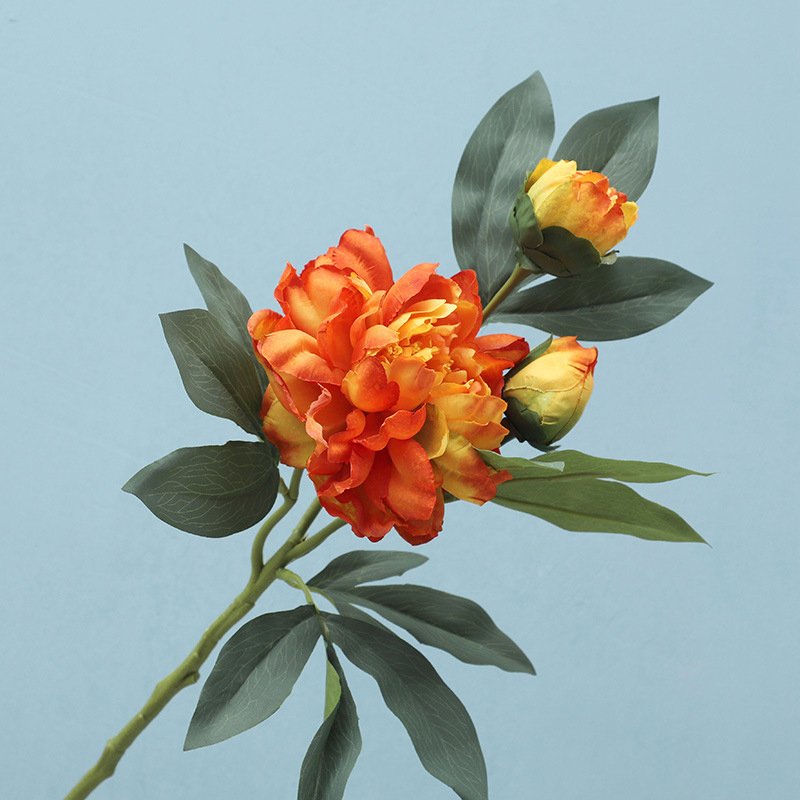
Real peonies have a two to six week season, cost a fortune outside it, and drop their petals within days of opening. That combination is why peonies are one of the most searched-for artificial flowers
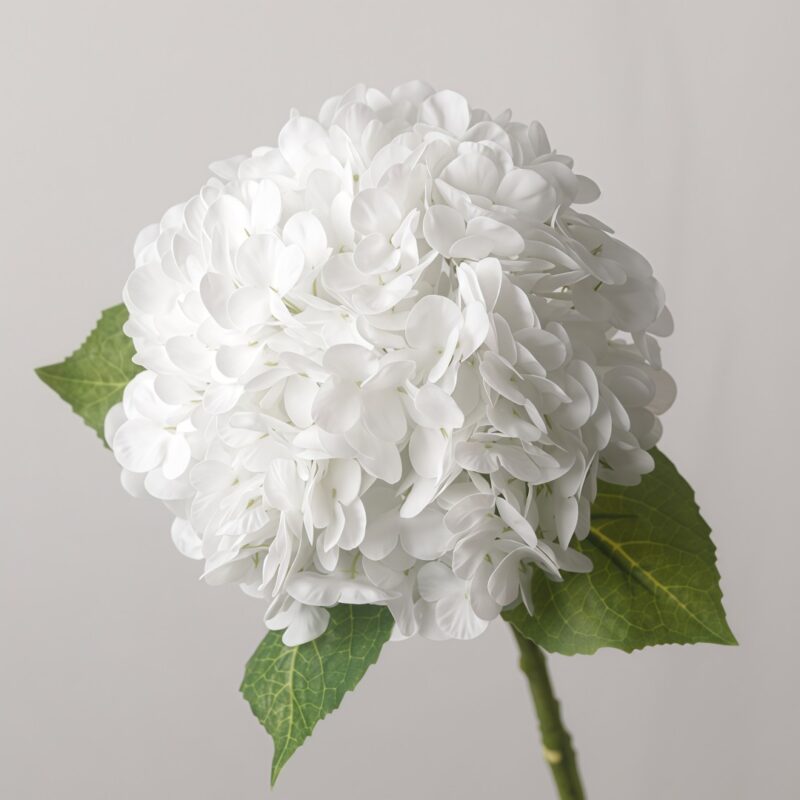
Hydrangeas are the flower people most often put outside, and the one that most often disappoints them a season later. Both facts have the same cause: the enormous, dense head that makes a hydrangea wo
Most cost advice about artificial flowers compares materials. We checked our own catalogue — 2,383 price points — and the material is not where the money is.
Most advice about artificial flower quality levels stops at a ranking: real touch beats silk, silk beats foam, foam beats plastic. That ranking is broadly right and almost useless, because it never an
What silk, real touch, PU, EVA, PE and PVC artificial flowers are really made of, what each costs per stem, and the questions that matter more: sunlight, heat, venue fire rules, chemicals and latex.
Be the first to know about new arrivals, special offers and early sale access. New here? Stretch the possibilities. Get 20% off your first online order of full-priced items when you sign up. Exclusions apply.